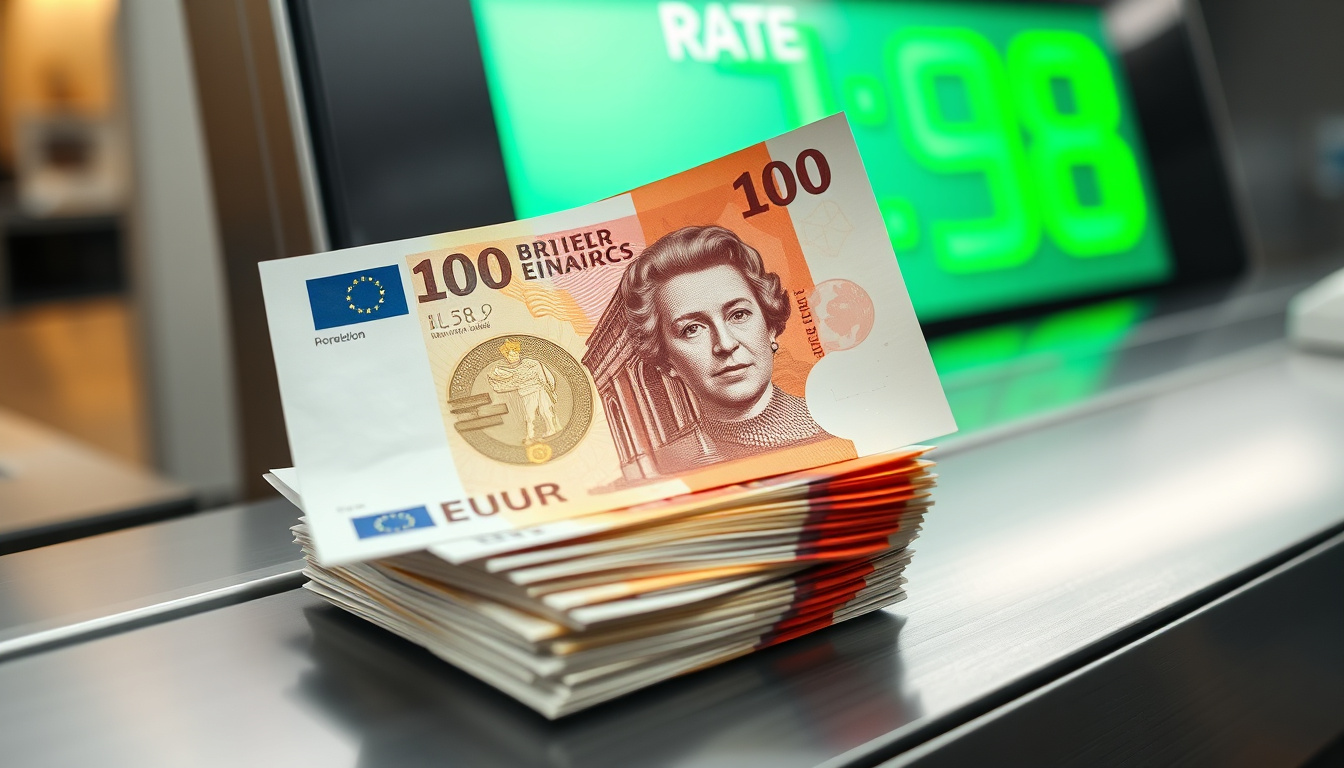
Converting British pounds to euros requires understanding the constantly shifting exchange rate between GBP and EUR. Whether exchanging travel money, sending funds abroad, or simply curious about currency values, knowing what £100 translates to in euros—and what factors influence that rate—helps consumers make informed financial decisions.
The pound-to-euro exchange rate fluctuates throughout each trading day, responding to economic data releases, central bank announcements, and broader market sentiment. For anyone asking “how much is £100 in euros right now,” the answer depends entirely on when and where the conversion takes place.
How Much is £100 in Euros Today?
The current mid-market rate stands at approximately 1 GBP = 1.148 EUR, meaning £100 converts to roughly €114.80 at interbank rates. However, the exact amount received varies considerably depending on the provider used for the transaction.
- Rates fluctuate continuously throughout each trading day
- The mid-market rate serves as a reference point only
- Banks and bureaus typically add 1–3% markup to the base rate
- Specialist currency services offer rates much closer to mid-market
- Comparing providers before converting can save several euros on £100
- Exchange rates shown online may differ from in-store rates
| Metric | Value | Source |
|---|---|---|
| £100 GBP to EUR | €114.80 (mid-market) | Multiple providers |
| 1 GBP | 1.148 EUR | OFX, Xe, Wise |
| 1 EUR | 0.87 GBP | Wise, Revolut |
| 24h Change | -0.11% | Pound Sterling Live |
| 1-Week High | 1.1513 GBP/EUR | Pound Sterling Live |
| Daily Range | 1.1471 – 1.1490 | Pound Sterling Live |
What is the Current GBP to EUR Exchange Rate?
The pound-to-euro rate reflects the relative strength of the UK economy against the eurozone. As of early April 2026, multiple financial platforms report slightly different figures due to the timing of data collection and their specific client offerings.
Provider Comparison for £100 Conversions
Different services offer varying rates when converting £100 to euros. Specialist currency providers consistently beat traditional banks, which often add significant markups and transaction fees to the mid-market rate.
A 1% markup on £100 means receiving approximately €1.14 less than the mid-market rate. Choosing a specialist provider over a high-street bank can preserve this difference for the consumer.
| Provider | £100 Gets You | Key Features |
|---|---|---|
| OFX | €114.84 | Competitive rates for larger transfers |
| Wise | €114.59 | Mid-market rate, transparent fees |
| Xe | €114.81 | Currency expertise, rate alerts |
| Revolut | €113.62 | App-based, continuous updates |
| Pound Sterling Live | €114.71 | Live market data, 0% fee options |
How to Convert GBP to EUR
Converting pounds to euros involves selecting a provider, entering the amount, and completing identity verification for larger transfers. Most specialist services allow conversions starting from £1 with no minimum amounts. Consumers should compare the mid-market rate against the offered rate to identify any hidden markups.
What Factors Affect the GBP to EUR Exchange Rate?
The pound-to-euro rate responds to numerous economic and political factors that influence currency markets. Understanding these drivers provides context for why rates change and how forecasts are developed.
Economic Drivers
Interest rate differentials between the Bank of England and the European Central Bank significantly impact the GBP/EUR pair. When UK rates rise relative to eurozone rates, sterling tends to strengthen. Inflation data from both regions also influences market expectations and subsequent rate movements.
Trade balances between the UK and EU affect currency demand. Strong export performance can boost sterling, while trade deficits may weaken it. Consumer spending data, employment figures, and GDP growth all contribute to market sentiment.
Interest rate decisions from the Bank of England and ECB, inflation data (CPI), employment reports, and GDP growth figures all influence the pound-to-euro exchange rate on a regular basis.
Political and Historical Context
The UK’s departure from the European Union continues to shape GBP/EUR dynamics. Historical data reflects post-Brexit volatility as trade arrangements were negotiated and implemented. Long-term charts show the pound has depreciated against the euro since the 2016 referendum, though recovery periods have occurred during times of political stability.
Geopolitical events, including elections and policy announcements, create short-term fluctuations in the exchange rate. Market participants continuously reassess the economic outlook based on political developments in both the UK and the eurozone.
Best Places to Exchange £100 GBP to Euros
For small conversions like £100, specialist currency platforms consistently outperform banks and airport exchange bureaus. Services like Wise, OFX, and Xe offer rates closest to the mid-market without significant markups.
For in-person exchanges, prepaid currency cards loaded with euros before travel often provide better rates than exchanging cash at airports. However, card withdrawal fees and ATM charges should be considered alongside the exchange rate offered.
GBP to EUR Historical Rates
Examining historical exchange rate data helps contextualize current levels and understand long-term trends in the pound-to-euro relationship.
Short-Term Trends
Recent data shows the pound trading within a narrow range against the euro. The one-week high reached 1.1513 GBP/EUR, with daily movements oscillating between 1.1471 and 1.1490. This stability contrasts with more volatile periods seen during significant economic announcements.
Forecast Outlook
Forward points from Pound Sterling Live suggest a gradual weakening of sterling over the coming months. Forecasts indicate the rate could decline from current levels of 1.148 toward 1.1295 within a year.
These projections reflect market consensus based on current economic indicators. Significant policy changes or unexpected data releases could alter this trajectory substantially.
Long-Term Historical Perspective
Interactive charts available through Wise, OFX, and other platforms allow users to examine GBP/EUR movements over extended periods. Pre-2026 data reflects long-term post-Brexit depreciation trends, with notable recovery phases during periods of reduced political uncertainty.
Understanding Rate Uncertainty
Several factors introduce uncertainty into any discussion of exchange rates. Being aware of these limitations helps readers interpret rate information accurately.
| Established Information | Information Requiring Verification |
|---|---|
| Mid-market rates published by financial data providers | Customer-specific rates applied at transaction time |
| Historical rate data from verified sources | Future rate movements and forecasts |
| General economic factors affecting currency pairs | Precise impact of specific events on rates |
| Fee structures disclosed by providers | Hidden fees not immediately apparent |
Live rates change every minute in response to market conditions. The rates shown in this article reflect data available from multiple sources as of early April 2026 and may differ from rates available when readers conduct their own conversions.
Economic Context for GBP/EUR Movements
The exchange rate between the pound and euro serves as a barometer for the relative economic health and outlook of the UK and eurozone. Understanding the broader context helps explain why rates move as they do.
UK-EU economic ties established through post-Brexit trade arrangements continue to influence both currencies. Trade barriers implemented since 2021 have affected supply chains and competitive positioning, with effects that remain embedded in current economic relationships. For practical guidance on managing everyday finances amid these conditions, see our guide to Waitrose Food to Order – Delivery Guide and Costs.
Currency markets can experience significant volatility during major economic announcements, central bank meetings, or unexpected political events. Rate alerts from providers like Xe help consumers monitor changes and time conversions strategically.
Central bank policies from both the Bank of England and European Central Bank shape expectations for future rate movements. Monitoring official communications and policy decisions provides insight into potential directional changes for the GBP/EUR pair.
Sources and Expert Commentary
Exchange rate information in this article draws from multiple verified financial platforms and data providers. These sources offer real-time rate tracking, historical analysis, and forecast data used by both consumers and financial professionals.
Platforms including OFX, Wise, Pound Sterling Live, and Xe provide publicly accessible rate information updated throughout each trading day.
Exchange rates are driven by market fluctuations, interest rate differentials, inflation, trade balances, and geopolitical events.
For policy-level context, the Bank of England and European Central Bank websites provide official statements on monetary policy decisions that influence currency valuations.
Summary
At the current mid-market rate of approximately 1 GBP = 1.148 EUR, £100 converts to roughly €114.80. However, the actual amount received depends significantly on the provider chosen, with specialist currency services offering rates much closer to mid-market than traditional banks. For more on related topics, see our guide to Waitrose Food to Order – Delivery Guide and Costs for everyday financial planning resources.
Rates fluctuate continuously based on economic data, central bank policy, and market sentiment. Setting rate alerts and comparing providers before converting currency helps ensure consumers receive the best possible value when exchanging pounds for euros.
Frequently Asked Questions
Is the £100 to euros rate fixed?
No. The exchange rate between GBP and EUR changes constantly throughout each trading day based on market conditions, economic data releases, and other factors affecting currency values.
How often does the GBP EUR rate update?
The mid-market rate updates continuously as currency markets operate 24 hours a day, five days a week. Rates shown by providers may refresh at different intervals depending on their data sources.
What is the best app for GBP to EUR conversion?
Wise, OFX, and Xe consistently offer rates closest to the mid-market with transparent fee structures. Wise and Xe provide free rate alerts to help users monitor favorable conversion moments.
Will I receive the same rate shown online when I convert?
The rate shown online is typically the mid-market reference rate. Actual conversion rates may include a markup added by your provider. Banks often add 1-3% while specialist services typically add 0-0.5%.
What affects the pound to euro exchange rate?
Interest rate decisions from the Bank of England and ECB, inflation data, trade balances, employment figures, GDP growth, and political events all influence GBP/EUR movements.
How much will £100 cost in fees to convert to euros?
Fees vary by provider. Banks may charge £15 or more per transaction plus a percentage markup. Specialist services like OFX and Wise often charge 0% or minimal fees for transfers.
What was the highest GBP to EUR rate in the past year?
Recent data shows a one-year high of 1.1513 GBP/EUR. Long-term historical data from Pound Sterling Live and other platforms can provide broader historical perspective on rate movements.
Related stories





Chris O'Brien covers Canadian startups, AI developments and innovation policy for BuzzLayer.