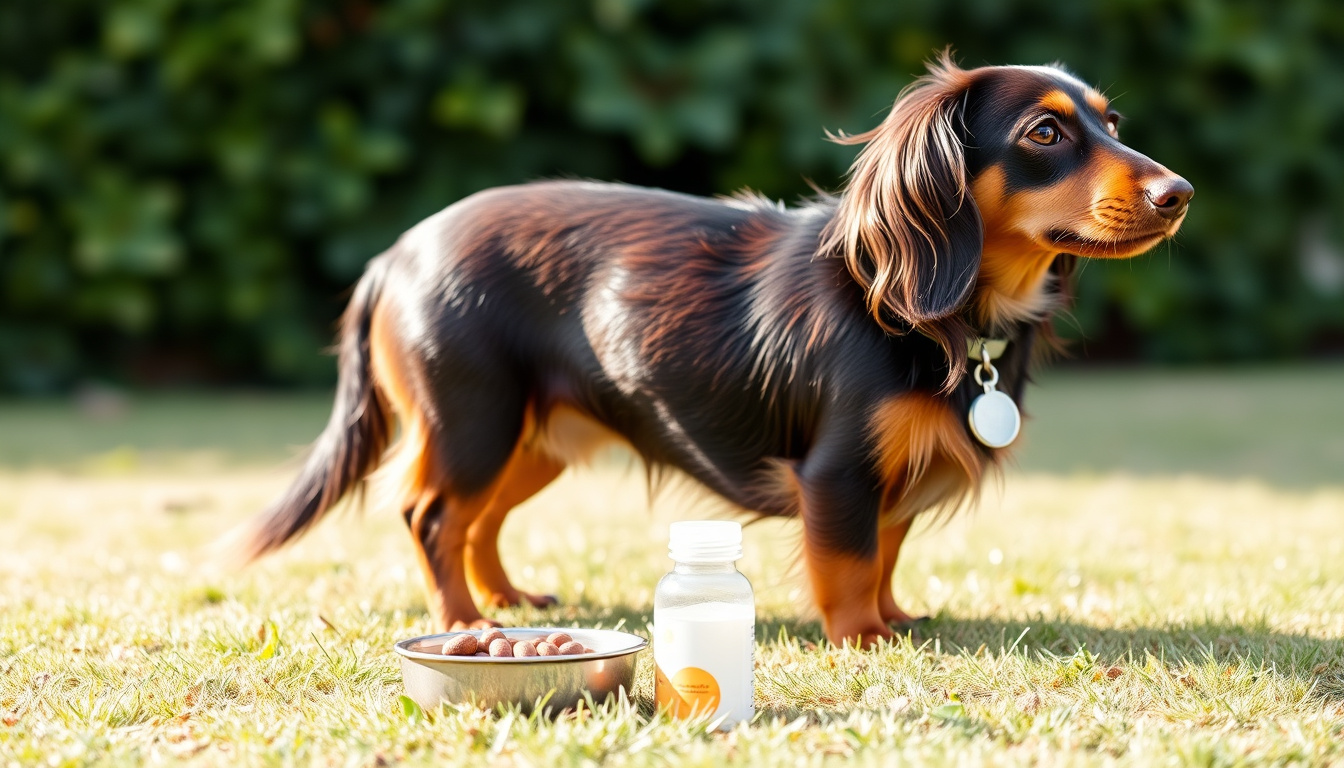
There’s a reason the Miniature Dachshund has been a beloved companion for centuries — this small dog packs a huge personality. This guide walks you through what to expect and how to prepare.
Weight: 3–5 kg (6.6–11 lb) ·
Height: 12–15 cm (4.7–5.9 in) ·
Lifespan: 12–16 years ·
Coat Types: Smooth, Longhair, Wirehaired ·
Common Colours: Red, Black & Tan, Chocolate & Tan, Cream
Quick snapshot
- Weighs 3–5 kg, stands 12–15 cm (Irish Kennel Club (breed registry))
- Predisposed to IVDD due to long spine and short legs (British Veterinary Association (veterinary body))
- Average lifespan 12–16 years (ASPCA Pet Insurance (pet health provider))
- Originally bred in Germany to hunt badgers (PetMD (veterinary reference))
- Exact origin date of the miniature variation is not well documented
- Precise percentage of Miniature Dachshunds that develop IVDD is debated among sources
- Effectiveness of different training methods for barking varies by individual dog
- Optimal grooming frequency for wirehaired coats is not standardized
- First vaccinations given at ~8 weeks, then boosters every 4 weeks (JOii Pet Care (veterinary guidance))
- Puppies must be microchipped by 8 weeks old (JOii Pet Care (veterinary guidance))
- Find a reputable breeder via the Irish Kennel Club or adopt from Dogs Trust Ireland (rescue charity)
- Prepare home: remove opportunities for jumping off furniture, buy ramp for beds (JOii Pet Care (veterinary guidance))
- Choose a high-quality small-breed dog food and measure portions to avoid obesity (ASPCA Pet Insurance (pet health provider))
Critical: Avoiding jumps and stairs is not optional — it’s a lifelong commitment to protect your dachshund’s spine.
Nine key facts at a glance — this table sums up the essential specs every potential owner should know.
| Attribute | Value |
|---|---|
| Breed Group | Hound |
| Size | Miniature |
| Weight | 3–5 kg |
| Height | 12–15 cm at withers |
| Lifespan | 12–16 years |
| Coat Types | Smooth, Longhaired, Wirehaired |
| Colours | Red, Black & Tan, Chocolate & Tan, Cream, Dapple |
| Origin | Germany (bred to hunt badgers) |
| Temperament | Affectionate, Stubborn, Curious, Alert |
Are mini Dachshunds good pets?
Temperament and personality
- Affectionate and loyal to family — the Kennel Club (UK breed authority) describes the Dachshund as “clever, lively and courageous to the point of rashness.”
- Stubborn but trainable with patience; positive reinforcement works best (ASPCA Pet Insurance)
- Courageous — may challenge larger dogs, so early socialisation is crucial
Suitability for families and singles
- Generally good with older children but may be wary with toddlers
- Excellent for singles or couples who can dedicate time and attention
- Can adapt to apartment living if exercised properly
Compatibility with other pets
- Early socialisation reduces wariness with other dogs (Mutz Nutz (Irish pet retailer))
- Prey drive may be high — be cautious with small pets like hamsters or rabbits
The pattern: a loving, loyal dog that demands respect for its independent streak. For families with toddlers, supervision is non-negotiable; for singles, the trade-off is a constant companion with a stubborn side.
What are the cons of a mini dachshund?
Back problems (IVDD)
- Intervertebral disc disease (IVDD) is a serious health risk — avoid jumping and stairs (British Veterinary Association (veterinary body))
- The BVA warns all six Dachshund varieties, including miniatures, are at risk of spinal problems that may require surgery
- Veterinary guidance from JOii Pet Care stresses preventing jumps on and off furniture
Stubbornness and training challenges
- ASPCA Pet Insurance notes they can be difficult to housetrain due to a stubborn streak
- Consistent positive reinforcement — treats, praise, play — is recommended
- Patience is essential; punishment can backfire
Barking tendency
- Barking is instinctual — they were bred to bark when tracking (PetMD (veterinary reference))
- Boredom and lack of exercise increase barking
- Positive reinforcement and mental stimulation can reduce nuisance barking
Potential for separation anxiety
- They often dislike being left alone for long periods (Mutz Nutz)
- Provide puzzle toys or a companion if you work full-time outside the home
The catch: many of these cons are manageable with the right setup, but ignoring them — especially IVDD risks — can lead to expensive surgery and heartache.
Do mini Dachshunds bark a lot?
Reasons for barking
- Bred to bark when hunting badgers — it’s in their DNA (Kennel Club)
- Alert barking at strangers or unusual sounds is common
- Separation anxiety can trigger prolonged barking
Training to reduce excessive barking
- Use positive reinforcement to reward quiet behaviour (ASPCA Pet Insurance)
- Increase mental stimulation — puzzle toys, sniffing games, chew toys
- Avoid shouting; it can be mistaken as joining in
Comparison with other small breeds
- Comparable to Chihuahuas and Jack Russell Terriers in vocalisation
- Less yappy than a Pomeranian but more persistent than a Cavalier King Charles Spaniel
What this means: barking is a feature of the breed, not a flaw. Training and enrichment can keep it at a neighbour-friendly level, but it will never be a silent dog.
Should you walk a Dachshund every day?
Recommended daily exercise
- Daily walks are important — 20–30 minutes is sufficient (ASPCA Pet Insurance)
- Dogs Trust Ireland advises low-impact exercise to protect the spine
- Mental exercise (puzzle toys) complements physical walks
Walk duration and intensity
- Split into two 15-minute walks if needed
- Avoid high-impact activities like running on hard pavement, agility jumps, or stair climbing
- Let the dog set the pace — sniffing is part of the experience
Protecting the spine during exercise
- Use a harness instead of a collar to avoid neck strain (JOii Pet Care)
- Provide ramps for sofas and beds — never let them jump down
- Watch for signs of pain: reluctance to move, yelping, or hunched back
Why this matters: proper exercise is the single best way to prevent obesity, which dramatically worsens IVDD. Skip the runs, keep the walks — and protect that long back.
What is the best dog food for a Dachshund?
Nutritional requirements for Dachshunds
- A high-quality, balanced diet with moderate protein and fat is ideal (PetMD (veterinary reference))
- Look for small-breed formulas with controlled calories
- Portion control is critical — obesity worsens back problems
Foods to avoid (including Weetabix)
- Weetabix is not recommended — high sugar, low nutritional value for dogs
- Avoid chocolate, grapes, raisins, onions, garlic, xylitol
- Table scraps and high-fat treats contribute to pancreatitis
Recommended commercial diets and portion control
- Brands like Royal Canin Dachshund, Hill’s Science Diet Small Breed, or Purina Pro Plan Small Breed
- Feed measured meals — typically ¼ to ⅓ cup twice a day for a 4 kg mini (ASPCA Pet Insurance)
- Limit treats to 10% of daily calories
Portion control tip: Measuring every meal prevents obesity, which is a direct risk factor for IVDD and other health issues.
The trade-off: a little extra weight feels harmless but puts enormous strain on the spine. Measuring every portion is not obsessive — it’s preventive medicine.
Eight specs in one table: here’s how the Miniature Dachshund’s dimensions and care demands line up.
| Parameter | Specification |
|---|---|
| Adult weight | 3–5 kg |
| Height at withers | 12–15 cm |
| Daily exercise | 20–30 minutes walk |
| Coat grooming – Smooth | Weekly wipe, minimal shedding |
| Coat grooming – Longhair | Brush 2–3×/week, occasional trimming |
| Coat grooming – Wirehair | Hand-strip 2×/year, brush weekly |
| Feeding (adult, 4 kg) | ~100–130 g high-quality kibble/day |
| IVDD prevention | No jumping, use ramps, harness only |
Upsides
- Loyal, affectionate companion with a big personality
- Compact size suits apartments and small homes
- Long lifespan (12–16 years) compared to many small breeds
- Minimal shedding in smooth-coated variety
- Easily portable — great travel partner
Downsides
- High risk of IVDD — requires constant back-safety measures
- Stubborn housetraining can frustrate first-time owners
- Barking can be excessive if not properly managed
- Separation anxiety — not suitable for owners who are away long hours
- Prone to obesity, which worsens health problems
Confirmed facts vs. what’s unclear
Confirmed facts
- Miniature Dachshunds weigh 3–5 kg and stand 12–15 cm tall (Irish Kennel Club)
- They are predisposed to IVDD due to their long spine and short legs (British Veterinary Association)
- Average lifespan is 12–16 years (ASPCA Pet Insurance)
- They were originally bred in Germany to hunt badgers (PetMD)
What’s unclear
- Exact origin date of the miniature variation is not well documented
- Precise percentage of Miniature Dachshunds that develop IVDD is debated among sources
- Effectiveness of different training methods for barking varies by individual dog
- Optimal grooming frequency for wirehaired coats is not standardized
The pattern: the breed’s risks are well-documented, but the precise numbers and training outcomes remain areas of individual variation.
What the experts say
“Dachshunds have a genetic predisposition to intervertebral disc disease, and miniatures are not exempt.”
— PetMD (veterinary health guide)
“The Dachshund is clever, lively and courageous to the point of rashness.”
— Royal Kennel Club (UK breed authority)
“A Dachshund needs about 30 minutes of exercise a day, but it must be low-impact to protect the spine.”
— Dogs Trust Ireland (rescue charity)
The expert consensus reinforces the need for careful spine protection and realistic expectations about temperament.
For a potential owner in Ireland, the decision comes down to whether your lifestyle can accommodate a clever, stubborn, back-health-conscious dog that will live well over a decade. The trade-off is clear: prepare your home for zero jumping, commit to daily measured walks and portions, and you’ll gain a devoted friend. Rush into ownership without those adjustments — and you risk heartbreak and vet bills.
horncreekhemp.com, facebook.com, gallant.com, rover.com, facebook.com
Frequently asked questions
Do Miniature Dachshunds shed?
Smooth-coated Miniature Dachshunds shed minimally and are considered a low-shedding breed. Longhaired varieties shed more, especially during seasonal changes. Regular brushing helps control loose hair.
Are Miniature Dachshunds good with children?
They can be good with older, respectful children but may be snappy with toddlers due to their sensitive backs and independent nature. Supervision is always recommended.
Can Miniature Dachshunds be left alone?
They are prone to separation anxiety and do not tolerate long periods alone well. Maximum four hours per day is a common guideline; consider a dog walker or doggy day care if you work full-time.
How much does a Miniature Dachshund cost in Ireland?
Expect to pay between €800 and €1,500 from reputable breeders. Rescue adoption fees are typically €150–€300 and include vaccinations, microchipping, and neutering.
Do Miniature Dachshunds need a lot of grooming?
Smooth coats need only weekly wiping; longhaired coats need brushing 2–3 times per week; wirehaired coats require professional hand-stripping twice a year. Overall moderate grooming needs.
Are Miniature Dachshunds easy to train?
They are intelligent but stubborn. Housetraining can be challenging. Positive reinforcement with high-value treats works best. Patience and consistency are essential.
What common health problems do Miniature Dachshunds have?
The most serious is intervertebral disc disease (IVDD). Other issues include obesity, patellar luxation, dental disease, and ear infections. Regular vet check-ups are vital.
The FAQs highlight that while the breed has challenges, they are manageable with preparation.
For more reading, you might find Waitrose Food to Order – Delivery Guide and Costs and All Her Fault Episodes – Complete Guide and Summaries helpful for other lifestyle topics.
Related stories





Alex Nguyen is Editor-in-Chief at BuzzLayer, overseeing editorial standards, publication decisions and corrections.