If you’ve ever wondered why a sore throat sometimes comes with tender lumps on the side of your neck, you’re feeling your lymph nodes at work. These small, bean-shaped structures are scattered throughout your body and act as biological checkpoints for your immune system. Learning where they are and what changes to watch for could help you catch infections early—or flag something that deserves a doctor’s attention.
Main lymph node clusters: head/neck, armpits, chest, abdomen, groin · Lymph nodes per body: ~600 · Primary function: filter lymph fluid, fight infection · Common self-check sites: neck, armpits, groin
Quick snapshot
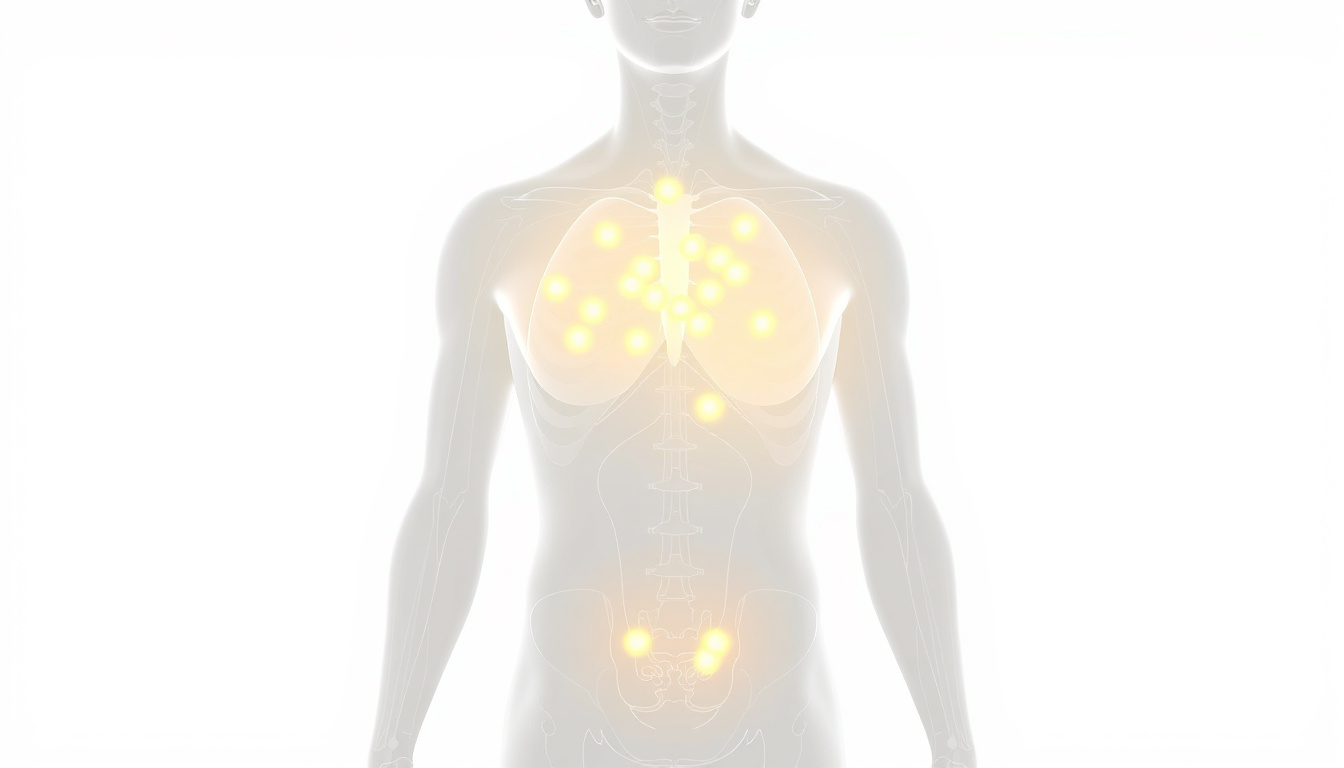
- Lymph nodes cluster at the sides of jaws, neck, upper chest, under arms, and groin on either side of the pubic bone (Cleveland Clinic)
- Cleveland Clinic notes lymph nodes are most numerous in the axilla, neck, chest beside the lungs, and groin, with none present in the brain or spinal cord (Cleveland Clinic)
- Self-check recommended once a month in head, neck, armpits, and groin to detect skin cancer spread early (Bristol Dermatology Center)
- Exact lymph node count varies by person — estimates range from 500 to 700
- Cancer diagnosis requires professional medical evaluation; self-checks cannot confirm malignancy
- Whether minor lymph node enlargement always signals infection versus other subtle causes remains individualized
- Swelling from infection typically resolves within 2 weeks (American Cancer Society)
- Nodes persisting beyond 2–4 weeks warrant medical evaluation (American Cancer Society)
- PET scans assess treatment response after 1–2 chemotherapy courses (American Cancer Society)
- Persistent or suspicious swelling triggers imaging (CT, PET, MRI) and possible biopsy (American Cancer Society)
- Biopsy remains the only definitive confirmation for non-Hodgkin lymphoma (American Cancer Society)
- Early detection through self-checks improves outcomes for skin cancers and lymphoma (American Cancer Society)
A reference table consolidates the core attributes you need when identifying lymph nodes during self-exams or medical consultations.
| Attribute | Detail |
|---|---|
| Body-wide count | Approximately 600 |
| Top concentrations | Armpits, neck, chest, groin |
| Normal feel | Pea-sized, soft, movable |
| Swelling trigger | Infection or illness |
| Cancer indicator | Hard, fixed, painless |
What are Lymph Nodes?
Lymph nodes are small, bean-shaped glands that are part of your lymphatic system—a network that runs parallel to your bloodstream. They filter lymph fluid as it moves through your body, trapping bacteria, viruses, and abnormal cells before they can spread further.
Function of lymph nodes
Each node contains immune cells called lymphocytes that identify and destroy foreign invaders. When you’re fighting an infection, these nodes often enlarge as they work overtime—a sign your body is actively responding. According to the Cleveland Clinic, lymph nodes are found along lymphatic vessels like beads on a string, distributed throughout the body.
Role in immune system
Think of lymph nodes as security checkpoints. When fluid drains from tissues, it passes through these glands where harmful substances get filtered out. If cancer cells or pathogens slip past, nodes downstream can become affected—which is why doctors check them during physical exams.
Lymph nodes are your body’s first-line biological filters. When they’re working normally, you won’t notice them. When they swell, that’s a signal your immune system is responding to something nearby.
Confirmed
- Lymph nodes in 5 main clusters throughout body
- Self-check safe for common surface sites
- Cancer can spread to nodes from elsewhere or start in nodes as lymphoma
- Most nodes too small or deep to palpate without imaging
Unclear / Under Study
- Exact count varies between individuals
- Whether every minor enlargement signals infection or other subtle triggers
- Precise progression timelines for lymphoma subtypes remain individualized
The implication: understanding lymph node basics helps you distinguish normal variation from changes worth discussing with a doctor.
Where Are Your Lymph Nodes Located?
Your body houses roughly 600 lymph nodes, but they’re not scattered randomly. They cluster in specific regions where fluid drainage demands the most filtering power. The Cleveland Clinic identifies the most concentrated areas as the axilla (armpits), neck, chest, and groin.
Lymph nodes in neck and head
The cervical lymph nodes run along the sides of your neck, from behind your ears down to your collarbone. You can feel several groups: one near your jaw, another along the sternocleidomastoid muscle (the large muscle on each side when you turn your head), and a cluster above your collarbone near the base of your throat. The Plymouth Hospitals NHS provides a numbered guide for self-checks, recommending a gentle circular motion from the front of the ear down to above the collarbone on both sides.
Armpit and chest lymph nodes
The axillary lymph nodes—the most numerous group in the body—sit in your armpits and drain lymph from your arms, chest wall, and breast tissue. This is why breast cancer staging often involves checking these nodes. Nearby, the infraclavicular nodes sit just below your collarbone, while mediastinal nodes cluster around your lungs and windpipe in the chest cavity.
Groin and abdomen nodes
Inguinal lymph nodes in your groin drain your lower body—legs, genitals, and lower abdomen. These are among the easier nodes to feel, sitting near the crease where your thigh meets your torso. Abdominal nodes surround your intestines and other organs, but they’re too deep to detect without imaging.
Knowing your lymph node locations helps you understand which areas to check during self-exams and which regions doctors examine during routine physicals. Not all nodes are reachable, but surface nodes can tell you a lot about what’s happening deeper in your body.
The pattern: lymph node distribution reflects where the body needs most immune surveillance—areas exposed to external contact and fluid exchange.
A detailed breakdown shows how lymph node groups connect to specific body regions and functions.
| Region | Node Group | Drains |
|---|---|---|
| Neck | Cervical (anterior, posterior, occipital) | Head, throat, neck |
| Armpit | Axillary (central, lateral, anterior, posterior) | Arms, chest, breast |
| Chest | Infraclavicular, mediastinal | Lungs, upper abdomen |
| Groin | Inguinal (horizontal, vertical) | Legs, genitals, lower abdomen |
| Abdomen | Para-aortic, mesenteric | Intestines, organs |
How to Check Your Lymph Nodes
Regular self-checks take just a few minutes and help you learn what’s normal for your body. The Plymouth Hospitals NHS recommends performing these checks monthly, using the pads of your fingers with gentle pressure in a slow, circular motion.
Self-exam steps for neck
- Tilt your head slightly to one side to relax the muscle on that side
- Place your fingers just below your earlobe, along the muscle that runs down your neck
- Using light to moderate pressure, sweep your fingers downward toward your collarbone
- Feel for pea-sized lumps under the skin—move both sides compared
- Check the area behind your ear and under your jaw as well
Checking armpits and groin
- For armpits: raise one arm and place your fingers high into the opposite armpit, pressing against the chest wall
- Move your fingers in small circles, covering the center, front border, back border, and upper inner arm
- For groin: with your leg relaxed, press gently along the crease where your thigh meets your torso and down the inner thigh
- Remove clothing that might obstruct access to these areas
What to feel for
Normal lymph nodes are typically pea-sized, soft, and movable beneath the skin. According to the Bristol Dermatology Center, cancer-related lymph nodes usually feel like a pea, olive, or smooth pebble and are typically painless. In contrast, swollen nodes from infection tend to be tender and may feel softer.
The American Cancer Society emphasizes that a biopsy is the only definitive way to confirm non-Hodgkin lymphoma. Self-checks help you notice changes worth discussing with your doctor, but they cannot replace professional evaluation.
The implication: monthly self-checks build a personal baseline, making it easier to spot when something genuinely changes.
Swollen Lymph Nodes – Symptoms & Causes
Swollen lymph nodes (lymphadenopathy) happen when nodes enlarge due to increased immune activity. This is most commonly triggered by infection, but other causes include autoimmune conditions, medications, and malignancies.
Common causes of swelling
- Infection: The most frequent cause. Sore throats, colds, ear infections, and skin wounds commonly produce tender, swollen nodes that resolve as you recover
- Cancer: Both lymphomas (cancers starting in nodes) and metastatic cancers (spreading from elsewhere) can cause enlargement
- Autoimmune diseases: Conditions like lupus or rheumatoid arthritis can produce persistent lymph node swelling
- Medications: Certain anticonvulsants and anti-inflammatory drugs list lymphadenopathy as a side effect
Pain and tenderness signs
Tender, painful nodes usually indicate infection or inflammation. According to the Bristol Dermatology Center, infection-related swelling is often temporary and painful, while cancer-related nodes tend to be painless. HOA Fredericksburg notes that lymphoma symptoms include painless swelling in the neck, armpits, or groin along with unexplained weight loss, fevers, and night sweats.
Nodes that are hard, fixed in place, or painless warrant immediate medical attention—especially when accompanied by fever, night sweats, or unexplained weight loss.
The implication: the nature of the swelling—painful versus painless, temporary versus persistent—narrows the list of likely causes and guides urgency of evaluation.
When to Worry: Cancer Signs in Lymph Nodes
Distinguishing benign swelling from something more serious isn’t always straightforward, but certain patterns should prompt you to schedule a doctor’s visit.
Red flags for cancer
According to Virginia Cancer Specialists, cancer can spread to lymph nodes from elsewhere in the body or start in lymph nodes as lymphoma. The presence of cancer in lymph nodes does not always mean lymphoma—it may indicate metastasis from a primary cancer like breast cancer. Cancer Research UK confirms that a biopsy examined under a microscope provides the definitive diagnosis.
- Nodes larger than 1 centimeter (about a half-inch) that persist beyond 4 weeks
- Hard, rubbery, or fixed texture that doesn’t move when you press
- Painless swelling with no accompanying infection symptoms
- Rapid growth or sudden appearance of multiple enlarged nodes
- Systemic symptoms: unexplained weight loss, fever, drenching night sweats, fatigue
Cancer symptoms vs infection
The key difference lies in persistence and accompanying symptoms. NYU Langone Health explains that non-Hodgkin lymphoma is classified as indolent (slow-growing), intermediate, or highly aggressive. An infection-related swollen node typically shrinks within two weeks once the illness resolves, while cancer-related nodes continue to grow or remain enlarged. HOA Fredericksburg adds that Reed-Sternberg cells in a biopsy confirm Hodgkin lymphoma specifically.
Self-checks empower you to notice changes early, but they also carry the risk of unnecessary anxiety. Learning to distinguish normal variation from genuine concerns helps you act promptly when needed without over-reacting to benign findings.
The implication: persistent, painless, hard nodes with systemic symptoms warrant prompt professional evaluation—early detection significantly improves outcomes for both lymphoma and metastatic cancers.
How Cancer Is Diagnosed in Lymph Nodes
When a self-check or doctor’s exam raises concern, several diagnostic steps follow to determine whether cancer is present and, if so, what type.
Imaging tests
- Ultrasound: Uses sound waves to create images; useful for distinguishing fluid-filled cysts from solid masses
- CT scan: According to the American Cancer Society, CT is useful for imaging the abdomen, pelvis, chest, head, and neck, and is often combined with PET
- PET scan: Highlights metabolically active cells, helping distinguish active cancer from scar tissue. American Cancer Society notes PET scans check if an enlarged node contains lymphoma and assess response after 1–2 chemotherapy courses
- MRI: Provides detailed soft tissue images, particularly useful for evaluating nodes near the spine or brain
Biopsy procedures
According to the American Cancer Society, a biopsy is the only way to confirm a person has non-Hodgkin lymphoma. The procedure typically removes one or two nearby nodes for examination. Virginia Cancer Specialists confirms that lymph node biopsy involves removing nodes to check for cancer evidence. The sample goes to a pathologist who looks for abnormal cells under a microscope.
“A biopsy is the only way to confirm a person has NHL.”
— American Cancer Society, Medical Experts
“If cancer is in the lymph nodes it does not necessarily mean you have lymph node cancer—or lymphoma.”
— Virginia Cancer Specialists, Oncology Team
Staging and next steps
Once cancer is confirmed, Cancer Research UK explains that PET-CT scans show the lymphoma’s stage and treatment response, distinguishing active cancer from scar tissue. Treatment options vary by lymphoma type (indolent, intermediate, or aggressive), stage, and the patient’s overall health.
Related reading: lymph node locations · where lymph nodes are found
rockymountaincancercenters.com, youtube.com, cuh.nhs.uk, pmc.ncbi.nlm.nih.gov
Frequently asked questions
How long do swollen lymph nodes last?
Swollen lymph nodes from infection typically return to normal size within two weeks once the underlying illness resolves. Nodes that persist beyond four weeks should be evaluated by a healthcare provider.
Are all swollen lymph nodes cancerous?
No. The vast majority of swollen lymph nodes result from infections, inflammation, or other benign causes. Cancer-related nodes tend to be painless, hard, fixed, and may grow rapidly—but only a doctor can make a definitive determination.
What size lymph node is concerning?
Nodes larger than 1 centimeter (about half an inch) that persist beyond four weeks are generally considered abnormal. Your doctor may use imaging to assess nodes that are too deep to feel during a physical exam.
Do lymph nodes hurt when cancerous?
Cancerous lymph nodes are usually painless, which is why they can grow undetected. Infection-related swelling tends to be tender or painful. However, some lymphomas can cause discomfort, so any persistent change deserves medical attention.
Can stress cause swollen lymph nodes?
Stress alone doesn’t typically cause lymph node swelling, but chronic stress can weaken your immune system, making you more susceptible to infections that do cause swelling.
What infections cause lymph node swelling?
Common infections include upper respiratory infections, ear infections, throat infections, skin infections, mononucleosis, tuberculosis, and sexually transmitted infections. Your doctor can help identify the specific cause based on location and accompanying symptoms.
How does breast cancer spread to lymph nodes?
Breast cancer often spreads first to the axillary lymph nodes in the armpit because lymph from breast tissue drains through these nodes. This is why axillary node status is a key factor in staging and treatment planning for breast cancer.
What tests confirm lymph node cancer?
Imaging tests (ultrasound, CT, PET, MRI) help identify enlarged nodes, but a biopsy—where tissue is removed and examined under a microscope—is the only definitive test. Cancer Research UK notes that PET-CT scans further help stage and monitor treatment response.
Related stories





David Kim covers consumer technology, apps and platform updates for BuzzLayer.