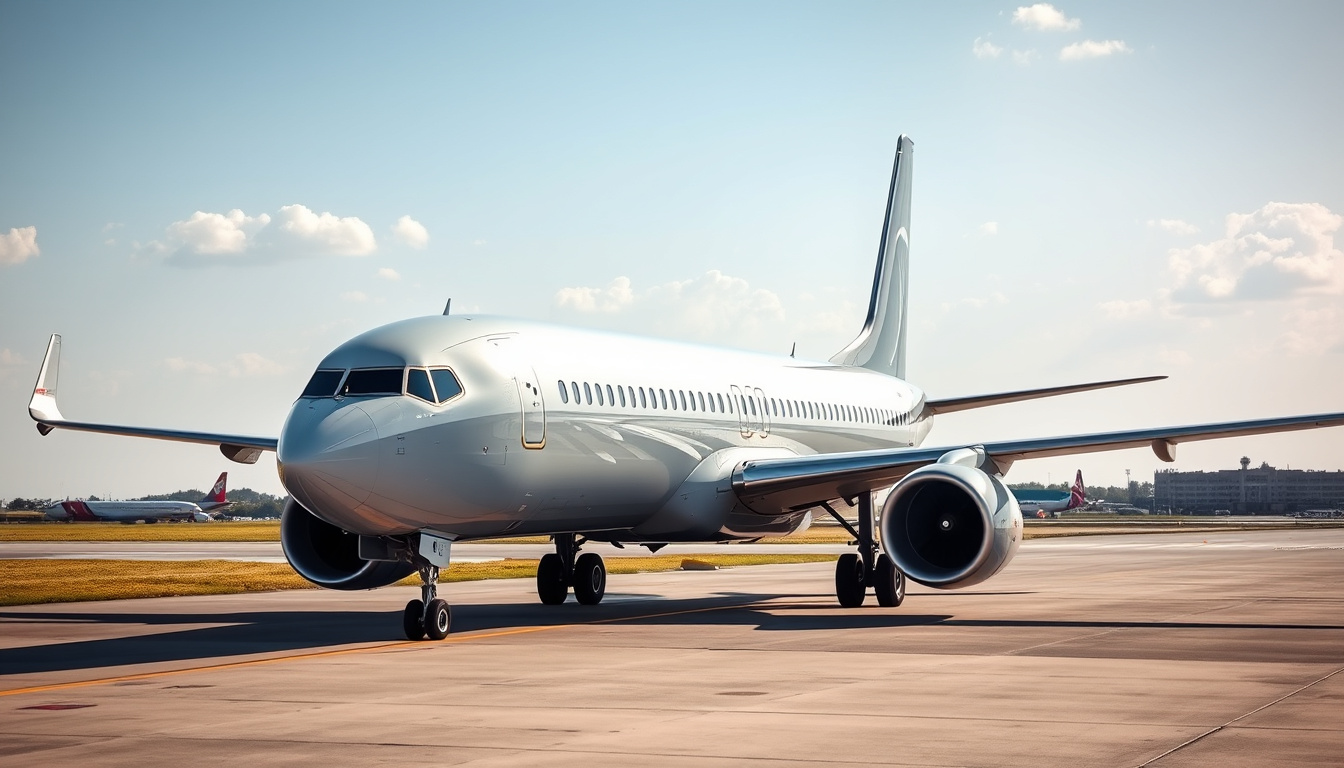
If you’ve ever scanned a seat map before booking a flight and wondered whether the aircraft type matters, you’re not alone. The Boeing 737-800 shows up on more routes than almost any other plane—and whether you’re drawn to the window or aisle often comes down to knowing which rows genuinely improve the journey. This guide cuts through the noise with a close look at its safety record across nearly three decades of commercial service, how seating stacks up across airlines like Delta, American, and KLM, and which seats actually make a difference on board.
Manufacturer: Boeing · Family: 737 Next Generation · Replaces: 737-400 · Stretched from: 737-700 · Operators include: KLM, United
Quick snapshot
- 737-800 is a 737 Next Generation variant, not a MAX (Business Insider)
- 17 fatal accidents recorded over nearly 30 years (Business Insider)
- 1,100 total fatalities across those accidents (Business Insider)
- No US airline has experienced a fatal 737-800 crash (Business Insider)
- Precise current production numbers from Boeing
- Whether the China Eastern crash was intentional remains under investigation
- Total accident count may shift as investigations conclude
- Entered service in 1998 with launch customer (FLYING Magazine)
- First fatal crash occurred in 2006 with Gol Airlines (Business Insider)
- Recent Jeju Air crash in December 2024 (FLYING Magazine)
- 737-800 production winding down as Boeing shifts focus to MAX and new 737-10
- Existing fleet will continue operating for years, especially with low-cost carriers
- Safety investigations ongoing for recent incidents
| Attribute | Detail |
|---|---|
| Type | Narrow-body airliner |
| Status | In service |
| Operators | KLM, United, Turkish Airlines, Delta, American |
| Service entry | 1998 |
| Max passengers | Up to 189 (varies by airline) |
| Resources | Boeing.com, Wikipedia |
Is it safe to fly on a Boeing 737-800?
The 737-800 belongs to the 737 Next Generation family—a generation that predates the MAX series and does not carry the Maneuvering Characteristics Augmentation System (MCAS) software linked to the 737 MAX crashes in 2018 and 2019 (Business Insider). That distinction matters when evaluating the aircraft type for your next booking.
Since entering service in 1998, the 737-800 has recorded 17 fatal accidents resulting in approximately 1,100 fatalities across nearly 30 years of commercial operations (Business Insider). Commercial airlines operated nearly 5.9 million flights on this type in 2024 alone, with more than 6.2 million scheduled through November 2025 (Business Insider). That volume puts the fatal accident rate in perspective: when you factor in flight frequency, the 737-800 sits among the safer commercial aircraft types in active service.
“The 737-800 is a great airplane, the workhorse of the world… It is the most reliable aircraft out there.”
— Geoffrey Thomas, Airline News editor and aviation expert (Business Insider)
The accident record reveals patterns worth understanding. Pilot error contributed to most fatal 737-800 accidents, including incidents involving Kenya Airways in 2007, Air India Express in 2010 and 2020, and Flydubai in 2016 (Business Insider). External factors also drove major incidents: Ukraine International Airlines lost a 737-800 when it was shot down by Iran in 2020 (176 fatalities), and the China Eastern Airlines crash in 2022 (132 fatalities) remains under investigation with reports suggesting possible intentional action (Business Insider). Notably, no US airline has had a fatal 737-800 crash (Business Insider).
“The 737 Next Generation family is a proven, mature platform. SKYbrary’s operational data confirms extensive safety documentation across millions of flight cycles.”
— Aviation safety database profile for Boeing 737-800 (SKYbrary)
When researching a specific 737-800 flight, check whether the airline participates in the FAA’s Safety Management System programs—US carriers and major international operators typically maintain rigorous maintenance cycles that go beyond minimum regulatory requirements.
Are 737-800 safe now?
The 737-800 continues to fly safely across nearly 200 airlines with about 4,400 aircraft still in service globally (Business Insider). Aviation regulators including the FAA have issued directives over the years addressing specific components—as happened after a China Airlines incident in 2007 involving slat inspections—keeping the fleet updated to current safety standards (Business Insider). The SKYbrary database, which tracks aircraft performance and safety profiles, classifies the 737-800 as a well-documented type with extensive operational history.
The implication: for most passengers, the 737-800 is statistically as safe as— or safer than—many alternatives when you account for the sheer volume of flights it operates.
Have any 737-800 crashed?
Yes, 17 fatal accidents are recorded for the 737-800 as of 2024 (Business Insider). The first occurred in 2006 when a Gol Airlines aircraft collided mid-air with a private plane over Brazil, killing 154 people (Business Insider). A 2007 China Airlines flight (Flight 120) caught fire after landing in Okinawa due to a mechanical issue, though all aboard survived— investigators found loose hardware in an engine pylon struck the right wing, severing fuel lines (Wikipedia). The Wikipedia accident list documents incidents from minor to fatal, providing a comprehensive database for those who want to dig deeper.
What is the seating on a Boeing 737-800?
Seating on the 737-800 varies significantly by airline, cabin configuration, and route. No single layout applies—the same airframe can seat anywhere from 160 to 189 passengers depending on how an airline configs its interior.
| Airline | Configuration | Total Seats |
|---|---|---|
| Delta Air Lines | 16 First / 36 Comfort+ / 108 Main Cabin | 160 |
| American Airlines | 16 First / 156 Main Cabin (no extra premium) | 172 |
| Qantas | 12 Business / 156 Economy or 12 / 150 | 162–168 |
| KLM | Business (blocked middle) / Economy | Up to 186 |
Delta’s 737-800 features 16 First Class seats at 20.9 inches wide with 38–39 inches of pitch, while Comfort+ and Main Cabin seats measure 17.3 inches wide with pitch ranging from 31 to 34 inches (Delta Air Lines). American Airlines configures its 737-800 (the 738K variant) with 16 First seats and 156 Main Cabin seats for a total of 172 passengers with no dedicated extra-legroom cabin (AeroLOPA). Qantas operates 737-800s with 12 Business Class seats plus either 156 or 150 Economy seats in a 3-3 layout, with 30-inch pitch and 17.2-inch width in economy (Qantas). KLM fits up to 186 passengers in a 3-3 economy arrangement with approximately 76-centimeter pitch, while their Business Class uses a 3-3 layout with the middle seat blocked for extra space at 84-centimeter pitch (KLM).
The physical dimensions of the aircraft itself remain constant: 35.8-meter wingspan, 39.5-meter length, and 12.5-meter height (JAL). The winglets visible on modern 737-800s improve fuel efficiency by reducing drag, a common upgrade applied to many in-service aircraft.
If seat count matters to you, American squeezes in more passengers per flight than Delta—but Delta offers a genuine extra-legroom tier (Comfort+) that American lacks on this type.
Boeing 737-800 seating capacity
The Boeing 737-800 has a maximum certified capacity of up to 189 passengers in a high-density all-economy layout (Business Insider). Most commercial configurations land between 160 and 186 seats. Singapore Airlines operates 737-800 NG aircraft with 12 Business Class seats plus 150 Economy seats (Singapore Airlines), while Japan Airlines offers configurations between 144 and 165 seats including a Class J premium section (JAL).
The catch: higher seat counts mean narrower seats and less pitch per passenger. An airline choosing 186 seats will pack more passengers aboard than one choosing 160—and that trade-off directly affects legroom and comfort.
Seat map examples
Seat maps for the 737-800 typically show a 3-3 configuration in economy across all airlines. Delta includes exit row seats (rows 12–13) with additional legroom in Comfort+, while American designates rows 11 and 12 as Main Cabin Extra with extra pitch available without a separate fare class (Delta Air Lines). KLM marks Business Class with a blocked middle seat that converts to extra space, and their seat maps clearly show which rows are near emergency exits for added legroom (KLM).
You can find airline-specific seat maps on sites like AeroLOPA or each carrier’s own website before booking.
Where is the best seat to be in on a Boeing 737-800?
The best seat on a 737-800 depends entirely on the airline and cabin you’re booking. Exit rows consistently offer the most legroom when available, but the specific row numbers shift between carriers.
| Airline | Best Legroom Option | Rows with Extra Space |
|---|---|---|
| Delta | Comfort+ (dedicated cabin) | Rows 12–13 (Comfort+) |
| American | Main Cabin Extra | Rows 11–12 (paid upgrade) |
| Qantas | Business Class | Rows 1–2 (12 total) |
| KLM | Business (blocked middle) | Row 1–3 typically |
Delta’s Comfort+ section on the 737-800 offers a meaningful upgrade from standard Main Cabin seating: these rows deliver more pitch without requiring a full First Class fare (Delta Air Lines). American Airlines designates certain rows as Main Cabin Extra for a fee—an option worth considering if you need extra knee room on a longer flight (AeroLOPA).
On American’s 737-800, rows near the rear lavatories (typically rows 23–26) often see increased foot traffic and lingering odors. If you book Main Cabin Extra, aim for rows closer to the front to avoid proximity to the lav area.
Seat map guide
When reading a 737-800 seat map, look for these patterns regardless of airline:
- Rows 11–13 often feature exit-row legroom or premium cabin sections
- Last three rows typically have limited recline due to aft lavatories
- Middle seats (A and F in window-aisle pairs) are statistically less preferred
- Front rows nearest the door offer faster deplaning but may experience more service cart traffic
The pattern: exit rows plus forward economy rows tend to offer the best trade-off between space and convenience. Avoid the last five rows unless you specifically prefer a window or aisle without concern for recline.
Avoid certain rows
Beyond the rear lavatory-adjacent rows, most seat map warnings for the 737-800 center on seat width rather than specific row numbers. The 3-3 layout means no seat is more than one person away from the aisle—a structural advantage over wider aircraft where middle seats can feel isolated. However, seats directly in front of exit doors (when the exit row is behind you) may have slightly less floor space for personal items during boarding.
For families: the middle section in a 3-3 layout works well for couples traveling with a child, since one adult can sit in the aisle seat and pass items to the child in the middle without climbing over anyone.
Is the 737-800 an old plane?
The 737-800 entered service in 1998, making it nearly three decades old in its current production form (FLYING Magazine). Boeing officially ended 737-800 production in 2020 as the MAX became the focus, though existing aircraft continue flying with operators worldwide.
The 737-800 replaced the older 737-400 in Boeing’s lineup and itself was stretched from the shorter 737-700 (FLYING Magazine). It sits in the middle of the 737 NG family, which itself has been superseded by the 737 MAX generation. Despite its age, the 737-800’s design, systems, and maintenance protocols have been continuously updated through FAA airworthiness directives and operator-led programs.
Production history
Boeing launched the 737 Next Generation program in the early 1990s, with the 737-600, -700, -800, and -900 variants debuting between 1995 and 2000. The -800 became the most popular NG variant, with nearly 4,400 still in service across nearly 200 airlines globally (Business Insider). All four major US carriers—American, Delta, Southwest, and United—have operated or continue operating 737-800s (FLYING Magazine).
Why this matters: production may have ended, but spares, maintenance expertise, and operational data for the 737-800 are abundant. An older platform with deep institutional knowledge often outperforms a newer model still working out early-life bugs.
Is the Boeing 737-800 a good plane?
By most operational metrics, the 737-800 earns its reputation as a reliable narrow-body workhorse. Its range of roughly 3,400 miles suits it well for short-to-medium haul routes (Business Insider), and fuel efficiency improved over time as winglets became standard and engines were upgraded.
Upsides
- No MCAS system—different architecture from 737 MAX
- Extensive global fleet means abundant parts and maintenance expertise
- Proven track record with millions of safe flights annually
- Range and capacity well-suited for high-frequency short-haul routes
- Winglets on most modern examples reduce fuel burn
- Seat maps widely available; passengers know what to expect
Downsides
- Older cabin systems lack some modern entertainment features on certain airlines
- Seat width (17–17.3 inches economy) trails newer competitor designs
- No true premium economy in many US configurations
- Production ended; no new airframes entering service
- Rear lavatories and galleys consume space in last rows, limiting recline
- Some carriers use older interior refurbishments on aging frames
The implication: passengers prioritizing modern cabin amenities may prefer newer aircraft types, while those valuing proven reliability will find the 737-800 a dependable choice across its operating airlines.
Pros and cons
The 737-800’s strengths center on reliability and predictability. Aviation analysts and airline operations teams have decades of data on its performance, maintenance intervals, and operational quirks. For passengers, that institutional knowledge translates to fewer surprises and well-understood seat configurations across carriers.
The trade-off: newer aircraft like the 737 MAX 8 or Airbus A320neo family offer improved fuel efficiency and modern cabin amenities. A carrier that flies newer frames may offer a materially different in-flight experience compared to one operating older 737-800 interiors. If cabin features matter more than proven track record, comparing aircraft type alongside airline choice becomes worthwhile.
Which Boeing 737 to avoid?
Context matters here. The 737-800 itself—specifically the NG generation—should not be conflated with the 737 MAX 8 or MAX 9, which underwent significant redesign and software changes after the 2018–2019 grounding. The Business Insider analysis confirms the 737-800 lacks the MCAS system that drove MAX incidents. When searching seat maps or booking flights, checking whether you’re on a NG (non-MAX) or MAX variant gives you a clearer safety picture than avoiding the 737 family entirely.
For passengers specifically concerned about aircraft age rather than type: Southwest, which operates primarily 737s including 737-800s, has undergone fleet modernization efforts but maintains a predominantly 737 operation. Any Boeing 737 remains a well-tested aircraft type with extensive safety data available through databases like Wikipedia.
For passengers weighing specific carriers: the United Airlines Boeing 737-800 seat map and Delta’s 737-800 configuration both provide published aircraft details worth reviewing before booking.
Related reading: Waitrose Food to Order – Delivery Guide and Costs · All Her Fault Episodes – Complete Guide and Summaries
Travelers on Delta KLM or United often reference this detailed specs safety seating guide alongside the aircraft’s strong safety record over millions of flights.
Frequently asked questions
What airlines fly Boeing 737-800?
Nearly 200 airlines operate the 737-800 globally. Major US carriers include Delta, American, Southwest, and United. International operators include KLM, Qantas, Japan Airlines, Singapore Airlines, and Turkish Airlines. The fleet spans every major region and route type.
Boeing 737-800 winglets?
Most 737-800 aircraft in current service have winglets installed. These curved wingtip devices reduce aerodynamic drag, improving fuel efficiency by an estimated 4–5 percent. Boeing offered winglets as an option on early NG models and they became standard on most later builds.
Boeing 737-800 price?
When Boeing was still producing the 737-800, list price was approximately $90–100 million depending on configuration and options. Second-hand market values have fluctuated with fleet changes, MAX deliveries, and post-pandemic demand for narrow-body capacity.
Boeing 737-800 Turkish Airlines seating?
Turkish Airlines operates 737-800s with various configurations. Their typical layout features Business Class and Economy Class sections with seating in the 160–189 passenger range. Specific seat maps are available on the Turkish Airlines website or through seat map aggregators.
How does Boeing 737-800 compare to 737-900?
The 737-900 is the longest NG variant, seating up to 215 passengers in high-density layouts versus the -800’s maximum around 189. Range is slightly shorter on the -900 due to additional weight. The -800 remains the most widely operated NG variant because its capacity meets most airlines’ short-haul needs without the structural trade-offs of the stretched -900.
Is Boeing 737-800 used for long flights?
The 737-800’s range of approximately 3,400 miles makes it suitable for medium-haul routes rather than transoceanic flights. Airlines typically deploy it on routes of 2–5 hours duration. For long-haul, airlines use wide-body aircraft like the 777, 787, or A350.
What engines on Boeing 737-800?
The 737-800 uses either CFM56 engines (the original NG powerplant) or in some cases newer CFM56-7B variants with improved efficiency. These are high-bypass turbofan engines providing around 23,000–27,000 pounds of thrust depending on the specific rating.
Related stories





David Kim covers consumer technology, apps and platform updates for BuzzLayer.