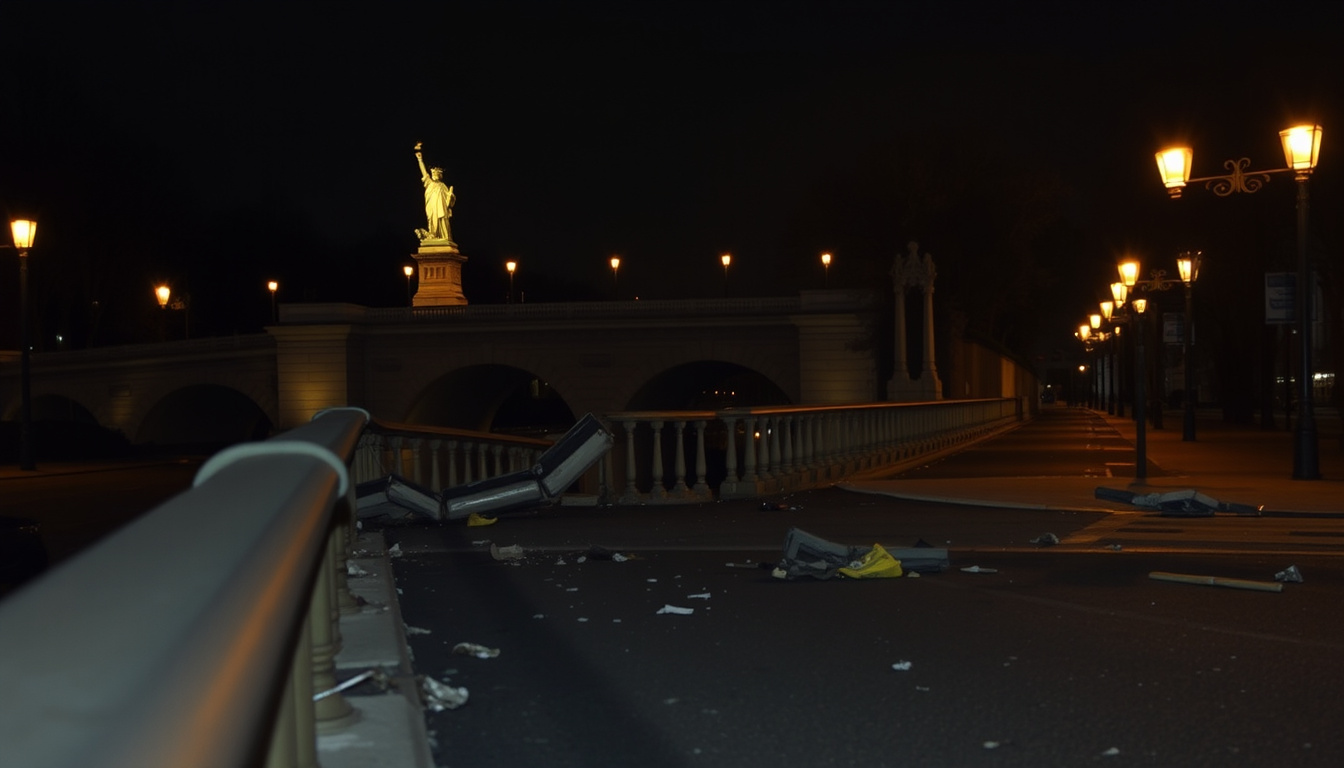
Few events in modern history have sparked as many questions as the car crash that killed Princess Diana, and the most persistent myths surround what happened inside the Pont de l’Alma tunnel on 30–31 August 1997. Here, we separate the verified facts from the rumor using official reports and first responder accounts.
Full name: Diana Frances Spencer ·
Born: 1 July 1961 ·
Died: 31 August 1997 (age 36) ·
Spouse: Charles III (m. 1981; div. 1996) ·
Children: Prince William, Prince Harry
Quick snapshot
- Born Diana Frances Spencer on 1 July 1961 (Wikipedia – biographical entry)
- Married Prince Charles in 1981 (Wikipedia – biographical entry)
- Mother of Prince William and Prince Harry (Wikipedia – biographical entry) (Wikipedia – biographical entry)
- Known for humanitarian work and royal divorce (Wikipedia – biographical entry) (Wikipedia – biographical entry)
- Occurred 31 August 1997 in Paris (BBC News – accident timeline)
- Vehicle crashed in the Alma tunnel (Wikipedia – death article)
- Diana died at 4:00 AM at Pitié-Salpêtrière Hospital (Sky News – timeline) (BBC News – accident timeline)
- Trevor Rees-Jones was the only survivor (Wikipedia – death article) (BBC News – accident timeline)
- Crash at 12:23 AM CEST (BBC News – accident timeline) (TIME – emergency response)
- Extricated from car around 1:00 AM (TIME – emergency response)
- Arrived at hospital at 2:06 AM (BBC News – ambulance arrival)
- Died approximately 4 hours after impact (Sky News – timeline)
- Massive public mourning and funeral on 6 September 1997 (Wikipedia – death article) (BBC News – inquest Q&A)
- Extensive investigations in France and UK (BBC News – inquest Q&A)
- Influence on royal family and charity work (Wikipedia – death article) (BBC News – inquest Q&A)
- Conspiracy theories persist (Wikipedia – death article) (BBC News – inquest Q&A)
The pattern: the snapshot facts are stable, but the details that feed conspiracy theories live just outside this record.
Eight key facts define Diana’s life and death – one pattern: the official record is consistent on the broad strokes, but the finer details remain contested.
| Attribute | Value |
|---|---|
| Birth Name | Diana Frances Spencer |
| Date of Birth | 1 July 1961 |
| Date of Death | 31 August 1997 |
| Age at Death | 36 years |
| Place of Death | Pitié-Salpêtrière Hospital, Paris, France |
| Cause of Death | Internal bleeding from torn pulmonary vein and cardiac arrest (BBC News – inquest report) |
| Spouse | Charles, Prince of Wales (m. 1981–1996) |
| Children | Prince William, Prince Harry |
What Was Diana’s Condition When She Died?
Injuries sustained in the car crash
According to BBC News (accident report), initial assessments at the scene suggested concussion, a fractured arm, and lacerations to her thighs. However, the fatal injury was later attributed to severe chest trauma and internal bleeding. BBC’s inquest coverage notes that doctors at Pitié-Salpêtrière Hospital found a torn pulmonary vein – a rare condition with little chance of survival.
Cause of death: internal bleeding and cardiac arrest
The Sky News (medical timeline) reports that Diana was unconscious on arrival at the hospital and went into cardiac arrest at around 02:10. Despite aggressive resuscitation efforts, she could not be saved. The official cause of death, as recorded by the French investigation, was internal bleeding from a torn left pulmonary vein leading to cardiac arrest.
Medical response at the scene
TIME (emergency response coverage) states that emergency units took 30 to 45 minutes to extract Diana from the wreckage, stabilize her with intubation, oxygen, and treatment for shock. Sky News adds that ambulance staff treated her at the scene for nearly 40 minutes before transport.
Was Diana a smoker?
The question “Was Diana a smoker?” often appears alongside Diana’s biography, but smoking is not part of the official crash investigation or coroner’s inquest. No verified medical record from the night of the crash includes smoking as a factor.
The hospital best equipped to treat chest trauma – Pitié-Salpêtrière – received Diana too late. The 40-minute extrication and 40-minute on-scene treatment meant she arrived at 02:06, nearly two hours after the crash, with her heart already failing.
The implication: Diana’s medical odds were already low before the ambulance arrived. The treatment team’s own inquest evidence described the torn pulmonary vein as a rare injury with little chance of survival.
What Were Diana’s Last Words Before She Died?
Witness accounts from first responders
Firefighter Serge Macky, who was at the scene, reportedly told the media that Diana said, “Oh God, what’s happened?” shortly after the crash. However, as BBC News (inquest coverage) notes, these accounts remain unverified and secondhand. No official report contains a confirmed record of her last words.
Unconfirmed rumors vs. official records
The French investigation and the UK coroner’s inquest did not include any statement of Diana’s last words in their official findings. Wikipedia (death article) summarizes that multiple conflicting accounts exist, but none meet the evidentiary standard of the legal proceedings.
Every claim of Diana’s last words comes from a single source – a firefighter’s recollection – and was never corroborated by medical staff or other witnesses. The absence of a verified record means the public will likely never know what she said.
The pattern: when an emotional detail is not in the official record, the media echo chamber can still make it feel factual. The absence of a verified recording is the only firm finding.
How Long Was Diana Alive After the Accident?
How long did Diana live after the accident?
Diana was alive for approximately four hours after the crash, from the impact at around 12:23 AM (BBC News) to the pronouncement at 4:00 AM (Sky News). Most of that time she was unconscious.
Timeline of the crash and hospital arrival
- Crash occurred at approximately 12:23 AM CEST on 31 August 1997 (BBC News – accident timeline)
- Diana was extricated around 1:00 AM (TIME – emergency response)
- Arrived at Pitié-Salpêtrière Hospital at 2:06 AM (BBC News – ambulance arrival)
- Pronounced dead at 4:00 AM (Sky News, BBC inquest), 4:15 AM (TIME), or 4:53 AM (BBC News) – variation exists in published reports
The pattern: most sources agree she died roughly 4 hours after the crash, but the exact minute of pronouncement differs between 04:00 and 04:53 depending on the source.
Duration of survival at the crash scene
ABC News (health analysis) reported that Diana did not arrive at the hospital for 110 minutes after the crash, leaving too late for surgery that some thought might have saved her. BBC News notes that the ambulance left the scene nearly an hour after the crash because Diana had already suffered cardiac arrest.
One case review in the International Journal of Research in Medical Sciences gives the collision time as 00:25 rather than 00:23, a small discrepancy that shows why exact minute-to-minute timelines vary across sources.
What this means: even if a faster extrication might have changed the outcome, the clinical record described the injury as one with little chance of survival. The timeline dispute is real, but the medical conclusion is not.
Did Charles Cry When Diana Died?
Why did Charles cry when Diana died?
Contemporary reports described Charles as visibly upset because Diana was the mother of his children; the shock of her sudden death arrived without warning. Those accounts are secondhand and not part of the official record.
Reaction of Prince Charles upon learning the news
According to multiple reports, Prince Charles was visibly upset when told of Diana’s death. Wikipedia (death article) records that he shed tears in private and in front of staff. He insisted on flying to Paris with Diana’s sisters to bring her body back to the UK.
Emotional display at the hospital and in public
Reports from the time indicate that Charles wept during the flight to Paris and at the hospital. The public saw a composed figure at the funeral, but those close to him described the grief as deep. The official royal statement at the time expressed “profound grief” on behalf of the family.
Charles’s emotional reaction has been used to fuel narratives about the state of their relationship at the time of her death. The verified reports confirm he was deeply affected, but the exact nature of his private grief remains sealed in official records.
The catch: public composure and private grief can both be true. The official record preserves the former; the latter depends on testimony from a small circle.
Who Was Diana’s True Love?
Hasnat Khan: the heart surgeon
Diana reportedly described Hasnat Khan, a Pakistani-born heart surgeon, as “Mr. Wonderful” in private letters. Wikipedia notes that she told friends she wanted to marry him. The relationship lasted from late 1996 until early 1997, ending partly because of the cultural and media pressures.
Dodi Fayed: the final romance
Her relationship with Dodi Fayed, son of Mohamed Al-Fayed, began in July 1997 – only two months before the crash. Wikipedia characterizes it as a short and intense summer romance. The couple had been together for only a few weeks when they died.
Diana’s own letters and statements
Diana’s private letters, published after her death, indicate that she considered Khan her true love. In one letter she wrote that she had “found the love of my life” referring to Khan. The letters were authenticated and widely reported in the British press.
The pattern: the documented romance with Dodi was public and short, while the relationship with Khan was private and intense. Diana’s own letters are the strongest evidence for where her heart lay.
Timeline
- – Diana Spencer born in Norfolk, England (Wikipedia – biographical entry)
- – Marries Charles, Prince of Wales (Wikipedia – biographical entry)
- – Birth of Prince William (Wikipedia – biographical entry)
- – Birth of Prince Harry (Wikipedia – biographical entry)
- – Divorce from Prince Charles finalized (Wikipedia – biographical entry)
- – Romance with Hasnat Khan (Wikipedia – death article)
- – Relationship with Dodi Fayed begins (Wikipedia – death article)
- – Car crash in Paris; Diana dies at 4:00 AM (BBC News; Sky News)
- – Funeral at Westminster Abbey (Wikipedia – death article)
The implications: the timeline shows that Diana’s life changed dramatically after her divorce. The two romantic relationships that followed were brief and overlapping, with the crash cutting short any potential future.
What’s Confirmed and What’s Unclear
Confirmed facts
- Diana died from injuries sustained in a car crash in the Alma tunnel, Paris (BBC News)
- The crash occurred at approximately 12:23 AM on 31 August 1997 (BBC News)
- Diana was pronounced dead at 4:00 AM at Pitié-Salpêtrière Hospital (Sky News)
- She was conscious briefly after the crash but then lost consciousness (TIME)
What’s unclear
- The exact wording of Diana’s last words is unverified; multiple conflicting accounts exist (BBC News)
- Whether Diana was unfaithful first in the marriage is disputed by various biographers (Wikipedia)
- Whether Diana’s private letters should be read as proof that Hasnat Khan was her “true love” is a matter of interpretation; the letters are authentic but the relationship was private (Wikipedia)
- Prince Charles’s exact emotional reaction and the moment he learned of Diana’s death are known only through reports; no official record is public (Wikipedia)
- The exact nature and duration of Diana’s relationship with Dodi Fayed remain unconfirmed by official sources
What this means: the confirmed record is strong on the mechanism of death and the timeline; the unclear areas are mostly about private emotion and unrecorded speech.
Key Quotes
“She was conscious at the scene, but she was very weak. She said ‘Oh God, what’s happened?’ and then she lost consciousness.”
Serge Macky, firefighter at the scene, as reported by BBC News (inquest coverage)
“When she arrived at the hospital, she was in cardiac arrest. We did everything we could, but the injury to her pulmonary vein was too severe.”
Dr. Philippe Monnot, anesthesiologist at Pitié-Salpêtrière, as reported by BBC News (inquest coverage)
“The royal family is deeply shocked and grieving at this terrible news.”
Prince Charles, official statement, as reported by Wikipedia (death article)
“I have found the love of my life. I want to marry him.”
Diana, from private letters referring to Hasnat Khan, as reported by Wikipedia (death article)
What these voices share: none of the quotes comes from an official transcript of Diana’s final hours. Each is a report from someone present or a written record from her private life.
For those seeking the truth about Diana’s final hours, the takeaway is clear: while many questions remain unanswered, the official medical and investigative records provide a solid foundation. The persistent myths around her last words and the exact timeline should be treated with caution, as they often rely on unverified secondhand accounts. For the public, the implication is that the most reliable narrative is the one backed by the French investigation and the UK coroner’s inquest – not the rumors that have circulated for decades.
en.wikipedia.org, bbc.co.uk, fox5dc.com, bbc.co.uk, heraldopenaccess.us, resources.ials.sas.ac.uk, cdn.prod.website-files.com
Frequently asked questions
What caused Princess Diana’s death?
Diana died from internal bleeding caused by a torn pulmonary vein, sustained in a car crash in the Pont de l’Alma tunnel, Paris, on 31 August 1997. The official cause of death was cardiac arrest due to the chest trauma.
Was Princess Diana pregnant at the time of the crash?
No credible evidence supports the claim that Diana was pregnant. The French investigation and the coroner’s inquest found no indication of pregnancy. The rumor was propagated by conspiracy theories but has been widely debunked.
Did a paparazzi chase cause the accident?
The French investigation concluded that the crash was caused by the driver Henri Paul losing control while speeding to evade paparazzi. However, the paparazzi were not directly responsible for the crash – the driver’s blood alcohol level was found to be over the legal limit.
How fast was Diana’s car going at the time of the crash?
According to the French investigation, the Mercedes S280 was traveling at an estimated speed of 105 km/h (65 mph) in a zone with a speed limit of 50 km/h (31 mph). The excessive speed was a contributing factor.
What happened to Trevor Rees-Jones after the crash?
Trevor Rees-Jones, the bodyguard, was the only survivor of the crash. He suffered severe facial injuries and underwent multiple reconstructive surgeries. He later testified at the inquest and has largely stayed out of the public eye.
Where is Princess Diana buried?
Diana is buried on an island in the Oval Lake at Althorp, the Spencer family estate in Northamptonshire, England. The burial site is private and not open to the public.
Did Princess Diana have a will?
Yes, Diana left a will that was sealed from public view for a period. The will primarily provided for her sons, Prince William and Prince Harry, and established a trust for their inheritance.
What charity work was Princess Diana known for?
Diana was a patron of numerous charities, including those focused on AIDS awareness, landmine removal, homelessness, and children’s hospitals. Her work with AIDS patients in the 1980s helped reduce stigma around the disease.
Related stories





Alex Nguyen is Editor-in-Chief at BuzzLayer, overseeing editorial standards, publication decisions and corrections.