There aren’t many people who went from modeling haute couture to storming war-torn Europe with a camera. Lee Miller did exactly that. By the time she died in 1977, she had left behind over 60,000 images and documents — a life that refused to sit still. This guide covers her most famous photos, her surrealist years, and how she became one of World War II’s most unique chroniclers.
Life dates: 1907–1977 ·
Archives size: over 60,000 images and documents ·
Famous role: American photographer, photojournalist, and former fashion model ·
Major exhibition: – at Tate Britain, London ·
Key association: Vogue (fashion editorials and war correspondent)
Quick snapshot
- Miller was a war photographer for Vogue (Lee Miller Archives, the official archive).
- She survived the war and returned to England (Lee Miller Archives).
- Archives are curated by the Lee Miller Archives at Farleys House (Lee Miller Archives website).
- The exact nature of her relationship with David Scherman beyond professional (National Geographic history feature).
- Extent of her interaction with Hitler’s inner circle during the Munich occupation (National Galleries of Scotland).
- 1945: Iconic bathtub self-portrait in Hitler’s Munich apartment (National Geographic).
- 1943: Accredited as war correspondent for Vogue (Lee Miller Archives).
- Major retrospective at Tate Britain from to (Lee Miller Archives announcement).
- Bonhams exhibition “Lee & LEE” in London, (Bonhams press release).
Five key facts about Lee Miller’s life, drawn from the official archive and museum sources:
| Field | Detail |
|---|---|
| Full name | Elizabeth “Lee” Miller, Lady Penrose |
| Born | , Poughkeepsie, New York |
| Died | , Chiddingly, East Sussex, England |
| Known for | Fashion model, surrealist photographer, war photojournalist |
| Major archive | Lee Miller Archives, Farleys House, UK (official site) |
| Spouse | Roland Penrose (married 1947) |
What is Lee Miller’s most famous photo?
Two images define her legacy: one shows her soaking in Adolf Hitler’s bathtub, the other captures a poisoned drinking glass beside a dead SS officer. Both were taken on a single day in Munich, 30 April 1945.
The image in Hitler’s bathtub
Miller’s self-portrait in Hitler’s bathtub at his Munich apartment is widely regarded as her most reproduced image. The photo was taken by David Scherman, a Life photographer who accompanied her into the Führer’s abandoned home. Miller’s boots on the floor and the small statue on the shelf create a surreal contrast — a final piece of defiance at the close of the war.
The bathtub photo is not just a trophy shot. Miller deliberately staged it as a surrealist statement: she, a former model turned war reporter, washing away the dirt of Dachau in Hitler’s own bathroom.
The cyanide portrait of a Nazi officer
The same day, Miller photographed a drinking glass on a nightstand next to the body of Nazi officer Christian Weber. The glass, later found to contain cyanide, became a symbol of the suicide cult that surrounded Hitler’s inner circle. The image is held by the Victoria and Albert Museum as part of its war photography collection.
The implication: Both photos work as paired documents of victory and horror — one playful, one grim — revealing how Miller used her surrealist eye to tell the story of the war’s end.
What happened to Lee Miller as a photographer?
Miller’s career moved through three distinct phases: fashion model, surrealist artist, and combat photojournalist. Each stage fed the next.
Early modeling career
- Discovered as a model by Condé Nast in 1927, she appeared on the cover of Vogue and in Harper’s Bazaar (Britannica biography).
- Her father, Theodore Miller, taught her the basics of photography (HistoryExtra feature).
Surrealist period in Paris
In 1929 she moved to Paris and became a student and collaborator of Man Ray. Together they rediscovered the solarization technique, lending an ethereal quality to prints. She associated with the surrealist circle — Picasso, Éluard, Magritte — and built a body of work that merged fashion with dreamlike composition (The Conversation, academic analysis).
World War II correspondence for Vogue
When war broke out, Miller was living in London. She convinced British Vogue to accredit her as a war correspondent in 1944. Accredited by the US Army, she was one of only four female photographers granted official status according to the Imperial War Museums. She documented the Liberation of Paris, the Battle of Alsace, and the liberation of Buchenwald and Dachau (V&A guide).
What this means: Miller’s wartime work was not a departure from surrealism — it was an extension. She applied the same eye for odd juxtapositions (a dead soldier’s boot, a porcelain bathtub) to scenes of mass suffering, making the war feel intimate and disturbing.
Where are Lee Miller’s photos now?
Her archive is the most comprehensive record of a 20th-century female photojournalist, and most of it is publicly accessible.
The Lee Miller Archives in East Sussex
The Lee Miller Archives at Farleys House holds over 60,000 negatives, prints, and documents. The archive is run by the Penrose family — her son Antony Penrose has curated exhibitions and published several books. Researchers can request access by appointment.
Major museum holdings (Tate, V&A, and more)
Tate Britain staged a major retrospective from October 2025 to February 2026, covering Miller’s entire career. The Victoria and Albert Museum holds a number of her prints, including the cyanide image. The National Galleries of Scotland also features her work in its war-art collection.
The pattern: Although Miller died relatively unknown, her archive has become a cornerstone of 20th-century photography scholarship. The 2025–26 Tate exhibition is the largest ever devoted to her.
Who took the photo of Lee Miller in Hitler’s bathtub?
The answer is simple: David Scherman, a Life magazine photographer. But the story behind it is worth unpacking.
David Scherman, Life magazine photographer
Scherman was embedded with Miller as both a photographer and colleague. On 30 April 1945, they entered Hitler’s Munich apartment together, fresh from covering the liberation of Dachau. Scherman captured Miller in the tub while she scrubbed the grime of the concentration camp from her skin (National Geographic feature).
The circumstances of the bathtub image
The photo was staged: Miller placed her boots on the floor to suggest a military presence, and the small statue of a goddess on a shelf echoes classical art. Scherman and Miller worked as a team — he shot while she improvised the scene. The image was first published in Vogue in June 1945 and later became the most famous representation of Miller herself (Lee Miller Archives).
The trade-off: Miller is often remembered as the subject of this photo, not its creator. Yet without her direction, the image would not have the surreal power that made it iconic.
Who was Lee Miller’s lover?
Her personal life was as layered as her career, with two significant partnerships shaping her art and her later years.
Roland Penrose (later husband)
She met the British surrealist painter and writer Roland Penrose in the 1930s. They began a relationship during the war and married in 1947. Penrose co-founded the Institute of Contemporary Arts in London. They lived at Farleys House in East Sussex, where Miller later developed an interest in gourmet cooking (Britannica).
Man Ray (romantic and artistic partner)
In Paris in the early 1930s, Miller was both Man Ray’s muse and lover. He taught her printing techniques, and together they produced some of the first solarized photographs. The relationship ended when Miller returned to New York in 1932, but both remained friends (The Conversation).
Why this matters: Miller’s relationships with men were not simply romantic — they were creative collaborations. Her work with Man Ray gave her the technical foundation to later compose battlefield scenes with surreal precision.
Timeline
- – Born Elizabeth Miller in Poughkeepsie, New York.
- – Discovered as a model; appears in Vogue.
- – Studies with Man Ray in Paris; develops surrealist solarization technique.
- – Becomes war correspondent for Vogue.
- – Photographs the liberation of Paris, Buchenwald, Dachau; takes iconic bathtub photo on 30 April.
- – Marries Roland Penrose; moves to England.
- – Dies at Farleys House, East Sussex.
Confirmed facts
- Miller was a war photographer for Vogue (Lee Miller Archives).
- She survived the war and returned to England (V&A).
- Archives are curated by the Lee Miller Archives (official site).
What’s unclear
- The exact romantic nature of her relationship with David Scherman (National Geographic).
- How much personal contact she had with Hitler’s inner circle before the collapse (National Galleries of Scotland).
“Lee Miller is described as a photographer, surrealist, war correspondent, model, and gourmet cook.”
Lee Miller Archives, official biography
“Miller’s photo of herself in Hitler’s bathtub at Munich’s apartment is one of the most indelible images of the end of World War II.”
National Geographic history feature
Lee Miller’s career has often been framed as a series of identities — model, surrealist, war reporter, cook — but the common thread is her refusal to separate art from journalism. She entered the most harrowing scenes of the 20th century with a surrealist’s curiosity and a journalist’s discipline. For photographers and historians alike, the decision to study her archive is clear: her work offers a lens on war that no male correspondent could have provided. For anyone who visits the Tate exhibition in 2025–26, the choice is equally clear: look past the bathtub photo and discover the full, uncompromising archive.
Frequently asked questions
Did Lee Miller take the bathtub photo herself?
No. The iconic image of Miller in Hitler’s bathtub was taken by Life photographer David Scherman. Miller is the subject, not the photographer (National Geographic).
How did Lee Miller die?
She died of cancer on 21 July 1977 at her home, Farleys House, in East Sussex, England (Lee Miller Archives).
Is there a movie about Lee Miller?
Yes. The feature film Lee (2024) stars Kate Winslet as Miller and was released in cinemas in late 2024. The Bonhams exhibition “Lee & LEE” paired Miller’s war photographs with stills from the film (Bonhams press release).
What camera did Lee Miller use?
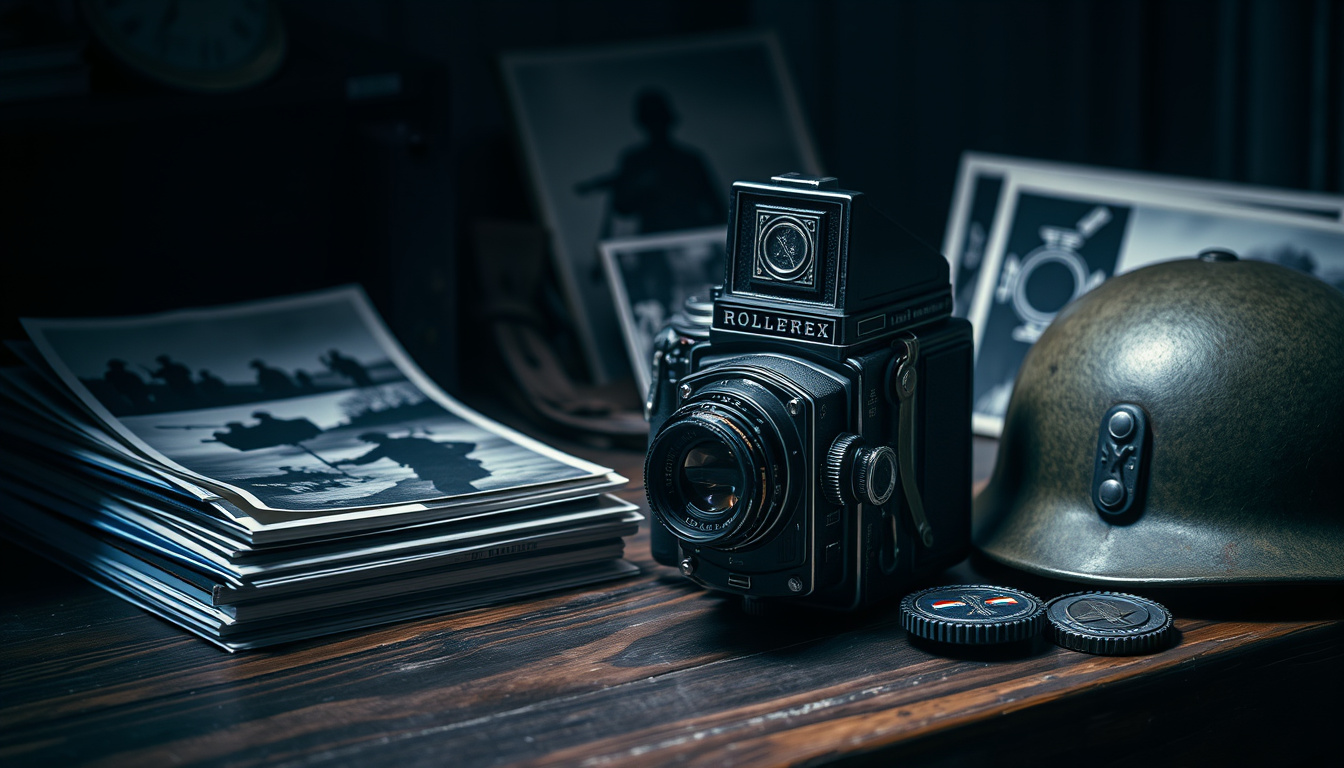
During the war, Miller primarily used a Rolleiflex twin-lens reflex camera, which gave her square, medium-format negatives. She also used a Leica for candid shots (Imperial War Museums).
Where can I buy prints of Lee Miller’s photographs?
Authorized prints are sold by the Lee Miller Archives at Farleys House. The official website (leemiller.co.uk) lists purchase information and current editions (Lee Miller Archives).
Did Lee Miller have children?
Yes. She had one son, Antony Penrose, born in 1947. Antony is the executor of her estate and curator of the Lee Miller Archives (Lee Miller Archives).
Related reading
- Waitrose Food to Order – Delivery Guide and Costs (buzzlayer.co.uk)
- All Her Fault Episodes – Complete Guide and Summaries (buzzlayer.co.uk)
Related stories


Alex Nguyen is Editor-in-Chief at BuzzLayer, overseeing editorial standards, publication decisions and corrections.