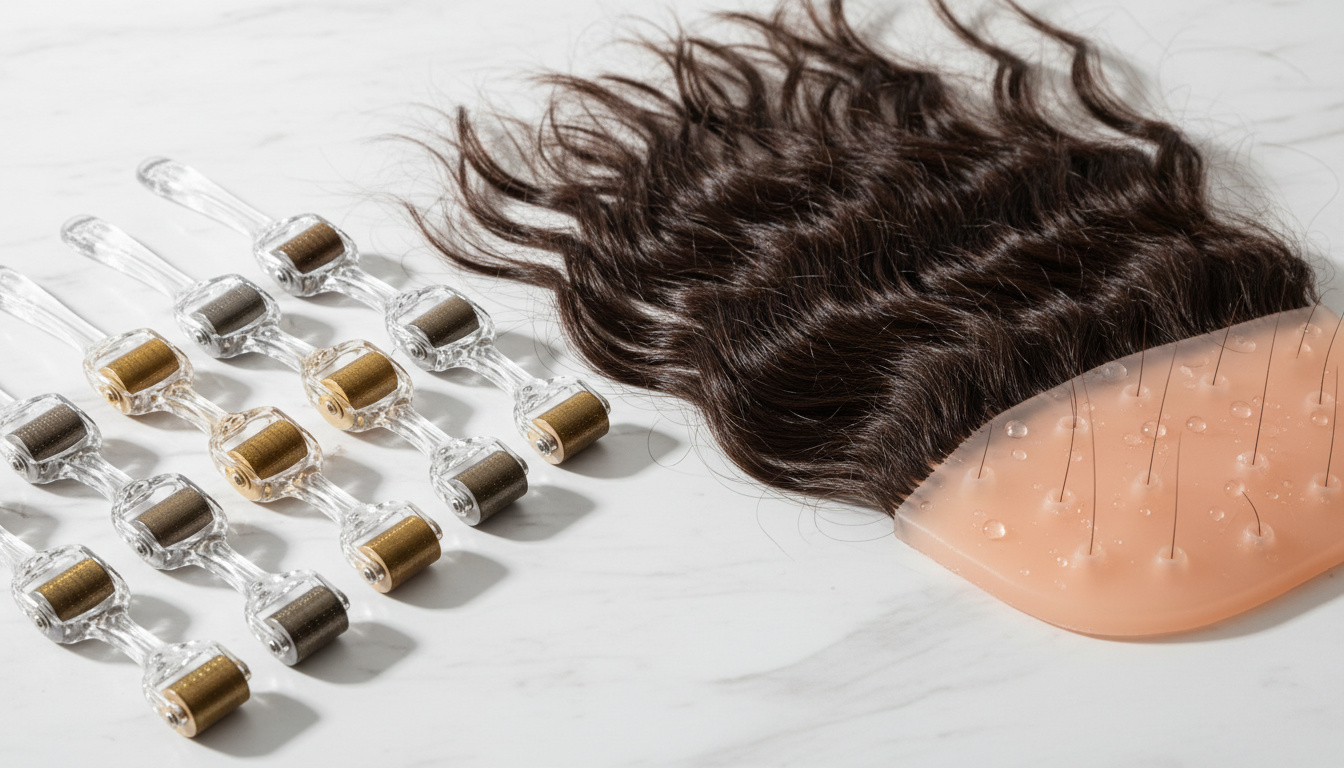
Scalp microneedling involves rolling a handheld cylinder covered in fine surgical-grade needles across thinning areas to create controlled micro-injuries. This mechanical stimulation triggers wound-healing cascades intended to revitalize dormant follicles and increase collagen density around the hair bulb, making it a widely discussed at-home intervention for pattern baldness and diffuse thinning.
The technique operates on dermatological principles of controlled trauma. Puncturing the stratum corneum and upper dermis releases platelet-derived growth factors and vascular endothelial growth factors, theoretically shifting follicles from the telogen resting phase into active anagen growth. Research indicates this process also enhances the penetration of topical agents like minoxidil by creating temporary micro-channels in the skin barrier.
Unlike clinic-based procedures using motorized pens, home derma rollers offer accessibility and lower cost, but they require strict adherence to sterile protocols and realistic timelines. Visible improvements typically demand three to six months of consistent application, with outcomes varying significantly based on needle length, underlying pathology, and combination therapies.
Does a Derma Roller Promote Hair Growth?
Stimulates follicular stem cells, affordable one-time purchase, feasible for home use without appointments
Risk of scalp irritation or infection, requires months to observe density changes, demands meticulous hygiene
Androgenetic alopecia, early-stage thinning, individuals seeking to augment topical treatments
Active scalp infections, bleeding disorders, scarring alopecias like lichen planopilaris
- Microneedling triggers localized release of growth factors and collagen synthesis around the dermal papilla.
- Increased cutaneous blood flow delivers oxygen and nutrients to follicles transitioning from telogen to anagen.
- Clinical observations suggest the technique enhances topical absorption by bypassing the stratum corneum barrier.
- A 2020 trial on androgenetic alopecia demonstrated that 0.5mm needles produced hair count increases comparable to or exceeding longer lengths.
- Murine studies indicate optimal follicular stimulation occurs at 0.25-0.5mm depths with repeated cycles.
- Visible density improvements typically require twelve to twenty-four weeks of consistent weekly or bi-weekly sessions.
- Devices are currently categorized as cosmetic rather than FDA-cleared medical devices specifically for hair regrowth.
| Needle Size | Primary Use Case | Recommended Frequency |
|---|---|---|
| 0.25 mm | Product absorption, sensitive scalps | 2-3 times per week |
| 0.5 mm | Early thinning, collagen induction | 2-3 times per week |
| 1.0 mm | Moderate thinning, follicle activation | Weekly or every 10-14 days |
| 1.5 mm | Advanced stimulation, stem cell targeting | Weekly or every 10-14 days |
| 2.0 mm | Clinical-grade growth factor release | Professional administration only |
| 2.5 mm | Hypodermis edge penetration | Clinical settings exclusively |
How to Use a Derma Roller for Hair Growth
Preparation and Sterilization Protocol
Begin by cleansing the scalp thoroughly with a gentle antiseptic shampoo and allowing it to dry completely. Soak the roller head in 70% isopropyl alcohol for ten to twenty minutes before use. Clinical guidance emphasizes that skipping sterilization introduces infection risks that can damage follicles permanently. Shave or clip treatment areas to ensure even needle contact without hair snagging.
Rolling Technique and Sectioning
Divide the scalp into quadrants to ensure systematic coverage without excessive overlap. Apply light, consistent pressure while rolling each section ten to fifteen times horizontally, vertically, and diagonally. Technique demonstrations show that lifting the device entirely between passes prevents dragging injuries. Expect transient erythema or pinpoint bleeding when using lengths exceeding 1.0mm.
Work in small subsections no larger than the roller’s width. Complete all directional passes in one quadrant before moving to the next to ensure even wounding density and prevent track marks that result from haphazard movement.
Post-Treatment Care and Maintenance
Immediately following the session, apply a vial of minoxidil or a peptide serum to maximize absorption through the fresh micro-channels. Avoid sun exposure, swimming pools, and harsh chemical treatments for twenty-four to forty-eight hours. Store the roller in its protective case after air-drying completely.
Combining with Topical Treatments
Clinical protocols frequently pair microneedling with minoxidil to exploit the temporary permeability boost. Evidence suggests this combination yields superior hair counts compared to either therapy alone. Alternatively, some users apply castor oil or caffeine solutions post-rolling for hydration, though these lack the robust trial data of pharmaceutical options.
Regular readers looking for structured health protocols might find parallels in the All Her Fault Episodes – Complete Guide and Summaries, which documents methodical approaches to complex wellness topics.
Best Derma Roller Size and Types for Hair
Matching Needle Length to Treatment Goals
Selection depends on whether the primary objective is topical enhancement or direct follicular wounding. Shorter needles (0.25-0.5mm) create superficial channels adequate for serum absorption without significant collagen induction. Medical guidelines recommend 1.0-1.5mm lengths for activating the stem cell bulge within the dermal papilla, though these require longer recovery periods between sessions.
Manual Rollers versus Motorized Pens
Manual rollers offer affordability and simplicity but introduce variability in penetration depth due to hand pressure inconsistencies. Motorized derma pens provide vertical needling at adjustable speeds, potentially reducing tissue tearing. Comparative analyses note that rollers typically achieve only fifty to seventy percent of their stated length due to application angle, meaning a 1.0mm roller approximates 0.5-0.7mm of actual dermal penetration.
Due to the angle of application, manual rollers typically achieve 50-70% of their stated penetration depth. Consequently, a 1.0mm roller delivers approximately 0.5-0.7mm of actual dermal penetration, comparable to a pen device set to a shorter depth.
Needle lengths exceeding 2.5mm risk penetrating the emissary veins beneath the scalp. Safety analyses confirm these depths require clinical supervision and should never be attempted with home devices due to bleeding and systemic infection risks.
Derma Roller Side Effects and Safety for Scalp
Expected Immediate Reactions
Transient redness and mild swelling typically resolve within twelve to twenty-four hours. Pinpoint bleeding may occur with 1.5mm needles, representing normal vascular trauma. Users occasionally report a scratching sensation or tenderness during the subsequent hair wash. Post-procedure data indicate that overuse delays recovery and can trigger telogen effluvium through excessive inflammation.
Risks and Absolute Contraindications
Poor hygiene protocols risk bacterial or fungal infections, particularly staphylococcal folliculitis. Keloid formers and individuals with active psoriasis, seborrheic dermatitis, or open wounds should avoid microneedling entirely. Dermatological consensus advises against home use for lengths exceeding 1.5mm, reserving deeper penetration for sterile clinical environments.
How Long Until You See Results from Derma Rolling?
- Weeks 1-4: Initial preparation phase focusing on technique refinement and establishing sterilization habits; expect mild erythema post-session.
- Months 1-3: Consistent weekly or bi-weekly sessions trigger the initial wound-healing cascade and growth factor release without visible hair changes yet.
- Months 3-6: Visible increases in hair density and shaft thickness typically emerge as follicles transition into anagen phase.
- Months 6-12: Peak cosmetic improvement usually observed; users assess whether to continue active treatment or transition to maintenance.
- Ongoing Maintenance: Bi-weekly or monthly sessions using shorter needles (0.5mm) to sustain vascularization and growth factor levels.
How Certain Is the Scientific Evidence?
| Established Findings | Remaining Uncertainties |
|---|---|
| Effective for androgenetic alopecia in randomized trials | Standardized home-use protocols remain undefined |
| 0.5mm needles demonstrate measurable hair count increases | Long-term safety data beyond twelve months is limited |
| Mechanism involves growth factor release and neovascularization | Efficacy for scarring alopecia types like lichen planopilaris |
| Synergistic effects with minoxidil documented | FDA clearance specifically for hair regrowth indications |
Understanding the Mechanism Behind Microneedling
The biological rationale rests on the concept of “controlled skin wounding.” By physically disrupting the dermal-epidermal junction, microneedling initiates the three classical phases of wound repair: inflammation, proliferation, and remodeling. During proliferation, fibroblasts deposit type III collagen and release transforming growth factor-beta, which signals dormant follicular stem cells to re-enter the cell cycle.
This mechanical stimulation also upregulates vascular endothelial growth factor, increasing capillary density around the follicle bulb. Enhanced blood supply delivers amino acids and oxygen necessary for keratinocyte proliferation, effectively extending the anagen growth period. The technique represents a physical modality distinct from hormonal or pharmaceutical interventions, potentially offering value for individuals seeking alternatives to systemic medications.
What Do Clinical Studies Reveal About Efficacy?
Studies indicate that microneedling regrows hair by wounding the dermis, releasing growth factors, increasing blood flow, and enhancing topicals—effective as a standalone treatment or combined with minoxidil, with hair count increases documented in controlled trials.
Investigations using 1.5-2.5mm devices demonstrated significant hair count improvements over baseline. Notably, a 2020 androgenetic alopecia trial involving forty-five participants revealed that 0.5mm rollers matched or outperformed 1.0mm devices for hair density, challenging assumptions that deeper is universally better. Murine models further refined this understanding, showing that repeated shallow needling (0.25-0.5mm) produced optimal follicular proliferation compared to single deep sessions.
Key Considerations Before Starting Treatment
Scalp microneedling presents a viable mechanical adjunct for androgenetic alopecia, supported by modest but promising clinical data emphasizing 0.5mm weekly protocols. Success demands rigorous hygiene, patience through the three to six-month latency period, and realistic expectations regarding the degree of regrowth achievable without concurrent pharmaceutical therapy. Those comparing home delivery options for medical supplies might review the Waitrose Food to Order – Delivery Guide and Costs for logistical considerations, though the device itself requires medical-grade sourcing rather than general retail.
Frequently Asked Questions
Can women use derma rollers for hair loss?
Yes, women experiencing androgenetic alopecia or diffuse thinning can use derma rollers. The mechanism of growth factor release applies regardless of sex, though women should avoid treatment during pregnancy or breastfeeding due to lack of safety data.
How does a derma roller compare to a dermapen?
Derma pens use motorized vertical needling that often causes less tissue tearing than angled roller needles. Pens allow precise depth adjustment, while rollers provide broader coverage but with variable penetration angles.
Where should you purchase a quality derma roller?
Source devices from reputable medical supply companies or pharmacies offering surgical-grade 192-needle titanium constructions. Avoid cosmetic-grade rollers with zinc alloys or unclear needle counts from unverified marketplaces.
Does derma rolling cause initial hair shedding?
Some users notice increased shedding during weeks two through four as follicles synchronize and transition into new growth cycles. This typically resolves by month three as anagen hairs emerge.
Is the hair growth permanent after stopping treatment?
Results require maintenance. Ceasing treatment usually leads to gradual regression toward baseline within six to twelve months as follicles re-enter telogen phase without ongoing stimulation.
Can derma rolling help with beard growth?
The technique shows anecdotal success for facial hair patchiness by stimulating dormant beard follicles, though clinical studies specifically targeting beard density remain limited compared to scalp research.
Related stories





David Kim covers consumer technology, apps and platform updates for BuzzLayer.