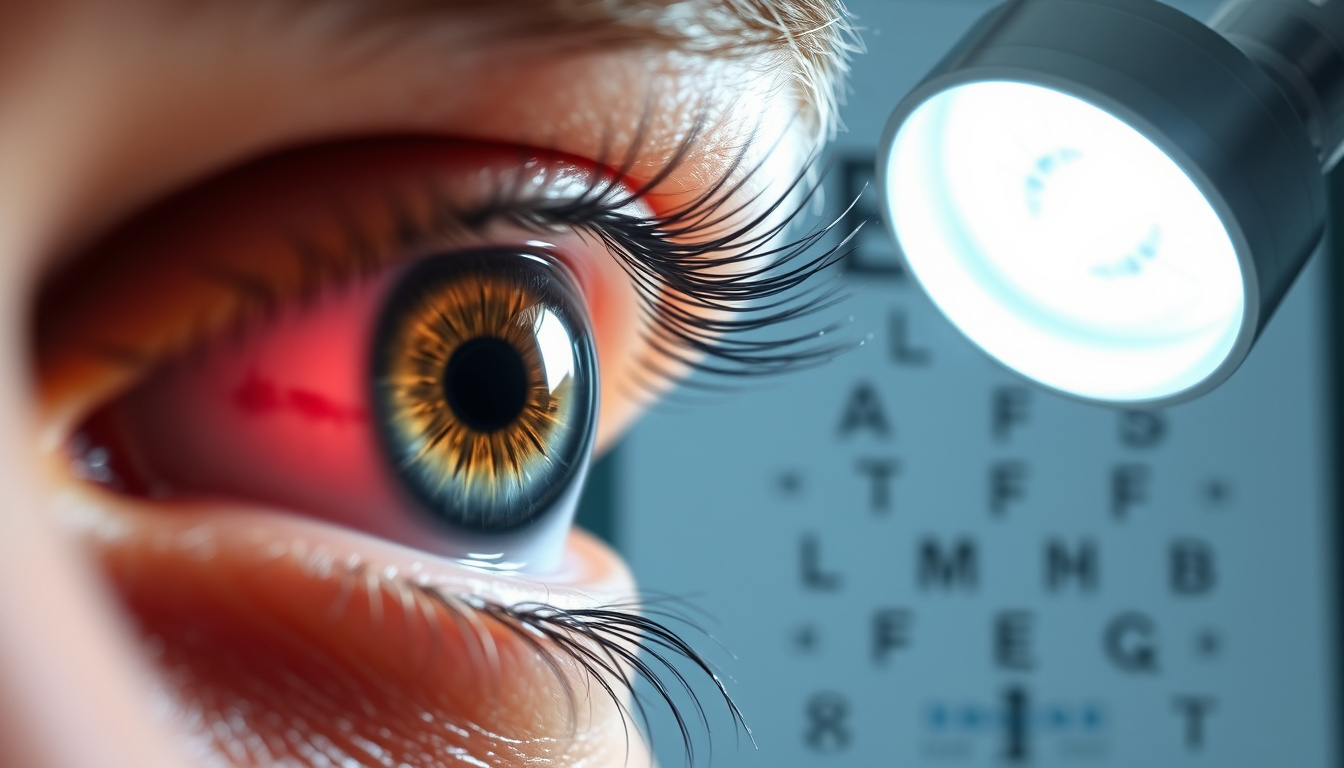
Waking up to find one eye bright red while the other looks completely normal can be unsettling. The good news is that over 90% of red eye cases turn out to be harmless, according to medical sources.
Most common cause of sudden one-sided red eye: Subconjunctival hemorrhage (broken blood vessel) · Typical duration of a subconjunctival hemorrhage: 1 to 2 weeks without treatment · Red eye as a reason for primary care visits: Approximately 2-3% of all visits · Eye stroke (retinal artery occlusion) incidence: Rare but requires immediate medical attention · Percentage of red eye cases that are benign: Over 90%
Quick snapshot
- Painless, no vision change, blood under clear conjunctiva (ophthalmology practice Dr Anne Malatt)
- Resolves in 1-2 weeks (ophthalmology practice Dr Anne Malatt)
- Itching or burning, discharge (clear or colored) (MedlinePlus Medical Encyclopedia from the U.S. National Library of Medicine)
- May affect one eye first; contagious if bacterial or viral (MedlinePlus Medical Encyclopedia from the U.S. National Library of Medicine)
- Sudden painless vision loss – emergency (health publisher WebMD)
- Often no redness until later, requires immediate ER (health publisher WebMD)
- Severe eye pain, headache, blurred vision (health information platform GoodRx)
- Red eye with cloudy cornea — medical emergency (health information platform GoodRx)
Why would only one eye be bloodshot?
When redness shows up in just one eye, it often points to a localized problem rather than a whole-body condition. Eye redness is most often due to swollen or dilated blood vessels on the surface of the eye, making the eye look red or bloodshot, explains MedlinePlus Medical Encyclopedia from the U.S. National Library of Medicine. The asymmetry is a clue that helps narrow down the cause.
Subconjunctival hemorrhage
- A common benign cause of one-sided bloodshot eye is subconjunctival hemorrhage, which occurs when a tiny blood vessel under the conjunctiva breaks and bleeds beneath it, according to ophthalmology practice Dr Anne Malatt.
- Subconjunctival hemorrhage usually causes a red patch but typically no pain, no itch, and normal vision, per the same source.
If you see a bright red patch on the white of one eye but feel nothing — no pain, no scratchiness, no change in how clearly you see — this is almost certainly a subconjunctival hemorrhage. It looks dramatic but is harmless and will clear on its own without drops or treatment.
Conjunctivitis (one eye can be affected first)
- Conjunctivitis, blepharitis, and eye infections can cause redness along with itching, discharge, pain, or vision problems, states MedlinePlus Medical Encyclopedia from the U.S. National Library of Medicine.
- Yellow or greenish discharge suggests infection and warrants medical evaluation, according to the same source.
Dry eye syndrome
- Eye dryness, dust or other particles, allergies, infection, injury, and too much sun exposure can all cause eye redness, per MedlinePlus Medical Encyclopedia from the U.S. National Library of Medicine.
- Dry eye often affects both eyes, but one eye can appear redder if it has been exposed to more wind, screen time, or air conditioning.
Injury or foreign body
- A foreign body or something in the eye is an urgent red-eye concern if there is pain, visual disturbance, or inability to close the eye comfortably. Contact lens users with red eye should remove lenses and seek medical advice promptly.
- Allergies, pink eye, dry eye, injury to the eye or face, glaucoma, extensive screen time, and wearing contact lenses for a long time are listed as causes of bloodshot eyes by healthcare provider CVS MinuteClinic.
Eye allergy
- Allergies typically affect both eyes but can start unilaterally, especially if one eye was directly exposed to an allergen like pollen, pet dander, or dust.
Should I worry about a bloodshot eye?
Most episodes of red eye are caused by common, less serious conditions such as allergies, viral infections, or dry eyes, according to health information platform GoodRx. But a bloodshot eye on one side can sometimes signal something more urgent. The difference comes down to four specific checks: pain, vision change, light sensitivity, and discharge type.
Signs that indicate a benign cause
- Benign causes: no pain, no vision change, clear discharge.
- Home care for mild bloodshot eyes can include rest, cool compresses, eye drops, washing the eyelids, and avoiding irritants, advises healthcare provider CVS MinuteClinic.
- Artificial tears, cool compresses, and breaks from digital devices may help if irritation or eye strain is contributing to redness, adds optometry practice Kadrmas Eye Care.
Red flags that require urgent care
- A red eye with eye pain or vision changes requires prompt medical evaluation, warns MedlinePlus Medical Encyclopedia from the U.S. National Library of Medicine.
- Bloodshot eyes accompanied by a severe headache, chemical splash, inability to open the eye, or sudden severe vision change are emergency red flags, per healthcare provider CVS MinuteClinic.
- Health publisher WebMD advises calling a doctor for red eyes with sudden vision change, sensitivity to light, halos around lights, severe headache, eye pain, fever, nausea or vomiting, swelling, or inability to keep the eye open.
Pain, vision changes, and photophobia as warning signs
- Sudden changes in vision, severe pain, or worsening symptoms are reasons to seek healthcare right away, according to health information platform GoodRx.
Seek emergency care if you have redness accompanied by vision changes, eye pain, or eye trauma.
— Mayo Clinic (medical research and practice institution)
The implication: benign redness can wait, but red-flag symptoms cannot. The next section translates these red flags into specific timing — when to go to the ER, when to call your doctor today, and when a routine appointment is fine.
When should I see a doctor for one red eye?
The HSE (Health Service Executive) says a red eye is usually nothing to worry about and often gets better on its own, but sometimes it can be more serious and you’ll need to get medical help. Timing matters. Here is a breakdown based on symptom severity.
Immediate emergency: vision loss or severe pain
- Healthcare provider CVS MinuteClinic lists chemical splash, inability to open the eye, or sudden severe vision change as emergency red flags.
- Health publisher WebMD includes severe headache, eye pain, fever, nausea or vomiting, and swelling as signs to seek emergency care.
Same-day appointment: discharge, photophobia, contact lens use
- MedlinePlus Medical Encyclopedia from the U.S. National Library of Medicine says to contact a provider if eyes are red longer than 1 to 2 days, or if there is eye pain, vision changes, a possible object in the eye, light sensitivity, or yellow or greenish discharge.
- Contact lens users with red eye should remove lenses and seek medical advice promptly.
Routine visit: mild redness without other symptoms lasting more than a week
- Red eyes that last longer than a few days should be discussed with a healthcare provider, advises healthcare provider CVS MinuteClinic.
The trade-off: waiting too long with a red eye that has pain or discharge risks complications, but rushing to the ER for a simple subconjunctival hemorrhage wastes time and resources. The rule: if vision has changed or the eye hurts, go now. If not, watch for 48 hours.
| Symptom | When to act | Action |
|---|---|---|
| Painless red patch, normal vision | No rush | Wait 1-2 weeks; self-care |
| Redness + itching or clear discharge | 24-48 hours | Same-day doctor if worsening |
| Redness + pain or vision change | Immediately | Go to ER |
| Redness + chemical splash or trauma | Immediately | Go to ER |
| Redness + headache with nausea | Immediately | Go to ER |
Can a bloodshot eye mean a stroke?
This is one of the most searched questions, and the answer requires a clear distinction between a brain stroke and an eye stroke. A bloodshot eye alone is rarely a sign of brain stroke, but it can signal an eye stroke — a medical emergency in itself.
Eye stroke (retinal artery occlusion)
- Eye stroke presents as sudden, painless vision loss in one eye.
- Retinal artery occlusion is a medical emergency. While the eye may not initially look red, redness can appear later as the eye reacts to the blockage.
Carotid artery dissection and Horner syndrome
- A damaged carotid artery can occasionally cause one-sided redness along with a drooping eyelid and a small pupil (Horner syndrome). This is rare but serious.
- Damaged eye vessels may indicate higher stroke risk in some adults, though a bloodshot eye on its own does not confirm this.
Differentiating from subconjunctival hemorrhage
- A subconjunctival hemorrhage is a flat, bright red patch that does not affect vision. An eye stroke causes vision loss, often described as a curtain coming down over the eye.
- According to Health publisher WebMD, sudden vision change is a top red-flag event that warrants immediate medical attention, regardless of whether the eye looks red.
If someone says their vision went dark or blurry in one eye suddenly — even if the eye looks normal — do not wait. Eye stroke treatment has a narrow window, often measured in hours, for any chance of restoring blood flow to the retina.
Why this matters: a patient who thinks “bloodshot = harmless” might dismiss an eye stroke just because the eye isn’t red. The key differentiating factor is vision — always check vision clarity alongside redness.
What are the first signs of an eye tumor?
This is the question that causes the most anxiety, and for good reason. Eye tumors are rare, but they do occur. The important context: a bloodshot eye alone is an uncommon first sign.
Common symptoms: bulging eye, vision changes, pain
- Eye tumors often cause a noticeable bulge (proptosis), blurred vision, double vision, or loss of vision.
- Pain is not always present with eye tumors.
Rare but possible: red eye as a presentation of ocular melanoma
- Bloodshot eye alone is an uncommon first sign of ocular melanoma; more typical signs include a visible mass on the eye surface, change in the shape of the pupil, or displacement of the eyeball.
When to suspect a tumor behind the eye
- A tumor behind the eye typically causes the eye to push forward (proptosis) or causes double vision because the eye cannot move freely.
- Redness without these accompanying signs is far more likely to be a benign cause like subconjunctival hemorrhage or dry eye.
The catch: while the odds strongly favor a benign explanation, a persistent one-sided redness that does not fit the subconjunctival hemorrhage pattern — especially with any vision change or bulging — warrants imaging to rule out a mass behind the eye.
Upsides
- Over 90% of red eye cases are benign and self-limiting
- Subconjunctival hemorrhage resolves without treatment in 1-2 weeks
- Artificial tears and cool compresses are effective home remedies
- Red-eye symptoms usually prompt early medical evaluation, catching serious issues early
Downsides
- Eye stroke can cause permanent vision loss if not treated within hours
- Acute angle-closure glaucoma can damage the optic nerve rapidly
- Red-eye-anxiety leads some patients to the ER unnecessarily
- Eye tumors are hard to detect early without imaging
How to manage a bloodshot eye at home (step-by-step)
For the majority of cases where the redness is painless and vision is normal, home care is appropriate. These steps combine guidance from multiple health authorities.
- Check symptoms first. Confirm there is no pain, no vision change, no light sensitivity, and no colored discharge. If any of these are present, skip home care and see a doctor.
- Apply a cool compress. A cool compress may help constrict blood vessels and reduce the appearance of bloodshot eyes, according to optometry practice Kadrmas Eye Care. Use a clean cloth, cool (not cold) water, and apply for 5-10 minutes.
- Use artificial tears. Preservative-free artificial tears can lubricate the eye and soothe irritation. Avoid “redness-reducing” drops that contain vasoconstrictors — they can cause rebound redness with overuse.
- Remove contact lenses. If you wear contacts, switch to glasses until the redness resolves. Contact lens users with red eye should remove lenses and seek medical advice promptly.
- Rest your eyes. Take breaks from digital screens. The 20-20-20 rule (every 20 minutes, look at something 20 feet away for 20 seconds) can reduce eye strain-related redness.
- Avoid irritants. Stay away from smoke, dust, pollen, chlorinated pools, and eye makeup until the redness subsides.
- Wait and monitor. If the redness is from a subconjunctival hemorrhage, it will change color over 1-2 weeks — from bright red to yellow-green to clear — and then disappear completely without treatment.
Frequently asked questions
Can dry eyes cause a bloodshot eye on one side?
Yes. Dry eye syndrome can cause redness, and it may affect one eye more than the other due to differences in blink patterns, exposure to drafts, or uneven tear film. Artificial tears can help.
How long does a subconjunctival hemorrhage take to heal?
A subconjunctival hemorrhage typically resolves completely in 1 to 2 weeks without any treatment. The red patch may spread and change color (yellow-green) during healing, which is normal.
Is a bloodshot eye a sign of high blood pressure?
While a sudden subconjunctival hemorrhage can sometimes be associated with a spike in blood pressure, most cases occur without a clear cause. Recurrent hemorrhages should prompt a blood pressure check.
Can allergies cause redness in just one eye?
Allergies usually affect both eyes, but they can appear in one eye first or be worse in one eye if that eye was directly exposed to an allergen like pet dander or pollen.
What should I do if I wake up with a bloodshot eye?
Check for pain, check your vision (cover each eye separately), and think about any possible injury from the night before. If vision is normal and there is no pain, monitor for 48 hours with cool compresses and artificial tears.
Does a red eye without pain need treatment?
Not necessarily. A painless red eye with normal vision — especially if it looks like a bright red patch on the white of the eye — is likely a subconjunctival hemorrhage and requires no treatment. See a doctor if it lasts longer than 2 weeks.
Can contact lenses cause one eye to become bloodshot?
Yes. Wearing a contact lens for too long, sleeping in lenses, or having a lens that does not fit properly can cause one eye to become red and irritated. Remove the lens immediately and switch to glasses.
What is the difference between a red eye and a bloodshot eye?
The terms are used interchangeably in everyday language. Medically, bloodshot describes visible dilated blood vessels making the white of the eye look red or streaky, while red eye can refer to any cause of redness including subconjunctival hemorrhage.
Related reading
- Waitrose Food to Order – Delivery Guide and Costs
- All Her Fault Episodes – Complete Guide and Summaries
Summary
A bloodshot eye on one side is usually a benign subconjunctival hemorrhage that will clear on its own within two weeks. But the asymmetry of the symptom raises the stakes because it can also signal a localized problem — from infection to eye stroke to, very rarely, a tumor behind the eye. For the reader waking up with one red eye, the decision is clear: check for pain and vision loss first. If both are absent, wait and watch. If either is present, go to the ER. The trade-off between inconvenience and irreversible damage is not a close call.
Related stories





David Kim covers consumer technology, apps and platform updates for BuzzLayer.