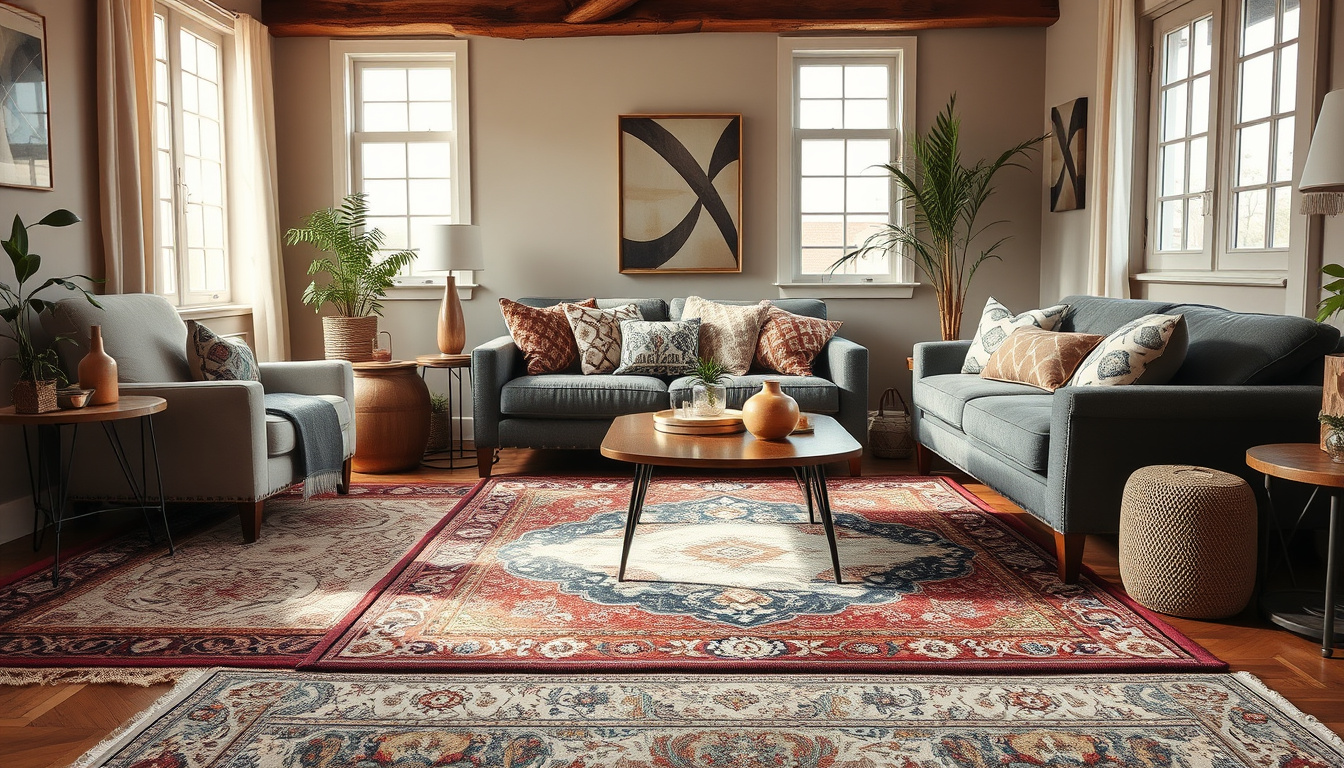
The Complete Guide to Rugs for Living Room Spaces
Selecting the right rug for your living room involves more than choosing a colour that complements your sofa. The ideal rug ties together the various elements of your seating area while providing comfort underfoot and protecting your flooring. Understanding the key factors that influence this decision helps homeowners make choices that enhance their spaces for years to come.
A well-chosen rug serves as a foundation piece, anchoring furniture arrangements and establishing visual boundaries within open-plan layouts. The size, material, and pile height all contribute to how effectively a rug performs its practical and aesthetic functions in high-traffic family rooms.
Essential Rug Sizes for Common Living Room Layouts
Living room rugs come in standard sizes that accommodate most furniture arrangements. The size you choose depends largely on whether you want all furniture legs on the rug or only the front legs.
For complete under rug placement, an 8×10 foot rug typically works well in medium-sized living rooms, while larger spaces may require a 9×12 or 10×14 rug. When opting for front-leg-only placement, a 5×8 rug often suffices for standard sofas. Measuring your room and furniture before purchasing prevents the frustration of receiving a rug that looks undersized in its intended space.
The distance from the rug edge to the wall should ideally remain consistent on all sides, creating a balanced visual frame around your furniture grouping. In smaller rooms, leaving a greater border of exposed floor can make the space feel larger.
Key Considerations When Selecting Living Room Rugs
Material selection significantly impacts both the longevity and maintenance requirements of your rug. Wool offers natural durability and stain resistance, making it suitable for households with children or pets. Synthetic fibres like polypropylene provide comparable durability at more accessible price points while offering excellent resistance to fading in sunlit rooms.
Pile height influences both comfort and practicality. Low-pile rugs easier to clean and better suited to doorways, while medium and high-pile options add cosy texture underfoot but require more frequent vacuuming. Texture also affects acoustics in a room, with denser rugs helping to absorb sound in spaces with hard flooring.
Colour and pattern decisions should consider existing furnishings, wall colours, and the overall aesthetic you wish to achieve. Solid colours offer versatility and can be refreshed with decorative pillows or throws, while patterned rugs add visual interest and help conceal everyday dust and debris between cleanings.
Material Comparison Table
| Material | Durability | Maintenance | Cost Range |
|---|---|---|---|
| Wool | Excellent | Regular vacuuming | Mid to High |
| Polypropylene | Very Good | Easy cleaning | Budget to Mid |
| Cotton | Good | Machine washable | Budget |
| Silk | Moderate | Professional cleaning | High |
| Jute | Good | Spot clean only | Mid |
Understanding Rug Care Requirements
Regular maintenance extends the life of any rug regardless of material quality. Vacuuming with appropriate attachments removes surface debris before it works deeper into fibres. Rotation of rugs in sunlit areas prevents uneven fading, particularly important for hand-knotted or vintage pieces.
Professional cleaning recommendations vary by material. Wool rugs typically benefit from deep cleaning every twelve to eighteen months, while synthetic options may require less frequent professional attention. Addressing spills immediately with appropriate cleaners prevents permanent staining, especially on natural fibre rugs.
Area rug pads serve multiple purposes beyond comfort. They prevent slipping on hard floors, add cushioning that reduces stress on backing materials, and create a barrier that limits dust and allergens from circulating through the room.
Timeline Considerations for Major Purchases
rug purchases often increase following holiday decorating periods, making late winter and early spring favorable times for finding sales on remaining inventory. However, custom or specialty sized rugs typically require longer lead times regardless of season.
Planning a rug purchase several weeks before needed allows adequate time for delivery, potential returns, and any necessary professional cleaning before placement. Rushing decisions often leads to sizing errors or choices that fail to complement existing furnishings.
Common Misconceptions About Living Room Rugs
One persistent myth suggests that larger rugs always cost more than smaller ones. While this holds true for standard sizes, specialty shapes and custom dimensions can reverse this equation unexpectedly. The Knot Collective offers resources explaining how area rug sizing works in practice.
Another misconception concerns the relationship between price and quality in synthetic rugs. Modern polypropylene manufacturing produces highly durable rugs that outperform many natural fibre options in specific conditions, particularly in rooms receiving significant direct sunlight.
Some homeowners believe that patterned rugs must match existing decor precisely. In reality, geometric and transitional patterns often integrate successfully with diverse furnishing styles, providing visual flexibility that solid colours cannot achieve.
Factors Affecting Long-Term Satisfaction
The intended use of your living room directly influences which rug characteristics deserve priority in your selection process. Family rooms serving as primary entertainment spaces benefit from durable, stain-resistant materials that withstand frequent activity. Formal sitting rooms may prioritise aesthetic refinement and luxurious textures over practical considerations.
Budget allocation should consider not only the initial purchase price but also ongoing maintenance costs and expected replacement timelines. A higher upfront investment in quality wool often proves economical over decades compared to replacing budget options multiple times.
Climate considerations affect material performance. Homes in humid environments may experience accelerated degradation of natural fibres unless climate control maintains consistent conditions. Understanding your local environment helps predict how different materials will age in your specific setting.
What Design Experts Recommend
“The living room rug is the room’s visual anchor. It should be large enough to unite the seating group while leaving enough floor visible to define the room’s boundaries. Think of it as a framing element rather than a filler.”
— Interior Design Professional, London
“Clients often underestimate how much texture influences perception of warmth. A plush wool rug transforms a cold-feeling room into an inviting gathering space almost instantly. Material selection deserves as much attention as colour choice.”
— Residential Design Consultant
Summary of Key Points
- Size your rug to your furniture arrangement, not arbitrary room dimensions
- Match material properties to your household’s lifestyle and maintenance capacity
- Consider pile height based on traffic patterns and cleaning frequency
- Account for ongoing care requirements when budgeting for your purchase
- Factor in room acoustics and lighting conditions when selecting colours and textures
- Invest in quality padding for improved longevity and safety
- Plan purchases ahead to avoid rushed decisions and delivery delays
Frequently Asked Questions
What size rug do I need for a living room with a standard sofa?
A 5×8 foot rug typically accommodates the front legs of a standard three-seater sofa. For a more complete look with all furniture legs on the rug, an 8×10 foot rug generally works well for average-sized living rooms with standard sofa dimensions.
How often should I vacuum my living room rug?
Vacuum high-traffic living room rugs at least twice weekly using a vacuum without a beater bar to protect fibres. Vacuuming in multiple directions helps lift debris from different fibre orientations and extends the rug’s appearance between deeper cleanings.
Which rug material is best for households with pets?
Synthetic fibres like polypropylene offer excellent stain resistance and durability against pet claws. Wool provides natural stain resistance but may be more susceptible to damage from pet accidents if not addressed promptly. Many pet owners find that darker colours or patterned designs best mask everyday wear.
How do I prevent my rug from slipping on hardwood floors?
Quality rug pads provide essential grip between the rug and floor surface while adding comfort underfoot. Felt-rubber pads offer excellent grip without risking floor damage. Avoid using rug grips with plastic backings as these can sometimes scratch or discolour hardwood finishes.
Can I use a living room rug in other rooms?
Living room rugs typically work well in adjacent spaces with similar traffic levels, including dining rooms and home offices. Consider whether different lighting conditions might affect colour appearance and whether the existing size suits the new space’s furniture arrangement before relocating.
Related stories





Chris O'Brien covers Canadian startups, AI developments and innovation policy for BuzzLayer.