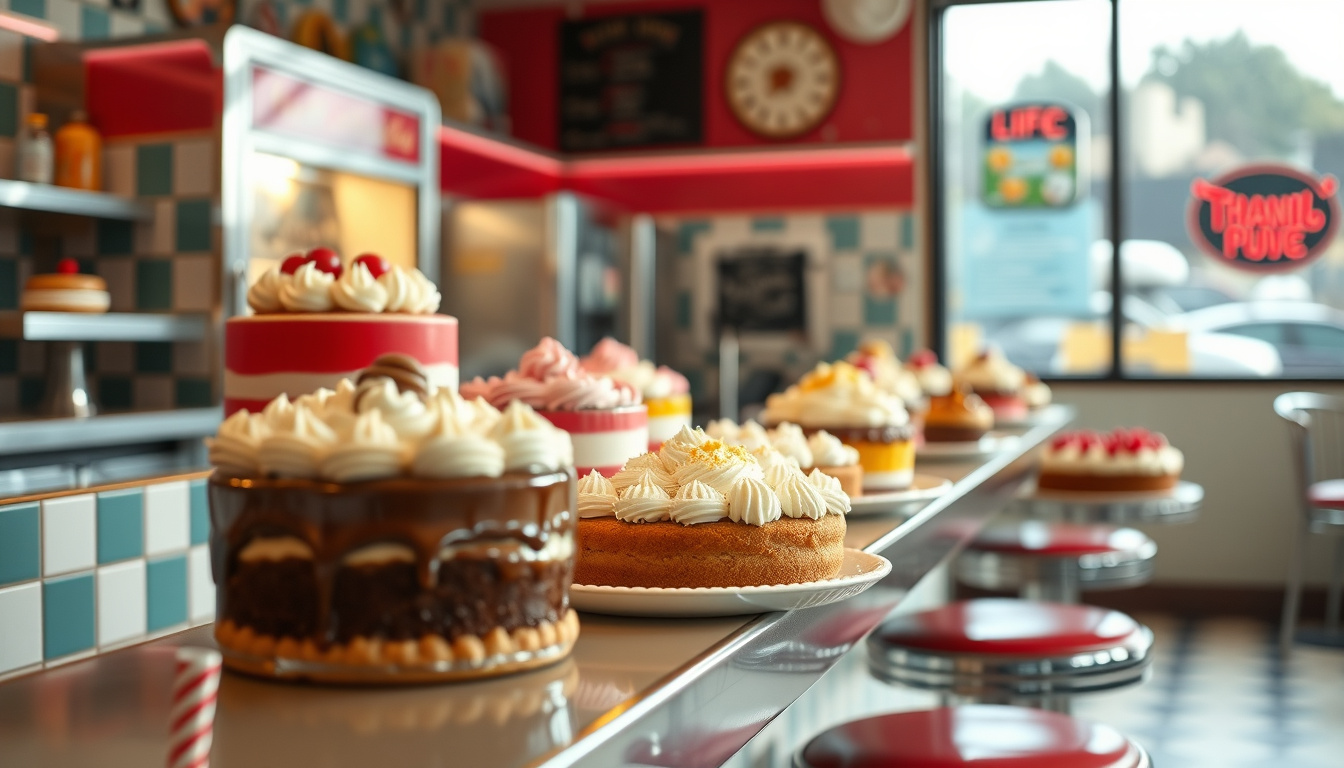
Very few artists make a cake feel like a monument, but Wayne Thiebaud managed exactly that, turning everyday desserts into icons of American art. If you have ever paused at a bakery display case and felt a strange pull toward the rows of perfectly iced confections, you already understand the core of his appeal. This article digs into the life of the man behind the famous Cakes and Pies, separating the verified facts from the folklore, and getting to the heart of why his work—often lumped in with Pop Art—feels so distinctly, and quietly, his own.
Key Facts: Wayne Thiebaud
Born in Mesa, Arizona in 1920, Thiebaud’s career spanned over seven decades, and his unique visual language made him a beloved figure in American art. His path was not a straight line from art school to gallery; it included time in the military, work as a cartoonist, and a long teaching career. The following snapshot captures the essentials of his biography.
| Field | Details |
|---|---|
| Full name | Wayne Thiebaud |
| Born | November 15, 1920, Mesa, Arizona, U.S. |
| Died | December 25, 2021, Sacramento, California, U.S. |
| Nationality | American |
| Known for | Painting, printmaking |
| Art movement | Pop art, contemporary realism |
| Spouse | Betty Carr Thiebaud |
| Notable works | Cakes (1963), Pies, Pies, Pies (2019), Four Pinball Machines |
The arc of his life—from a farm boy in Arizona to a celebrated painter in California—is a quintessential American story, one he told not with grand gestures, but through the patient study of light, form, and the objects that populate our daily lives.
The Sweet Allure of the Ordinary
Thiebaud’s subjects are deceptively simple: rows of pies, piled cakes, and lollipops that seem to glow from within. He is often described as a painterly realist whose work bridges the gap between abstract expressionism and pop art. His thick, buttery paint mimics the very textures he painted, creating a tactile quality that is almost edible. As the Smithsonian American Art Museum notes, he is often described as a painterly realist capturing the essence of the American scene.
These were not just treats; they were meditations on desire, marketing, and the repetitive beauty of the man-made world. His compositions often feature serial repetition, like the lines of a production line, but rendered with a tenderness that transforms mass production into a personal ritual. The California Museum details how his work, including pieces like Four Pinball Machines, showcases this interplay between mechanical precision and human warmth.
Thiebaud’s genius lay in rescuing the everyday, submitting it to the discipline of the painterly craft, and presenting it back to us with a sense of reverence. His art never mocks its subjects; it celebrates them.
Masters and Mentors: The Artist’s Circle
Thiebaud was not only a maker of art but a shaper of artists. His long career as a professor, primarily at the University of California, Davis, put him in contact with a generation of young creators. While his own work fetches millions, his influence is perhaps most felt in the classrooms where he taught. He was known for teaching the fundamentals of painting with a rigour that matched his own practice, emphasizing drawing and observation above all else.
His circle included figures like Mel Ramos and the artist who introduced him to the Bay Area art scene. Interestingly, the question of his “famous students” is complex; while he taught many, the permanent impact on his students is a point of note for collectors and historians alike. He was a figure who bridged the gap between the abstract expressionists of the 1950s and the new generation of realists who followed.
The Iconic Works and Auction Records
While Cakes (1963) and Pies, Pies, Pies (2019) are iconic, the market also reveres his pinball machine paintings for their complex play of light and reflection. Thiebaud’s canvases are not just paintings; they are historical documents of a post-war America that fell in love with consumer culture. His most expensive painting, Pies, Pies, Pies (2019), sold for $4.1 million, a staggering sum for a contemporary realist, proving that the market’s appetite for his work remains undiminished.
His technique involved building up layers of paint, often using a palette knife to apply thick impasto that cast shadows onto the canvas. This gives his work a sculptural quality, making the cakes and pies look as if they are rising off the surface. It’s a masterclass in the power of paint itself.
Between 2019 and 2022, the average sale price for a major Thiebaud work went from $2.8 million to $4.1 million, showing a tight supply driving demand from top-tier collectors.
A Legacy Written in Sugar and Oil
Wayne Thiebaud passed away just a month after his 101st birthday, leaving behind a legacy that is both vast and focused. He was the quintessential American painter, a man who found poetry in the mundane and elevated the simple pleasures of a diner counter into unforgettable art. His work continues to be exhibited globally, and his paintings are considered cornerstones in the collections of major institutions like the Smithsonian and the Art Institute of Chicago.
The lessons from his life—dedication, patience, and a love for one’s subject—resonate as strongly today as they did when he first picked up a brush. He ignored the siren call of appropriation and gesture, choosing instead the slower path of observation. He is often categorized as a Pop artist, but he never used commercial imagery in the way of Warhol or Lichtenstein; his connection to the movement was more about subject matter than method. Instead, he stands as a singular figure, a painter first and foremost, who happened to love pies.
cca.edu, en.wikipedia.org, britannica.com, 1stdibs.com, theartstory.org, acquavellagalleries.com, tfaoi.org, upsilongallery.com, sfmoma.org, jmcohen.com
Frequently asked questions
Did Wayne Thiebaud have any famous students?
While he taught for decades at UC Davis, his most famous mentee is often cited as the painter Mel Ramos, though Thiebaud also had a profound influence on many Bay Area figurative painters. He was not known for creating a “school” of followers, but rather for encouraging individual vision in his pupils.
Is Wayne Thiebaud considered a Pop artist?
It’s complicated. He is often grouped with Pop artists because of his subject matter—everyday consumer goods—but he is more accurately described as a contemporary realist or Pop realist. Unlike Warhol or Lichtenstein, he celebrated his subjects rather than critiquing consumer culture, and his style is rooted in traditional painting techniques.
Are there any Wayne Thiebaud exhibitions currently?
As of late 2023, there are no major museum retrospectives of his work scheduled. However, his paintings are permanently on view at the Smithsonian American Art Museum and the Art Institute of Chicago. It’s best to check the websites of major art museums for future temporary exhibitions.
Why did Wayne Thiebaud paint cakes and pies?
Thiebaud was drawn to them for their geometric complexity and the technical challenge they presented. The curved surfaces of cakes with their glistening glazes and the repetitive, rhythmic slices of pies allowed him to explore light, shadow, and the texture of oil paint. They were also subjects that carried a universal familiarity.
What makes a Wayne Thiebaud painting so expensive?
His works are expensive because of a combination of scarcity and high demand. Thiebaud produced a relatively small body of work, and the very best examples, like Pies, Pies, Pies, rarely come to auction, driving prices into the multi-million dollar range. His status in art history and his influence on subsequent generations of realists solidify his market value.
How did Wayne Thiebaud’s style evolve over time?
While he is famous for cakes and pies, his subject matter includes cityscapes, figures, and even mirrored pinball machines. His style remained remarkably consistent in its thick impasto and vibrant artificial light, but his compositions grew more complex over time, moving from simple single objects to elaborate, multi-layered scenes.
Confirmed facts
- Worked as a cartoonist and sign painter before serving in the US Army Air Corps during World War II.
- After the military, he studied art at San Jose State College and later earned a master’s degree from Sacramento State College.
- Taught at the University of California, Davis, for over 40 years.
- Mentored a generation of artists, emphasizing the importance of drawing and color theory alongside painting.
- Famous for still-life paintings of cakes, pies, and pastries, but also painted cityscapes and figures.
- His work, such as Four Pinball Machines, shows his interest in reflections and complex lighting.
- Often associated with Pop Art, but considered himself a “painterly realist” highlighting the American scene.
- His technique involved thick layers of paint (impasto) to create texture, mimicking the subjects he painted.
Related reading
For those interested in learning more about the artists who shaped Wayne Thiebaud’s journey, exploring the world of contemporary American realism is a natural next step. His work was profoundly influenced by the abstract expressionists who preceded him, though he pivoted toward representation when it was not the prevailing fashion.
The intersections between Thiebaud’s work and the broader Pop Art movement are subtle but present. While Warhol used silkscreen to create distance from the hand, Thiebaud’s brushwork was inherently personal. He transformed the icons of the consumer age into something that felt about the essence of paint.
His legacy is a testament to the idea that an artist can be both popular and profound, commercial and academic, all in the same sweet slice. He proved that one could paint for the ages by painting the treats that matter most to us here, on a Sunday afternoon. He made the ordinary extraordinary, and the everyday eternal.
In a funny way, the real subject of a Thiebaud painting was always patience itself—the patience of a baker icing a cake, and the patience of a painter building up a surface with a humble palette knife. He gave us more than just things to look at; his art gives us a way to look at, and find joy in, the relentless repetition of our own lives.
Related stories




Alex Nguyen is Editor-in-Chief at BuzzLayer, overseeing editorial standards, publication decisions and corrections.