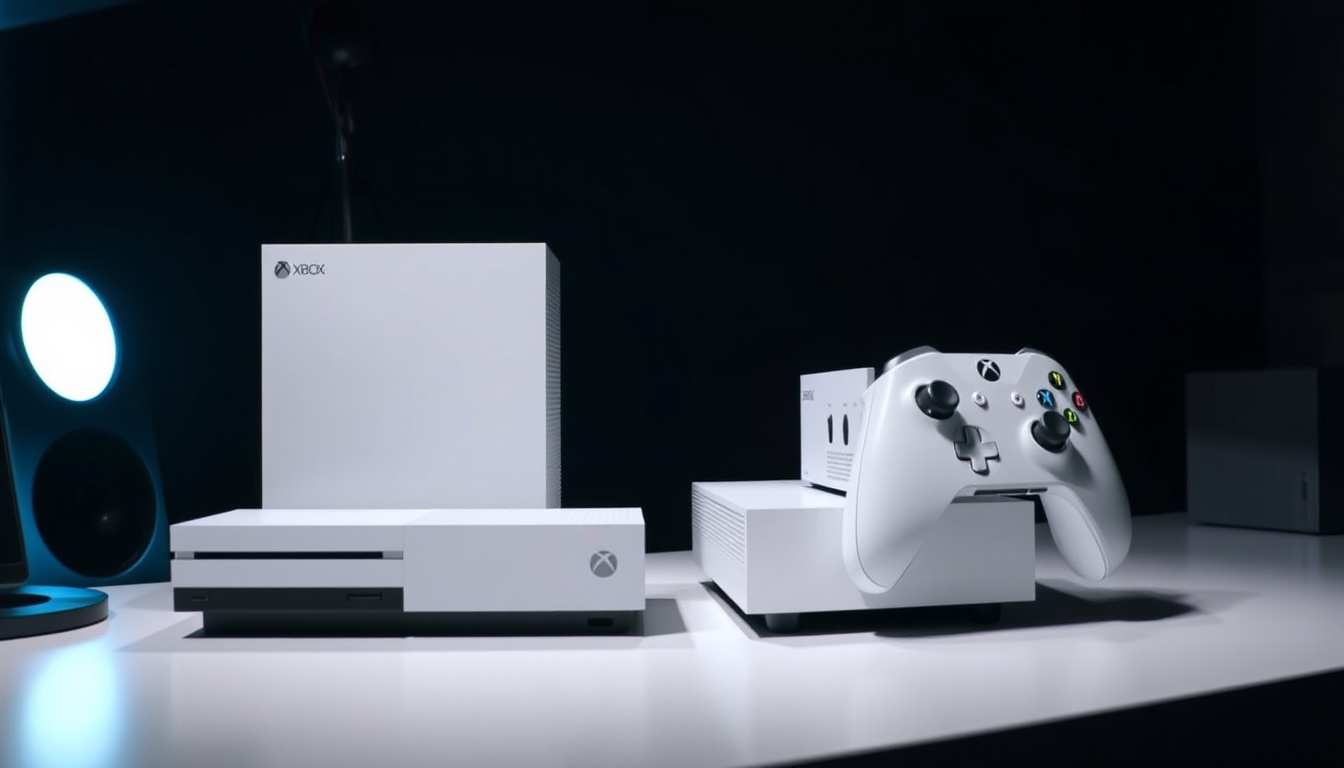

If you’ve been searching for an “Xbox One Series S,” you’re not alone — it’s one of the most common search misnomers in gaming right now. The thing is, that console doesn’t actually exist. What you’re likely looking for is either the Xbox One S (discontinued since 2020) or its next-gen counterpart, the Xbox Series S. This article cuts through the confusion, compares both machines side by side, and helps you decide which one actually fits your setup.
Xbox Series S Release Year: 2020 · Xbox One Line Discontinued: July 2020 · Storage Options: 512GB or 1TB SSD · Resolution: 1440p (upscales to 4K) · Disc Drive: Disc-free
Quick snapshot
- The Xbox Series S launched in November 2020 as a disc-free, digital-next-gen console (Microsoft Official)
- Microsoft discontinued the Xbox One line in July 2020 to focus on Series X|S (Pocket-lint)
- Series S supports up to 120 FPS at 1440p resolution with 4K upscaling (Microsoft Official)
- Whether the “Xbox One Series S” search reflects an actual rumored console or purely a naming confusion
- Current retail pricing for Series S in Ireland — EU pricing applies but specific EUR figures need local retailer confirmation
- Xbox One S announced at E3 on 13 June 2016, discontinued post-2020 (AimControllers)
- Series S launched November 2020 — four years of next-gen availability (AimControllers)
- Series S remains Microsoft’s budget next-gen entry point; no budget model replacement announced as of early 2026
- Backward compatibility ensures Xbox One libraries work on Series S indefinitely
The table below lays out the core technical differences at a glance.
| Spec | Xbox Series S | Xbox One S |
|---|---|---|
| Release Date | November 2020 | Announced June 2016 |
| Status | Active (current-gen) | Discontinued July 2020 |
| Resolution Target | 1440p, upscales to 4K | 1080p, upscales to 4K |
| Max Frame Rate | 120 FPS | 60 FPS |
| Storage | 512GB SSD (expandable) | 1TB HDD |
| Optical Drive | None (digital only) | UHD Blu-ray |
| Ray Tracing | Yes | No |
Is the Xbox Series S worth it?
For most buyers considering an Xbox One upgrade in 2026, the Series S delivers meaningful improvements — but the disc-free design and tight storage are genuine trade-offs worth weighing.
Performance upgrades
The performance gap between these consoles is substantial. According to a developer from The Coalition, the Xbox Series S is more than four times as powerful as the Xbox One S. The Series S CPU runs at 3.6 GHz versus the One S’s 1.75 GHz, and its custom Zen 2 architecture handles complex tasks far more efficiently than the older Jaguar-based chips. The RAM situation tells a similar story: 10GB of fast GDDR6 memory on the Series S beats the 8GB GDDR3 in the One S by a wide margin in both capacity and bandwidth.
Games load noticeably faster on the Series S thanks to its NVMe SSD, which delivers 2.4 GB/s raw I/O throughput (4.8 GB/s compressed) compared to the sluggish HDD in the One S. That difference transforms open-world games in particular — no more staring at loading screens when fast-traveling across large environments.
The Series S delivers roughly double the frame rates and significantly faster load times compared to the Xbox One S, which matters most for games optimized for current-gen hardware.
Price value
Price comparisons get complicated because the Xbox One S is no longer in production. When available, last-gen units reportedly fetch around £250, though stock is increasingly scarce and prices vary widely by retailer. The Series S launched at an accessible price point and has remained competitive, especially when discounted. One assessment from Pocket-lint technology review notes that the Series S remains “probably the best deal in gaming right now, especially when it’s discounted.”
That said, the math changes when you factor in digital game pricing versus physical discs. If you already own a library of Xbox One discs, the One S’s UHD Blu-ray drive has real value — you won’t need to repurchase those games digitally.
Game compatibility
Both consoles play Xbox One games, but the experience differs. The Series S runs Xbox One titles with enhancements like faster loading and better frame rate stability. One reviewer notes that the Xbox One S remains the better choice if you want to play last-gen disc games, while the Series S is optimized for digital current-gen gaming.
No matter which console you choose, your existing Xbox One games, saves, and subscriptions transfer seamlessly — just sign in with your Microsoft account.
The verdict for most buyers: The Series S wins on performance and future-proofing, but the One S still makes sense if you have a stack of physical discs and can find one at a fair price.
What is better, Xbox One S or Xbox Series S?
The honest answer depends entirely on what you value most: raw performance and future-proofing, or physical disc support and lower upfront cost.
Speed and load times
The SSD in the Series S is the single biggest practical upgrade over the One S. NVMe storage eliminates the spinning HDD bottleneck entirely, cutting load times dramatically. According to Microsoft’s official product page, the Series S delivers 2.4 GB/s raw throughput — a leap that won’t be matched by any HDD configuration, including external drives.
Graphics and resolution
Resolution tells an interesting story. The Xbox One S targets 1080p and upscales to 4K, while the Series S aims for 1440p natively and upscales from there. Both can output to 4K displays, but the Series S renders at a higher internal resolution, producing a sharper image on1440p monitors and reducing the workload when upscaling. The Series S also hits 120 FPS in supported titles, while the One S maxes out at 60 FPS. Ray tracing support on the Series S adds another visual dimension unavailable on last-gen hardware.
Storage and expandability
Storage is where the comparison gets awkward for the Series S. Its 512GB SSD sounds reasonable until you consider that modern games routinely exceed 50GB each. The One S’s 1TB HDD holds more raw data, though it’s drastically slower. The Series S compensates with expandable storage via official expansion cards, but that adds cost. Neither console is ideal for large digital libraries without additional spending.
Storage bottom line: The One S holds more data on paper, but the Series S’s SSD speed makes everyday gaming feel far more responsive.
Why was Xbox One S discontinued?
Microsoft made a deliberate strategic call to consolidate its console lineup around next-gen hardware, leaving the Xbox One family behind in favor of the Series X|S duo.
Microsoft’s 2020 announcement
Microsoft announced the discontinuation of the Xbox One line in July 2020, a move confirmed by multiple technology outlets including Pocket-lint consumer technology review publication. The announcement cleared the runway for the Series S and Series X, which had launched months earlier in November 2020.
Shift to next-gen
The discontinuation reflected Microsoft’s commitment to the Xbox Series X|S platform as its primary focus. Game developers increasingly optimized for current-gen features like faster CPUs, SSDs, and ray tracing — hardware the One S simply couldn’t deliver. Maintaining two console generations simultaneously also divided development resources and complicated the Game Pass proposition.
Production end impact
For consumers, the end of production means new Xbox One S units are no longer manufactured. Remaining retail stock varies by market and retailer, with prices often inflated above original retail. Secondary market prices have climbed as scarcity increases — a typical pattern when manufacturing ceases on consumer electronics.
What this means for buyers: Any “new” One S on the market is old stock at inflated prices — the Series S at regular retail is now the better value proposition.
What year is the Xbox One Series S?
There is no Xbox One Series S. The confusion stems from a common search pattern where buyers combine generations unintentionally — and it’s worth understanding why the distinction matters.
No Xbox One Series S exists
The “Xbox One Series S” query doesn’t correspond to any real Microsoft product. Xbox One is the 2013 generation; Xbox Series S is the 2020 digital-only model. No manufacturer has released a console with both labels. This appears to be a search misnomer rather than a rumored or leaked product.
Xbox Series S launch
The Xbox Series S launched in November 2020 as the budget companion to the flagship Series X. It launched at $299 in the United States, targeting 1440p gaming with a disc-free, all-digital design. According to Microsoft’s official product page, the console features a custom Zen 2 processor, RDNA2 graphics, and a 512GB SSD as confirmed baseline specifications.
Common search confusion
The “Xbox One Series S” search likely reflects buyers who encountered the term through search autocomplete, forum discussions, or outdated articles. The confusion is understandable — the naming is similar, both start with “Xbox,” and many buyers search by component rather than generation.
What are the key differences between Xbox One and Xbox Series S?
The generational gap between these two consoles spans nearly every hardware dimension: processing power, storage technology, graphics capabilities, and form factor all differ substantially.
Hardware specs
The specs table below highlights the architectural leap from Jaguar to RDNA2.
| Component | Xbox Series S | Xbox One S |
|---|---|---|
| GPU Architecture | RDNA2, 20 CUs @ 1.55 GHz | AMD Jaguar, 12 CUs |
| GPU Performance | 4 TFLOPS | 1.23 TFLOPS |
| CPU | Custom Zen 2 8-core @ 3.6 GHz | Custom Jaguar 8-core @ 1.75 GHz |
| RAM | 10GB GDDR6 | 8GB GDDR3 |
| Storage | 512GB NVMe SSD | 1TB HDD |
| Dimensions | 275 × 150 × 64mm, 1.9kg | 294 × 229 × 64mm, 2.9kg |
| Optical Drive | None (digital only) | UHD Blu-ray |
| Max Output | 1440p / 4K upscaling / 120Hz | 1080p / 4K upscaling / 60Hz |
| I/O Throughput | 2.4 GB/s raw, 4.8 GB/s compressed | HDD-limited (~0.1 GB/s) |
| Ray Tracing | Yes (hardware RT) | No |
| Audio Support | Dolby Vision, Dolby Atmos, DTS | Dolby Atmos, DTS |
| Variable Refresh Rate | AMD FreeSync, HDMI VRR, ALLM | None |
Gaming features
On the gaming features front, the Series S pulls well ahead. Quick Resume lets you suspend multiple games and jump between them instantly — a feature impossible on HDD-based hardware. Auto Low Latency Mode (ALLM) and HDMI Variable Refresh Rate (VRR) reduce input lag and screen tearing when gaming on compatible displays. The One S lacks these features entirely; they require the faster processing and memory bandwidth of current-gen hardware.
Dolby Vision support on the Series S enhances HDR gaming on supported titles, a capability the One S doesn’t offer. Both consoles support Dolby Atmos for spatial audio, but the Series S’s more powerful CPU handles more complex audio processing.
Availability
The Xbox One S is no longer manufactured as of July 2020, according to reporting from Pocket-lint technology review outlet. Remaining stock sells through remaining retail channels at fluctuating prices. The Series S remains actively produced and available through Microsoft and major retailers.
For buyers in Ireland, the comparison often hinges on what’s actually available at local retailers like Smyths or GameStop Ireland — both consoles may be harder to source depending on stock levels, with the One S being particularly scarce.
Upsides
- Series S loads games dramatically faster than Xbox One S thanks to NVMe SSD
- Series S renders at up to 120 FPS versus 60 FPS max on One S
- Series S is smaller (275 × 150 × 64mm) and lighter (1.9kg) than One S
- Ray tracing support on Series S enables advanced lighting effects
- Both consoles share full backward compatibility — same game library
- Game saves and subscriptions transfer seamlessly between generations
Downsides
- Series S has no disc drive — all games must be purchased digitally
- 512GB SSD fills quickly; expansion storage costs extra
- One S remains relevant only if you own physical Xbox One discs
- One S production ceased in 2020 — new units are scarce and overpriced
- One S cannot run games optimized for current-gen hardware
- Series S’s 1440p target may underwhelm on 4K TVs without upscaling
The Xbox Series S remains probably the best deal in gaming right now, especially when it’s discounted — nabbing you current-gen gaming for way less.
— Pocket-lint technology review
A developer from The Coalition says the Series S is more than four times as powerful as the One S.
— AimControllers gaming blog via developer interview
Related reading: Waitrose Food to Order – Delivery Guide and Costs · All Her Fault Episodes – Complete Guide and Summaries
solentwaycomputers.co.uk, youtube.com, youtube.com, youtube.com, youtube.com
Beyond specs, savvy Irish buyers often find used Xbox One S deals up to 70% cheaper than new Series S models, easing upgrade decisions.
Frequently asked questions
Does Xbox Series S play Xbox One games?
Yes. The Xbox Series S is fully backward compatible with all Xbox One games, including discs and digital downloads. Xbox Series X|S hardware runs Xbox One titles with enhancements like faster loading and improved frame rate stability where developers have enabled them.
How do I transfer games from Xbox One to Series S?
Simply sign in with your same Microsoft account on the Series S. Your game saves, digital purchases, and Xbox Game Pass subscription carry over automatically over your home network or via cloud sync. Physical discs from the One S can’t be installed on the Series S due to the lack of a disc drive — only digital versions transfer.
Is Xbox Series S backwards compatible?
Yes, and the backward compatibility extends beyond Xbox One games. The Series S also plays select Xbox and Xbox 360 titles that have been made available through Microsoft’s backward compatibility program — though the library of compatible titles varies by generation and title-by-title licensing.
Can I buy Xbox One S new?
No. Microsoft discontinued the Xbox One line in July 2020. New units are no longer manufactured, and remaining retail stock has largely sold out. Any “new” Xbox One S units available now are likely remaining old stock at inflated secondary-market prices. For buyers wanting a physical-disc console, the Xbox Series X remains the only option — it includes a disc drive and current-gen performance.
What storage does Xbox Series S have?
The Xbox Series S ships with 512GB of internal NVMe SSD storage. Of that, roughly 364GB is available for games and apps after the operating system consumes its share. Microsoft offers an official Storage Expansion Card in 512GB, 1TB, and 2TB sizes that slots into the back of the console. External USB drives can also be used, though only for Xbox One and earlier titles — current-gen games must run from internal or expansion storage.
Does Xbox Series S have a disc drive?
No. The Xbox Series S is a digital-only console with no optical drive whatsoever. All games, movies, and content must be purchased and downloaded digitally through the Microsoft Store or Xbox Game Pass. If physical disc support is essential, the Xbox Series X at a higher price point is Microsoft’s alternative with current-gen performance and a disc drive.
For buyers in Ireland deciding between a used Xbox One S and a new Series S, the trade-off is clear: the Series S offers substantially better performance, faster storage, and an active warranty, while the One S makes sense only if you have a stack of physical Xbox One discs you refuse to re-purchase digitally. With new One S units no longer in production, sourcing one reliably at a fair price has become genuinely difficult — a factor that tips the scales further toward the Series S for most buyers weighing their options.
Related stories





David Kim covers consumer technology, apps and platform updates for BuzzLayer.