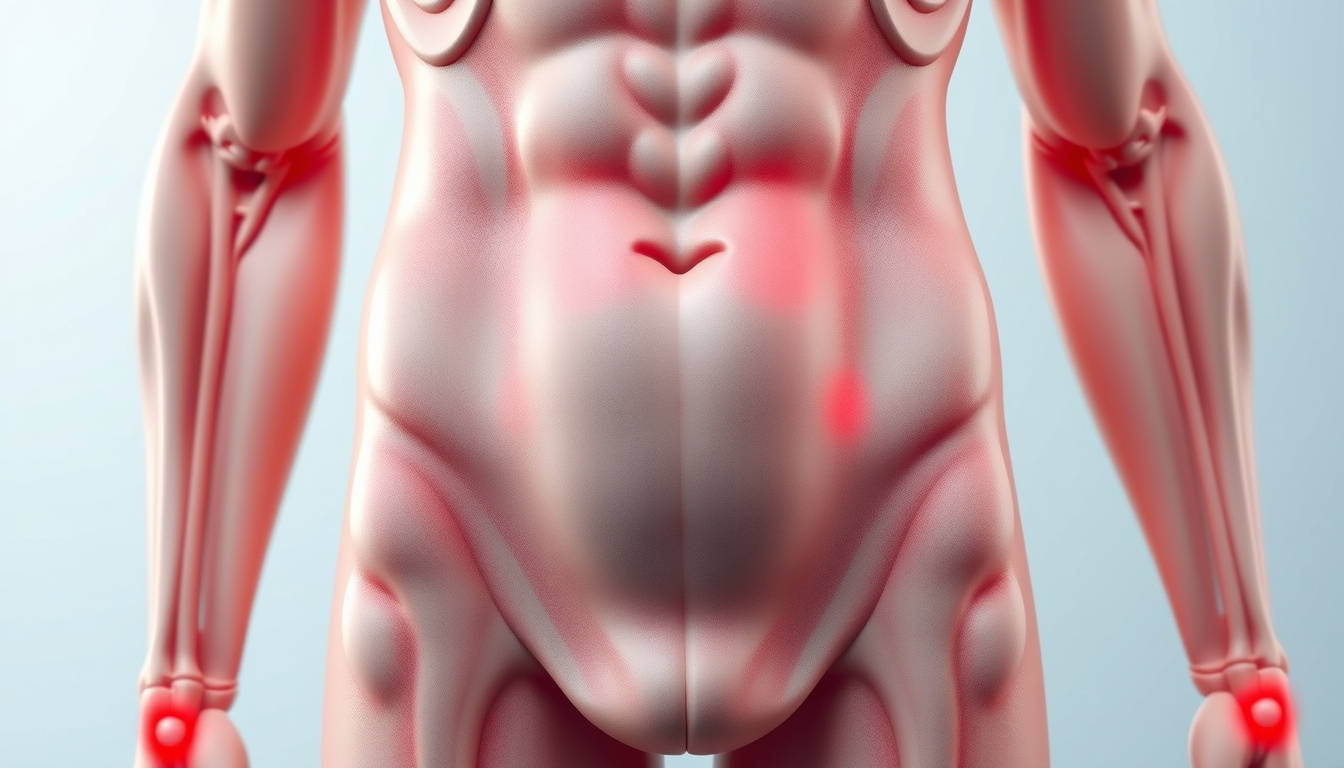
Understanding what a hernia feels like can help you identify the condition early and seek appropriate care. Hernias occur when tissue pushes through a weak spot in the surrounding muscle or connective tissue, most commonly in the groin or abdomen. The sensations they produce vary widely, ranging from mild discomfort to sharp, debilitating pain.
Recognizing the characteristic feelings associated with hernias—including specific types of pain, visible bulges, and trigger patterns—can guide whether you need medical evaluation. This guide covers the primary sensations, common locations, progression patterns, and warning signs that distinguish hernia symptoms from other conditions.
Anyone experiencing persistent groin or abdominal discomfort should understand these distinctions, as early intervention typically leads to better outcomes and fewer complications.
What Does a Hernia Feel Like? Common Sensations and Symptoms
The sensations caused by hernias differ depending on the type, location, and severity of the condition. Most people describe a combination of discomfort that intensifies with certain activities and eases with rest.
Dull ache, sharp stab, burning sensation
Groin, abdomen, upper stomach
Soft lump that worsens when standing
Coughing, lifting, straining
Key Sensations Reported by Patients
Medical sources document several distinct sensations that characterize hernia symptoms:
- Dull ache, pressure, or heaviness in the groin or abdomen that may be constant or intermittent
- Sharp or burning pain during straining, lifting, or physical activity that may radiate to the thigh, back, testicles, or labia
- Gurgling, tugging, or pinching sensations at the bulge site
- A visible or palpable lump that increases when standing and may shrink when lying down
- Weakness or feeling of fullness in the affected area
- Symptoms that come and go rather than remaining constant
According to Johns Hopkins Medicine, pain frequently comes and goes, with the protrusion becoming more noticeable when standing and reducing when lying down or being manually pushed back.
Symptom Comparison by Hernia Type
| Symptom | Inguinal (Groin) | Abdominal (Ventral) | Hiatal |
|---|---|---|---|
| Primary pain | Dull ache, sharp stab | Mild ache, pressure | Heartburn, chest pain |
| Visible bulge | Yes, above groin crease | Yes, at incision or navel | No external bulge |
| Common triggers | Lifting, coughing | Heavy lifting, running | Eating, lying down |
| Radiating pain | Thigh, testicles, labia | Localized area | Back, chest |
| Associated symptoms | Scrotal swelling | Skin discoloration | Acid reflux, nausea |
While inguinal and ventral hernias typically produce visible or palpable bulges, hiatal hernias affect the upper stomach through the diaphragm and cause internal symptoms without any external lump. According to the Cleveland Clinic, hiatal hernias primarily manifest as acid reflux, heartburn, indigestion, bloating, regurgitation, and difficulty swallowing.
Where Do You Feel Hernia Pain and Bulge?
The location of hernia symptoms depends largely on the type of hernia. Understanding where discomfort typically appears can help narrow down the specific condition you may be experiencing.
Inguinal Hernia Location
Inguinal hernias account for approximately 90% of all hernias and occur in the groin area. The UCSF Department of Surgery notes that this type creates a bulge above the groin crease, potentially on one or both sides. In men, the bulge may extend into the scrotum, while in women it can extend toward the labia.
According to Columbia University Surgery, the area may feel tender or heavy, especially after physical exertion. Many patients describe a sensation of dragging or pulling in the affected groin.
Gender-Specific Presentations
Men experience inguinal hernias far more frequently than women, with roughly 90% of hernias occurring in males. Men may notice scrotal swelling, tugging sensations, or testicular pain accompanying the groin bulge.
Women account for approximately 40% of inguinal hernia cases. While the presentation is similar, women face a potentially higher risk of complications, and a femoral type hernia with labial extension is also possible in female patients.
Can You Feel a Hernia from the Outside?
For inguinal and ventral hernias, yes—the bulge is often palpable. The Advanced Hernia Specialists organization explains that the protruding tissue creates a soft lump beneath the skin that can usually be felt with gentle pressure.
A simple self-check involves standing and coughing or straining to see if a bulge becomes more prominent. Lying down may cause the bulge to reduce or disappear entirely, which medical professionals call a reducible hernia.
To check for a potential inguinal hernia, stand upright and feel along the groin crease while coughing or bearing down. A noticeable bulge that increases with strain or can be gently pushed back may indicate a hernia. The Surgical Associates of North Texas recommend this simple examination for early detection.
Does Hernia Pain Come and Go? Triggers and Progression
One of the hallmark characteristics of hernia pain is its intermittent nature. Symptoms often fluctuate based on physical activity, body position, and the severity of the underlying condition.
Common Triggers for Hernia Symptoms
Several activities commonly provoke hernia discomfort:
- Heavy lifting or strenuous exercise
- Coughing, sneezing, or forceful straining
- Bending over or engaging in activities that increase abdominal pressure
- Prolonged standing or walking
- Straining during bowel movements
According to Johns Hopkins Medicine, symptoms frequently ease with rest, and many people find that lying down provides relief as gravity allows the protruding tissue to return to its normal position.
Symptom Progression Over Time
- Early stage: Mild discomfort or soreness in the groin or abdomen, sometimes painless initially; small bulge that may come and go
- Worsening stage: Bulge becomes more prominent and persistent; pain intensifies with activity; difficulty reducing the bulge manually
- Complication stage: Intense, sudden pain; nausea or vomiting; bulge that cannot be pushed back; redness or discoloration—indicating potential strangulation
The UVA Health notes that strangulated hernias represent a medical emergency requiring immediate surgical intervention. The trapped tissue can lose blood supply rapidly, leading to tissue death within hours.
When Pain Worsens with Exercise
Exercise-related pain is particularly common with inguinal and ventral hernias. Activities that engage the core muscles—running, weightlifting, sit-ups—increase intra-abdominal pressure and aggravate the weakened area. Many patients report that the discomfort begins during or immediately after physical exertion and may persist for hours afterward.
If hernia pain becomes severe, is accompanied by nausea or vomiting, or if the bulge cannot be returned to its normal position, seek emergency medical care immediately. According to the Mayo Clinic, these symptoms may indicate strangulation, a life-threatening complication requiring urgent surgery.
How Do I Know If I Have a Hernia? Self-Check and When to See a Doctor
Distinguishing hernia symptoms from other causes of groin or abdominal pain can be challenging, but certain characteristics help set hernias apart from other conditions.
Differentiating Hernia from Muscle Strain
According to UVA Health, the pain patterns differ significantly:
- Hernia pain typically presents as a dull ache or burning sensation that sharpens with activity or lifting
- Muscle strain causes sudden sharp pain from direct injury, evolving into soreness and tenderness without any visible bulge
- Hernias produce a reducible lump that changes with body position; strains do not
- Strain pain usually peaks within 24-48 hours of injury and gradually improves; hernia discomfort persists or worsens over time
Self-Examination Steps
A basic self-check can provide initial guidance:
- Stand in front of a mirror and visually inspect the groin and abdomen for any asymmetry or bulging
- Gently press on the area while coughing or bearing down to feel for a protruding mass
- Lie down and observe whether any bulge reduces or disappears
- Note any pain, pressure, or dragging sensations during these maneuvers
The SEM Surgical group emphasizes that early hernias may be small and intermittent, making them easy to miss without careful examination.
When to Seek Medical Care
The National Institute of Diabetes and Digestive and Kidney Diseases (NIDDK) recommends consulting a healthcare provider for:
- Any persistent bulge in the groin, abdomen, or around a previous surgical scar
- Pain or discomfort that persists or recurs
- Symptoms that worsen with physical activity or lifting
- A bulge that cannot be pushed back manually
For a comprehensive understanding of treatment pathways, reviewing resources like Waitrose Food to Order – Delivery Guide and Costs can help with planning practical support during recovery, though medical consultation should precede any self-treatment decisions.
A physical examination by a qualified healthcare provider remains the standard for confirming a hernia diagnosis. Imaging studies such as ultrasound or CT scans may be ordered if the clinical examination is inconclusive. The WebMD resource provides additional background on diagnostic approaches used by medical professionals.
What Is Known and What Remains Uncertain About Hernia Sensations
| Established Information | Less Certain Areas |
|---|---|
| Hernias cause dull ache, sharp pain, pressure, burning, or gurgling sensations | Precise pain thresholds vary significantly between individuals |
| Most hernias worsen with activity (lifting, coughing) and improve with rest or lying down | Exact progression timelines differ based on individual factors |
| Inguinal hernias typically show visible/palpable bulges; hiatal hernias do not | Optimal timing for surgical intervention in asymptomatic patients remains debated |
| Strangulation signs include sudden severe pain, nausea, non-reducible bulge, redness | Long-term outcome variations following different surgical techniques |
| Gender differences exist in prevalence and presentation patterns | Effectiveness of non-surgical management approaches |
The Broader Context of Hernia Conditions
Hernias develop when tissue pushes through a weakness in the surrounding muscle or fascia. The most common type, inguinal hernia, occurs in the groin canal where the spermatic cord passes through the abdominal wall in men. Women can experience inguinal hernias through the same canal where the round ligament travels.
Risk factors include age-related tissue weakening, previous surgical incisions, chronic coughing, heavy lifting, pregnancy, and genetic predisposition. The UCSF Department of Surgery notes that while many hernias are congenital, symptoms often develop later in life when tissue degeneration occurs.
Understanding these underlying mechanisms helps contextualize why symptoms manifest in specific ways and why certain activities trigger discomfort. For those exploring related content, All Her Fault Episodes – Complete Guide and Summaries offers a different perspective on comprehensive guides.
What Medical Authorities Say About Hernia Symptoms
“The most common symptom of an inguinal hernia is a bulge you can see and feel. It usually appears in the groin area near the inner thigh, or in the scrotum for men. The bulge may feel like a rounded lump and may be tender.”
“A strangulated hernia is a medical emergency. The blood supply to the hernia has been cut off. Without blood flow, the tissue can die and become infected. If left untreated, it can be life-threatening.”
Summary: Understanding Hernia Sensations
Hernias produce a range of sensations including dull aches, sharp pain, pressure, burning, and gurgling that typically worsen with activity and improve when lying down. The presence of a visible or palpable bulge in the groin or abdomen, combined with discomfort triggered by lifting, coughing, or straining, strongly suggests a hernia. Early signs may be subtle—a small, intermittent bulge with mild soreness—but symptoms generally progress over time. Seeking medical evaluation for any persistent bulge, pain, or discomfort ensures appropriate diagnosis and treatment planning before potential complications develop.
Frequently Asked Questions
Can hernias go away on their own?
No. Hernias do not resolve without medical intervention. Small, asymptomatic hernias may be monitored, but once tissue has protruded through a weakness, it requires surgical repair to prevent complications such as strangulation.
What relieves hernia pain temporarily?
Rest, avoiding triggering activities, and lying down to reduce intra-abdominal pressure may provide temporary relief. However, these measures do not address the underlying condition and symptoms typically return.
Is hernia pain always visible as a bulge?
No. While inguinal and ventral hernias typically produce visible bulges, hiatal hernias cause internal symptoms without any external lump. Some very small hernias may not produce a noticeable bulge initially.
How quickly can a hernia become dangerous?
The timeline varies. Some hernias remain stable for years, while others can strangulate within hours of onset. Sudden severe pain, nausea, vomiting, or a non-reducible bulge requires immediate emergency care.
Does a hernia always cause pain?
No. Some hernias, particularly in early stages, may be painless. The SEM Surgical notes that mild discomfort or subtle pressure may be the only initial sign in some cases.
Can I exercise with a hernia?
Strenuous exercise typically worsens hernia symptoms and may accelerate progression. Low-impact activities may be possible, but any exercise causing pain should be avoided until medical evaluation.
What does a strangulated hernia feel like?
According to UVA Health, a strangulated hernia causes sudden, severe pain with nausea, vomiting, redness, and a bulge that cannot be pushed back. This is a medical emergency requiring immediate surgery.
Related stories





David Kim covers consumer technology, apps and platform updates for BuzzLayer.