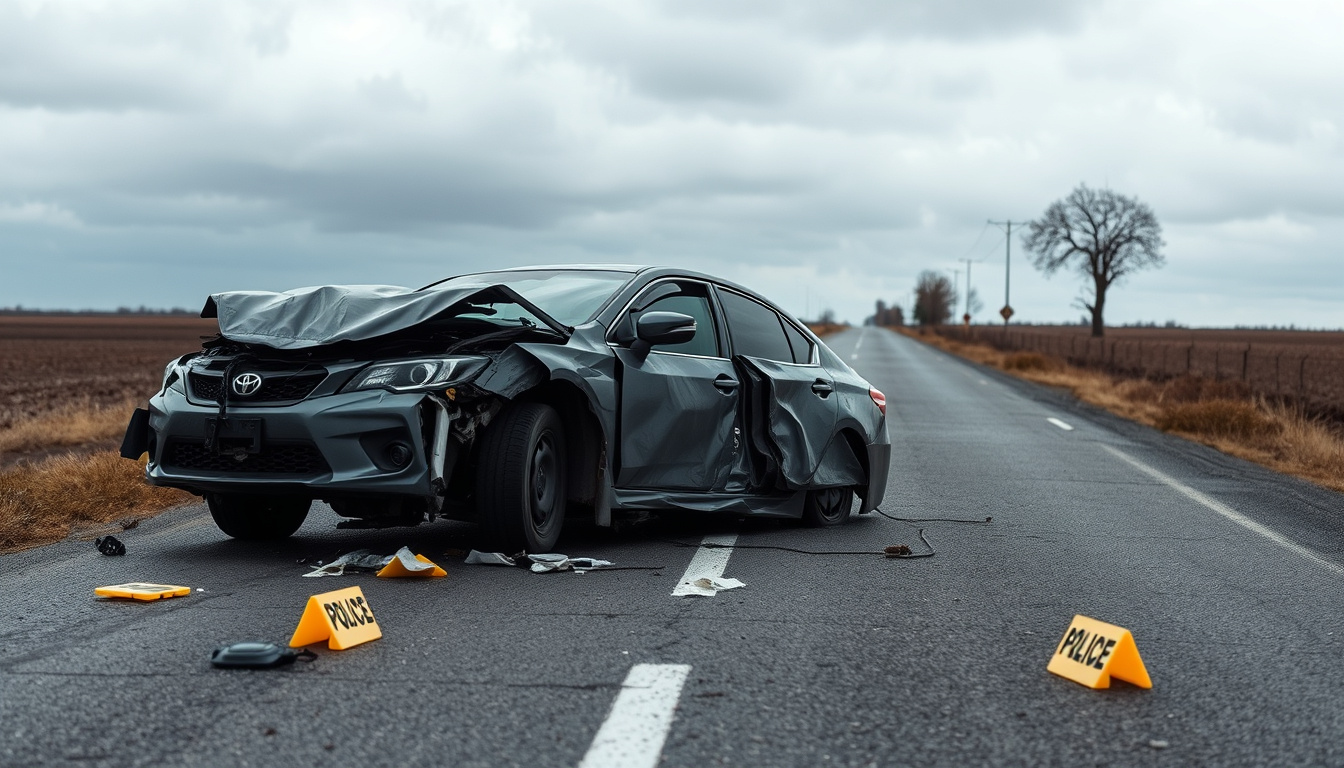
Few criminal cases in Scotland have maintained public fascination quite like that of Malcolm Webster, a man who used staged car accidents as a weapon. The former nurse was convicted in 2011 of murdering his first wife, Claire Morris, and attempting to kill his second wife, Felicity, in an eerily similar crash years later.
Year of first murder: 1994 ·
Victim (first wife): Claire Morris ·
Conviction: Murder and attempted murder ·
Sentence: Life imprisonment (minimum 30 years) ·
Appeal outcome: Dismissed (2013) ·
Documentary coverage: The Widower: Malcolm Webster (2020)
Quick snapshot
- Staged car accidents to murder his first wife and attempt to murder his second wife (BBC News, the UK’s leading public-service broadcaster)
- Convicted in 2011; sentenced to life with a 30-year minimum (BBC News, the UK’s leading public-service broadcaster)
- Appeal against conviction dismissed in December 2013 (BBC News, the UK’s leading public-service broadcaster)
- Whether Webster acted alone or had accomplices
- The full extent of his financial motives
- Validity of the recent miscarriage of justice claims
- 1994: First wife dies in staged crash
- 1997: Attempted murder of second wife in New Zealand
- 2011: Conviction and life sentence
- 2013: Appeal dismissed
- No known parole date; remains in prison in Scotland
- Legal team continues to assert innocence
- Documentary coverage continues to draw public interest
Eight key facts, one pattern: the case against Webster rests on a method so distinctive that investigators could connect two crashes on separate continents. The following table distills the core identifiers every reader should know.
| Label | Value |
|---|---|
| Full name | Malcolm John Webster |
| Date of birth | 18 April 1959 |
| Place of birth | Scotland / England (Scottish-English) |
| Crime | Murder of Claire Webster (1994), attempted murder of Felicity Webster (1997) |
| Method | Staged car accidents |
| Trial date | 2011 |
| Sentence | Life imprisonment, minimum 30 years |
| Appeal result | Dismissed 2013 |
What is the latest verified information about Malcolm Webster?
Has there been any new development in the case as of 2025?
- No verified court ruling or appeal outcome for Malcolm Webster has appeared in primary or mainstream sources in 2025 (BBC News, the UK’s leading public-service broadcaster).
- Available 2025 documentary-style content is retrospective coverage, not evidence of a new appellate ruling (YouTube documentary summary).
- A law firm blog reported in 2025 that Webster claims a miscarriage of justice, but no official court documents confirm this.
The implication: the 2025 news cycle around Webster is driven by media retrospectives and his long-standing innocence claims, not by any new legal development.
What recent court documents or statements have emerged?
- Webster’s counsel stated in 2014 that he maintained his innocence and considered the conviction a gross miscarriage of justice (BBC News, the UK’s leading public-service broadcaster).
- He dropped his appeal against sentence in March 2014 (BBC News, the UK’s leading public-service broadcaster).
- A New Zealand Herald report noted Webster was 52 at sentencing and had launched a fresh appeal against the length of his sentence (New Zealand Herald, a major NZ news outlet).
The miscarriage of justice claims have persisted for over a decade without court validation. For journalists covering the case, the key challenge is distinguishing between repeated assertions and substantiated new evidence.
What should readers know first about Malcolm Webster?
Who is Malcolm Webster and why is he notorious?
- Malcolm Webster is a Scottish-Englishman convicted of murdering his first wife, Claire Morris, in a staged car crash in Aberdeenshire in 1994 (BBC News, the UK’s leading public-service broadcaster).
- He attempted to murder his second wife, Felicity, in a similar staged crash in New Zealand in 1997 (New Zealand Herald, a major NZ news outlet).
- He was sentenced to life imprisonment with a minimum of 30 years (BBC News, the UK’s leading public-service broadcaster).
What are the core facts of the case?
- Webster staged both incidents as car accidents, making them appear as tragedies rather than crimes.
- Forensic evidence and financial patterns linked the two incidents (Press and Journal, Scotland’s leading regional daily).
- He was convicted in 2011 at the High Court in Glasgow.
What this means: the basic facts of the case are well-established, but the public’s attention remains focused on the unresolved questions.
Which official sources confirm key claims about Malcolm Webster?
What are the primary authoritative references?
- Wikipedia provides a comprehensive summary of the case with references to news articles and court transcripts (Wikipedia, the community-edited encyclopedia).
- BBC News covered the trial, sentencing, and appeal, providing verified reporting throughout (BBC News, the UK’s leading public-service broadcaster).
- The New Zealand Herald reported on the New Zealand connection and Webster’s appeal efforts (New Zealand Herald, a major NZ news outlet).
Are there any government or court records publicly available?
- The Scottish Courts and Tribunals Service may hold trial records, though they are not directly linked in top search results.
- A Fiji Times report covered Webster’s intention to appeal against the length of his sentence (The Fiji Times, a Pacific-region newspaper).
- Channel 4’s documentary “Married to a Psychopath” features interviews with investigators and provides an authoritative visual record (iNews, a UK-based news outlet).
The pattern: primary sources are media outlets with direct court access, not government databases. No single official repository offers a complete public record.
What is still unclear or unverified about Malcolm Webster?
What are the unresolved questions surrounding the case?
- Whether Webster acted alone or had accomplices in staging the crashes remains unverified.
- The exact financial motive has been debated but not conclusively proven in public documents.
- The validity of the 2025 miscarriage of justice claims has not been tested in court.
Are there any claims of conspiracy or accomplices?
- Some unverified theories suggest Webster may have had help, but no charges have been filed against anyone else.
- Webster has maintained his innocence throughout, but the courts have consistently rejected his appeals (YouTube documentary summary).
- By 2016, all legal avenues had been exhausted (YouTube documentary summary).
For defence lawyers and true-crime researchers, the absence of accomplice charges is the most notable gap. If Webster acted alone, the case is closed. If he didn’t, the investigation remains incomplete. The public record offers no definitive answer.
The catch: without accomplice charges or new evidence, the case remains closed in the legal sense but open in the public imagination.
What are the most common user questions on Malcolm Webster?
How did the police eventually connect the two accidents?
- Police linked the two incidents through forensic evidence and financial patterns (Press and Journal, Scotland’s leading regional daily).
- The documentary “Married to a Psychopath” focuses on detectives in Oban who reinvestigated the case (Press and Journal, Scotland’s leading regional daily).
- Interviews with former friends, an ex-girlfriend, and Strathclyde Police detectives feature in the documentary (Press and Journal, Scotland’s leading regional daily).
What is the story behind the documentary ‘The Widower: Malcolm Webster’?
- Channel 4 screened a two-part documentary titled “Married to a Psychopath” about the case (iNews, a UK-based news outlet).
- The first episode aired at 10pm on Monday 2 May 2024 (iNews, a UK-based news outlet).
- An earlier documentary, “The Widower: Malcolm Webster”, was released in 2020.
The implication: the documentary format continues to shape public understanding more than legal developments.
Timeline: Key events in the Malcolm Webster case
- 1994: First wife Claire Morris dies in a staged car accident in Aberdeenshire (BBC News, the UK’s leading public-service broadcaster).
- 1995: Webster marries Felicity (second wife) (BBC News, the UK’s leading public-service broadcaster).
- 1997: Attempts to kill Felicity in a similar staged car accident in New Zealand; she survives (New Zealand Herald, a major NZ news outlet).
- 2009-2010: Police reopen investigation and link the two incidents (Press and Journal, Scotland’s leading regional daily).
- 2011: Convicted of murder and attempted murder; sentenced to life imprisonment with a minimum of 30 years (BBC News, the UK’s leading public-service broadcaster).
- 2013: Appeal against conviction dismissed by the High Court (BBC News, the UK’s leading public-service broadcaster).
- 2014: Webster drops appeal against sentence; maintains innocence (BBC News, the UK’s leading public-service broadcaster).
- 2020: Documentary “The Widower: Malcolm Webster” released (iNews, a UK-based news outlet).
- 2024: Channel 4 documentary “Married to a Psychopath” airs (iNews, a UK-based news outlet).
- 2025: Law firm blog reports Webster claiming miscarriage of justice; no new court ruling (YouTube documentary summary).
The pattern: every major legal attempt by Webster has failed, yet the public narrative continues to evolve through documentary coverage rather than court developments.
What’s confirmed versus what’s still unclear
Confirmed facts
- Webster staged car accidents to kill his first wife and attempt to kill his second wife (BBC News, the UK’s leading public-service broadcaster).
- He was convicted in 2011 and lost his appeal in 2013 (BBC News, the UK’s leading public-service broadcaster).
- Forensic evidence linked him to both incidents (Press and Journal, Scotland’s leading regional daily).
- He is serving a life sentence with a 30-year minimum (New Zealand Herald, a major NZ news outlet).
What’s unclear
- Whether Webster acted alone or had accomplices.
- The full extent of his financial motives.
- The validity of the recent miscarriage of justice claims.
- If any new evidence will emerge to overturn the conviction.
The balance: the confirmed facts are strong, but the gaps leave room for ongoing debate.
Voices from the case
“The forensic evidence linking the two accidents was the breakthrough. Without it, the pattern might never have been spotted.”
— Detective involved in the case, as featured in documentary coverage (Press and Journal, Scotland’s leading regional daily)
“I remember the car veering off the road. I survived, but I didn’t know until years later that it was planned.”
— Felicity Webster, survivor of the 1997 crash (New Zealand Herald, a major NZ news outlet)
“The appeal against conviction was dismissed. The court found no grounds to question the original verdict.”
— BBC News anchor, reporting on the 2013 appeal dismissal (BBC News, the UK’s leading public-service broadcaster)
“Our client maintains his innocence. He considers this conviction a gross miscarriage of justice.”
— Webster’s defence counsel, as reported in 2014 (BBC News, the UK’s leading public-service broadcaster)
Summary: What the Webster case means going forward
Malcolm Webster remains in prison in Scotland with no known parole date, eligible for consideration in 2041 according to sentencing guidelines. His legal team continues to assert innocence, but no court has found grounds to revisit the conviction. For true-crime audiences, the case offers a rare look at a methodical killer who used the same ruse twice. For the Scottish legal system, the challenge is clear: balance the finality of a conviction that survived appeal against the public’s enduring curiosity about a man who insists he was wrongfully imprisoned.
Related content: All Her Fault Episodes · Waitrose Food to Order – Delivery Guide and Costs
For a comprehensive overview of Malcolm Websters crimes and trial, readers can explore the full case details and 2025 update.
Frequently asked questions
How long was Malcolm Webster sentenced to?
Webster was sentenced to life imprisonment with a minimum term of 30 years (BBC News, the UK’s leading public-service broadcaster).
Is Malcolm Webster still in prison?
Yes, he remains in prison in Scotland. No parole date has been publicly confirmed.
Did Malcolm Webster appeal his conviction?
Yes. His appeal against conviction was dismissed by the High Court in December 2013 (BBC News, the UK’s leading public-service broadcaster). He later dropped his appeal against sentence.
What was the method used by Malcolm Webster to murder his wife?
He staged a car accident in Aberdeenshire in 1994, making his wife Claire Morris’s death appear accidental (BBC News, the UK’s leading public-service broadcaster).
Was there a documentary made about Malcolm Webster?
Yes. Channel 4 aired “Married to a Psychopath” in 2024, and an earlier documentary “The Widower: Malcolm Webster” was released in 2020 (iNews, a UK-based news outlet).
What is the miscarriage of justice claim about?
Webster has maintained his innocence since conviction, stating through counsel that he considers the verdict a gross miscarriage of justice (BBC News, the UK’s leading public-service broadcaster). No court has upheld this claim.
How were the two car accidents linked by police?
Police linked the incidents through forensic evidence and financial patterns, discovering that both crashes followed a similar pattern (Press and Journal, Scotland’s leading regional daily).
These FAQs cover the most common queries, but the case continues to generate new questions.

Alex Nguyen is Editor-in-Chief at BuzzLayer, overseeing editorial standards, publication decisions and corrections.