COVID-19 duration varies significantly from person to person. While some individuals recover within days, others face symptoms persisting for weeks or months.
The timeline depends on factors including disease severity, viral variant, vaccination status, and individual immune response. Medical authorities including the CDC, WHO, and major health systems have established general patterns, though specific experiences diverge based on personal health profiles.
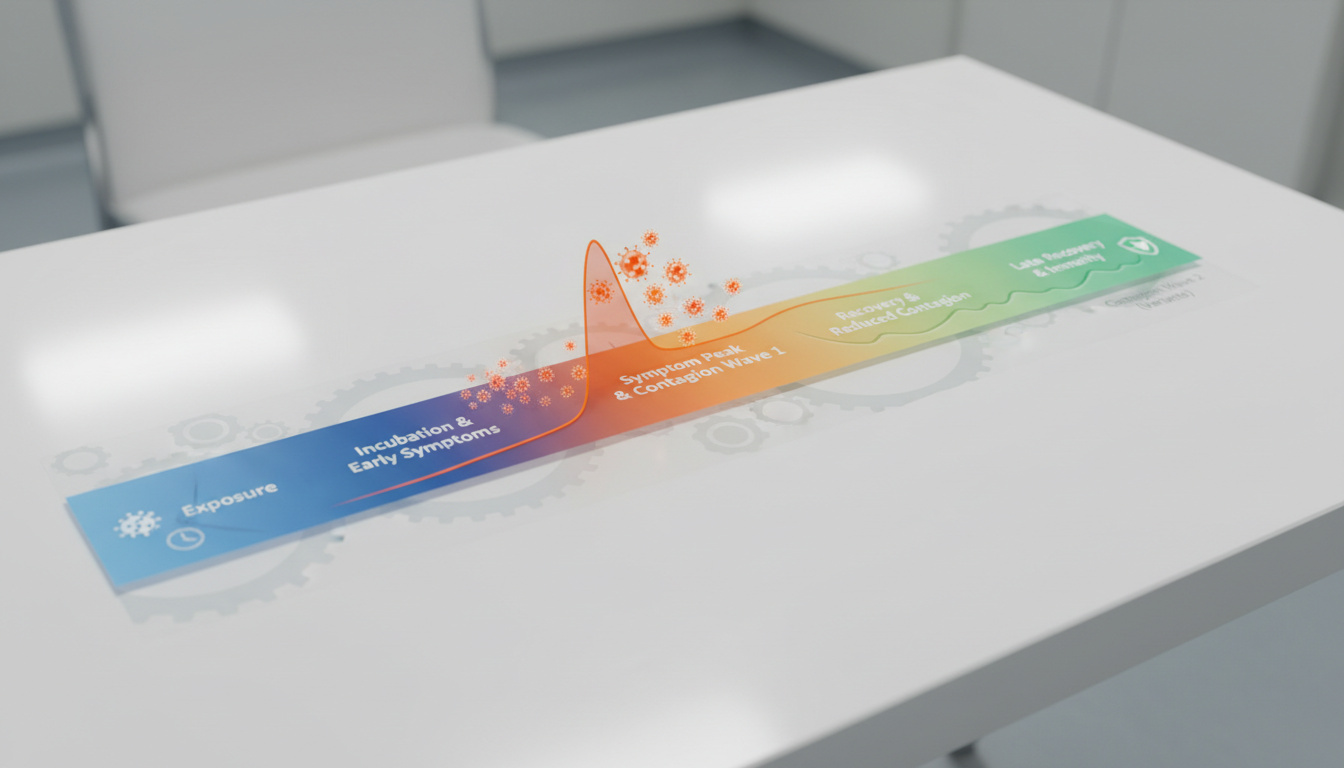
Most infections follow a predictable arc from exposure through recovery, with distinct phases marking contagiousness, symptom severity, and return to baseline health.
How Long Do COVID-19 Symptoms Typically Last?
5-7 days
Up to 10 days
2-4 weeks
Months to years
- Mild to moderate symptoms typically resolve within 1-2 weeks
- Severe infections may require up to 12 weeks for full recovery
- Fever usually subsides first, followed by respiratory symptoms
- Symptoms often fluctuate, improving and worsening before final resolution
- Vaccinated individuals generally experience shorter illness duration
- Viral variants influence both symptom severity and timeline
- Asymptomatic infections can still transmit the virus during the contagious window
| Phase | Duration | Key Indicators |
|---|---|---|
| Incubation | 2-14 days | Asymptomatic; contagious 1 day before symptoms appear |
| Symptom Onset | Day 1-3 | Fever, fatigue, sore throat, body aches |
| Peak Illness | Day 3-5 | Highest viral load, cough, respiratory symptoms |
| Recovery Start | Day 5-7 | Fever breaks, energy levels improve |
| Contagious Period End | Day 10 | Safe to end isolation for mild cases |
| Full Recovery | 1-4 weeks | Return to baseline health and activity |
| Long COVID Evaluation | 4-12+ weeks | Persistent symptoms requiring medical assessment |
| Severe Recovery | Up to 12 weeks | Hospitalized cases, potential rehabilitation needs |
How Long Are You Contagious with COVID?
Infectiousness begins before symptoms appear. According to WebMD, individuals typically reach peak infectiousness one day before symptom onset.
When Are You Most Infectious?
Viral load reaches its highest point approximately 24 hours before symptoms develop. This pre-symptomatic transmission drives significant community spread, as individuals unaware of their status interact normally.
Contagiousness remains high during the first five to seven days of illness. After day seven, most mild cases show declining viral loads, though immunocompromised patients may shed virus longer.
Isolation Guidelines by Severity
People with mild to moderate COVID-19 generally remain contagious for about 10 days from symptom onset. Severe or critical cases, particularly those requiring hospitalization, may remain infectious for up to 20 days.
Individuals with mild to moderate COVID-19 remain contagious for approximately 10 days from symptom onset. Severe or critical cases may shed viable virus for up to 20 days, requiring extended isolation precautions.
What Is the Timeline for COVID Infection?
How Long Is the Incubation Period?
The incubation period—the time between exposure and symptom onset—typically spans 2 to 14 days. Most individuals develop symptoms around day 5 or 6, according to Mayo Clinic and Johns Hopkins Medicine.
The WHO notes symptoms usually begin 3-6 days post-exposure, though rare cases manifest as early as 2 days or as late as 14 days after infection. Variant strains may alter these timelines, with some newer variants showing shorter incubation periods.
From Exposure to First Symptoms
Early symptoms often include fever, chills, and fatigue. During the first week, patients may experience sore throat, headache, and muscle aches. Cough and respiratory symptoms typically emerge or worsen during the second week for those with prolonged illness.
While the average incubation period is 5-6 days, individual variation ranges from 2-14 days. This variability depends on viral load exposure, immune status, and specific variant characteristics.
Testing and Recovery Milestones
PCR tests may remain positive for weeks after symptoms resolve, detecting viral RNA rather than live virus. According to Ada Health, most individuals recover from mild to moderate infections within 1-4 weeks.
Antigen tests typically turn negative sooner than PCR tests, usually correlating with the end of the infectious period around day 10.
How Long Does Long COVID Last?
Defining Post-COVID Conditions
Long COVID, or post-COVID condition, involves persistent symptoms lasting 4 or more weeks after initial infection, according to the CDC. Other health authorities define the threshold at 12 weeks.
These prolonged symptoms occur regardless of initial illness severity, affecting people who had mild cases as well as those hospitalized. Not everyone experiences long-term effects.
Duration and Impact
Symptoms may persist for months or years, significantly impairing daily activities. Common manifestations include fatigue, shortness of breath, cognitive dysfunction, joint pain, and altered taste or smell.
Long COVID can persist for months or years following acute infection. The condition affects daily functioning and may develop even after mild initial cases, requiring ongoing medical monitoring and support.
How Does COVID-19 Progress Day by Day?
- : Exposure to SARS-CoV-2 virus through respiratory droplets or aerosols
- : Incubation period ends for most; viral replication peaks
- : Peak infectiousness occurs approximately 24 hours before symptoms
- : Symptom onset including fever, fatigue, and body aches
- : Peak symptom severity and highest viral load
- : Turning point where fever typically subsides
- : End of contagious period for mild cases according to clinical data
- : Symptom resolution for most mild to moderate infections
- : Gradual return to normal activity levels
- : Long COVID evaluation if symptoms persist beyond this point
What Is Definite About COVID Timelines?
| Established Facts | Uncertainties |
|---|---|
| Mild symptoms typically last 1-2 weeks | Exact duration of newest variants (2024-2025) |
| Contagious period averages 10 days for mild cases | Individual variation in viral shedding duration |
| Incubation ranges 2-14 days (average 5-6) | Predictors of who will develop long COVID |
| Severe cases may require 12 weeks recovery | Precise testing negative timelines by variant |
| Peak infectiousness occurs 1 day before symptoms | Pediatric vs. adult duration differences |
| Long COVID defined as 4-12+ weeks of symptoms | Long-term prognosis for post-COVID conditions |
Why Do COVID Durations Vary Between Individuals?
Vaccination status significantly influences illness duration. Vaccinated individuals typically experience shorter, less severe infections compared to unvaccinated patients. The specific viral variant also matters; some strains produce shorter incubation periods while others cause more prolonged symptoms.
Underlying health conditions, age, and immune function create substantial variation in recovery timelines. While influenza typically resolves within one week, COVID-19 progression shows greater variability, with some patients experiencing biphasic illness where symptoms improve then worsen.
For those managing health needs during recovery, services like Waitrose Food to Order – Delivery Guide and Costs offer convenient options for obtaining necessities while isolating.
What Do Health Authorities Say About COVID Duration?
Symptoms of COVID-19 typically appear 2-14 days after exposure to the virus, with most cases developing around 5-6 days post-exposure.
— Centers for Disease Control and Prevention
People with COVID-19 are considered infectious for about 10 days after symptom onset in mild to moderate cases, with severe cases potentially remaining infectious for up to 20 days.
— World Health Organization
Most people recover from COVID-19 within weeks, though some may experience post-COVID conditions lasting months or longer.
What Is the Bottom Line on COVID Duration?
COVID-19 typically lasts 5-10 days for acute symptoms in mild cases, with contagiousness extending up to 10 days from symptom onset. Recovery generally completes within 1-4 weeks, though severe infections may require up to 12 weeks. Long COVID represents a distinct condition potentially lasting months or years. For detailed episode guides and entertainment content during recovery, see All Her Fault Episodes – Complete Guide and Summaries.
Frequently Asked Questions
Can COVID symptoms come and go?
Yes. Many patients experience fluctuating symptoms where they improve for several days before worsening again, particularly during the second week of illness.
How long after exposure do COVID symptoms appear?
Symptoms typically appear 2-14 days after exposure, with most individuals developing symptoms around days 5-6.
How long does it take to test negative after COVID?
PCR tests may remain positive for weeks due to detecting viral RNA. Antigen tests usually turn negative around day 10 when contagiousness ends.
When does COVID peak?
Symptoms typically peak around days 3-5 of illness, coinciding with the highest viral load and maximum infectiousness.
How long should you isolate with COVID?
Isolate for at least 10 days from symptom onset for mild cases. Severe cases may require isolation up to 20 days.
Are you contagious if you have no symptoms?
Yes. Asymptomatic individuals can transmit the virus, with peak infectiousness typically occurring one day before symptoms would have appeared.
How long does long COVID last?
Long COVID lasts 4 weeks or longer according to the CDC, or 12+ weeks by other definitions. Symptoms may persist for months or years.
Related stories





David Kim covers consumer technology, apps and platform updates for BuzzLayer.