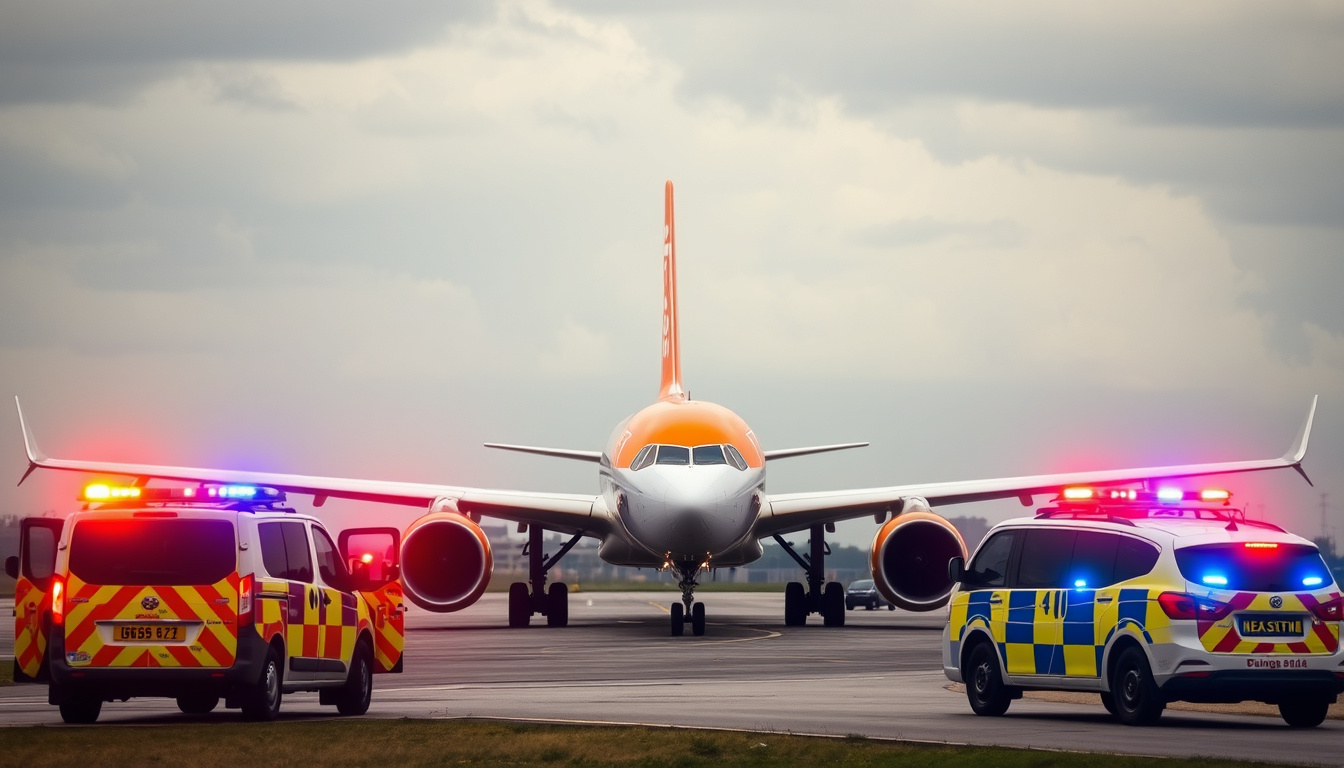
EasyJet flight U28545 was forced to return to London Gatwick Airport on September 12, 2025, after declaring a medical emergency mid-flight. The Airbus A320, operating the route from London to Porto, turned back approximately 30 minutes after departure when a passenger became unresponsive. The aircraft landed safely at Gatwick, with emergency services standing by on the runway.
The incident occurred while the aircraft cruised at 33,000 feet over Brittany, France. Pilots activated the emergency squawk code 7700 to alert air traffic control of the urgent situation. A doctor travelling aboard the flight provided initial medical assistance to the affected passenger before the aircraft’s return to London.
The flight touched down on runway 26L at 08:56 BST, roughly one hour and 40 minutes after its original departure. Emergency paramedics met the aircraft upon landing to attend to the passenger. The incident prompted questions about onboard medical protocols and the rapid response that followed.
What Happened to EasyJet Flight U28545?
EasyJet flight U28545 departed London Gatwick at 7:16 BST on September 12, 2025, bound for Porto, Portugal. The Airbus A320 aircraft, registered as G-EZTM, was airborne for approximately 30 minutes when the crew declared a medical emergency. The aircraft was cruising at 33,000 feet above Brittany, France, when the situation developed.
The emergency declaration required the pilots to activate transponder code 7700, the universal signal used worldwide to indicate a flight in distress. This code automatically alerts air traffic control centres along the flight path to prioritise the aircraft for landing clearance.
- Flight U28545 departed London Gatwick at 7:16 BST
- The Airbus A320 reached 33,000 feet over Brittany before the emergency
- A passenger became unresponsive during the flight
- Doctors onboard provided medical assistance to the passenger
- The crew requested ambulance services while still in the air
- Emergency services met the aircraft upon landing at London Gatwick
| Fact | Details |
|---|---|
| Flight Number | U28545 (U2 8455) |
| Airline | EasyJet |
| Aircraft Type | Airbus A320 |
| Registration | G-EZTM |
| Date | September 12, 2025 |
| Departure Time | 7:16 BST |
| Route | London Gatwick to Porto, Portugal |
| Emergency Declaration | Medical emergency, code 7700 |
| Landing Time | 08:56 BST |
| Landing Site | Runway 26L, London Gatwick |
| Passenger Status | Received medical attention from onboard doctor |
| Emergency Services | Ambulance requested and met aircraft on landing |
The aircraft was on final approach to Gatwick by 08:50 BST, approximately 11 minutes before touching down at 08:56 BST. This swift return to base allowed emergency responders to reach the passenger quickly after the aircraft came to a stop.
Why Did EasyJet Flight U28545 Declare an Emergency?
The decision to declare an emergency stemmed from a medical situation aboard the aircraft. As the Airbus A320 flew over Brittany at altitude, a passenger became unresponsive. Flight crew members recognised the severity of the situation and immediately requested medical assistance from any qualified professionals aboard the aircraft.
Medical Response During Flight
A doctor who was travelling as a passenger responded to the crew’s call for assistance. Medical professionals aboard commercial flights often provide crucial aid in such situations, drawing on their expertise to stabilise patients until emergency services can take over. The crew worked to support the doctor’s efforts while preparing the cabin for an emergency landing.
Aircraft crews receive training in basic life support and first aid. When a medical emergency occurs, pilots can request priority landing from air traffic control and activate emergency procedures including the 7700 transponder code.
Emergency Squawk Activation
The pilots transmitted emergency code 7700 through the aircraft’s transponder, a device that broadcasts the aircraft’s identity, position and altitude to air traffic control radar systems. This code signals to controllers that the flight requires immediate assistance and priority handling for landing. According to air traffic control procedures, such declarations take precedence over routine operations.
Upon receiving the emergency squawk, air traffic control facilities along the flight path cleared the airspace and coordinated with London Gatwick to prepare for an expedited landing. The aircraft began its turn back toward London shortly after the emergency was declared.
Where Did EasyJet Flight U28545 Land and What Was the Outcome?
The aircraft turned around over Brittany and headed directly to London Gatwick Airport, its departure point. The crew advised air traffic controllers of the medical emergency, requesting ambulance services be standing by upon arrival. Gatwick’s approach controllers guided the aircraft toward runway 26L, the airport’s dedicated runway for such arrivals.
Landing and Emergency Response
The Airbus A320 touched down at 08:56 BST, having been airborne for approximately one hour and 40 minutes on what was intended to be a short-haul flight to Portugal. Emergency medical crews were positioned on the runway as the aircraft taxied to a stand, ensuring immediate access to the passenger requiring care.
Details regarding the passenger’s condition following the landing have not been publicly disclosed. EasyJet has not released a statement specifying the nature of the medical emergency or the outcome for the individual involved.
Publicly available sources have not confirmed whether the passenger required hospitalisation or the specific medical nature of the emergency. Updates regarding the passenger’s condition remain limited.
Passenger and Crew Impact
The flight carried passengers who were accommodated following the disruption. The diversion added approximately one hour and 40 minutes to the journey time. Airlines typically assist affected passengers with rebooking or alternative travel arrangements when flights are disrupted by emergencies. Under EU air passenger rights regulations, travellers on affected flights may be entitled to certain forms of compensation and assistance.
The crew members continued their duties throughout the emergency, maintaining communication with ground services and ensuring passenger safety during the descent and landing. Following standard aviation protocols, the crew would have completed required documentation for the incident report.
What Are the Latest Updates on EasyJet Flight U28545?
The aircraft registration G-EZTM has returned to service following the incident. Flight tracking databases indicate the aircraft resumed normal operations within days of the emergency landing. EasyJet has not provided further public statements regarding the incident since the initial emergency response.
Official investigation status remains unclear. Aviation incidents involving medical emergencies and emergency declarations typically generate incident reports reviewed by relevant aviation authorities. The status of any regulatory review has not been confirmed through publicly available sources.
Investigation and Follow-up
The United Kingdom’s Civil Aviation Authority and European Union Aviation Safety Agency typically review incidents involving emergency declarations. However, publicly accessible records have not documented an active investigation into the U28545 emergency at this time. For further reading on aviation safety procedures and regulations, see the All Her Fault Episodes – Complete Guide and Summaries.
Passengers affected by the disruption were entitled to assistance under air passenger rights regulations. The specific arrangements made for those travelling on U28545 have not been publicly detailed. Documentation of the incident will form part of EasyJet’s operational records, though such internal reports are not typically released publicly.
Timeline of EasyJet Flight U28545 Emergency
- 7:16 BST — Flight U28545 departs London Gatwick bound for Porto, Portugal
- 7:46 BST — Approximately 30 minutes into flight, aircraft reaches 33,000 feet over Brittany, France
- 7:46 BST — Crew declares medical emergency after passenger becomes unresponsive
- 7:46 BST — Pilots activate emergency transponder code 7700
- 7:46 BST — Doctor aboard provides medical assistance to the affected passenger
- 7:46 BST — Crew requests ambulance services through air traffic control
- 7:50 BST — Aircraft initiates turn back toward London Gatwick
- 08:50 BST — Aircraft on final approach to London Gatwick runway 26L
- 08:56 BST — Airbus A320 touches down safely at London Gatwick
- 08:56 BST — Emergency medical crews attend to passenger upon landing
What Is Confirmed and What Remains Unclear About the Incident
Available sources provide a clear outline of the emergency and its resolution. However, several aspects of the incident remain undocumented in public records.
| Established Information | Unconfirmed Details |
|---|---|
| Flight U28545 departed Gatwick on September 12, 2025 | Whether the passenger was admitted to hospital |
| A passenger became unresponsive mid-flight | Specific nature of the medical emergency |
| A doctor on board provided medical assistance | Identity or demographic details of the passenger |
| Emergency code 7700 was activated | Whether an official regulatory investigation is underway |
| Ambulance services were requested and responded | EasyJet’s internal investigation findings |
| Aircraft landed safely at Gatwick at 08:56 BST | Details of post-incident support provided to passengers |
The Context of In-Flight Medical Emergencies
Medical emergencies aboard commercial aircraft occur with some regularity across the aviation industry. Such incidents represent a known operational challenge for airlines, with crews trained to respond using standardised procedures. The activation of emergency protocols on U28545 demonstrated the intended function of these safety measures. Research from the International Civil Aviation Organization highlights the importance of prepared medical response systems in commercial aviation.
Commercial aircraft carry basic medical equipment as standard, though the range of supplies varies by airline and jurisdiction. The presence of medical professionals among passengers often proves decisive in stabilising individuals before landing. Airlines maintain protocols for coordinating with emergency services at destination airports.
Sources and Available Information
The incident was reported by aviation monitoring services and flight tracking platforms. LiveATC recordings and flight tracking data provided the foundation for public reporting on the incident timeline.
The Airbus A320 aircraft (registration G-EZTM) departed London Gatwick at 7:16 BST and encountered the emergency approximately 30 minutes into the flight while cruising at 33,000 feet over Brittany, France. The pilots activated emergency squawk code 7700 to alert air traffic control.
— AirLive Aviation News, September 12, 2025
Flight tracking services confirmed the aircraft’s position, altitude and transponder codes throughout the incident. The timeline established through multiple aviation monitoring sources aligns across independent reports. For related content on food delivery services and consumer topics, see the Waitrose Food to Order – Delivery Guide and Costs.
Summary
EasyJet flight U28545 returned safely to London Gatwick on September 12, 2025, after a passenger became unresponsive approximately 30 minutes into the flight. The aircraft landed at 08:56 BST, with emergency services attending to the passenger upon arrival. The incident demonstrated established emergency protocols, with crew members activating distress codes and coordinating medical response while executing a swift diversion. Several aspects of the situation, including the passenger’s condition following landing and any official investigation, have not been publicly confirmed.
Frequently Asked Questions
What happened to EasyJet flight U28545 on September 12, 2025?
Flight U28545 declared a medical emergency and returned to London Gatwick after a passenger became unresponsive during the flight from London Gatwick to Porto.
Why did EasyJet flight U28545 turn back to London Gatwick?
A passenger became unresponsive mid-flight. A doctor aboard provided assistance, and the crew requested ambulance services before turning the aircraft back to Gatwick.
What was the emergency code used by the pilots?
The pilots activated emergency transponder code 7700, the universal distress signal that alerts air traffic control to priority handling requirements.
Where did EasyJet flight U28545 land?
The aircraft landed safely on runway 26L at London Gatwick Airport at 08:56 BST on September 12, 2025.
Was anyone injured on EasyJet flight U28545?
A passenger required medical attention after becoming unresponsive. Details about injuries or the passenger’s condition following landing have not been publicly disclosed.
What type of aircraft was operating flight U28545?
The aircraft was an Airbus A320 with the registration G-EZTM, operated by EasyJet on the route from London Gatwick to Porto, Portugal.
Is EasyJet flight U28545 back in service?
Flight tracking data indicates the aircraft has returned to normal service following the incident.
Are there official statements from EasyJet about the incident?
EasyJet has not issued a public statement beyond the operational response to the emergency.
Related stories





David Kim covers consumer technology, apps and platform updates for BuzzLayer.