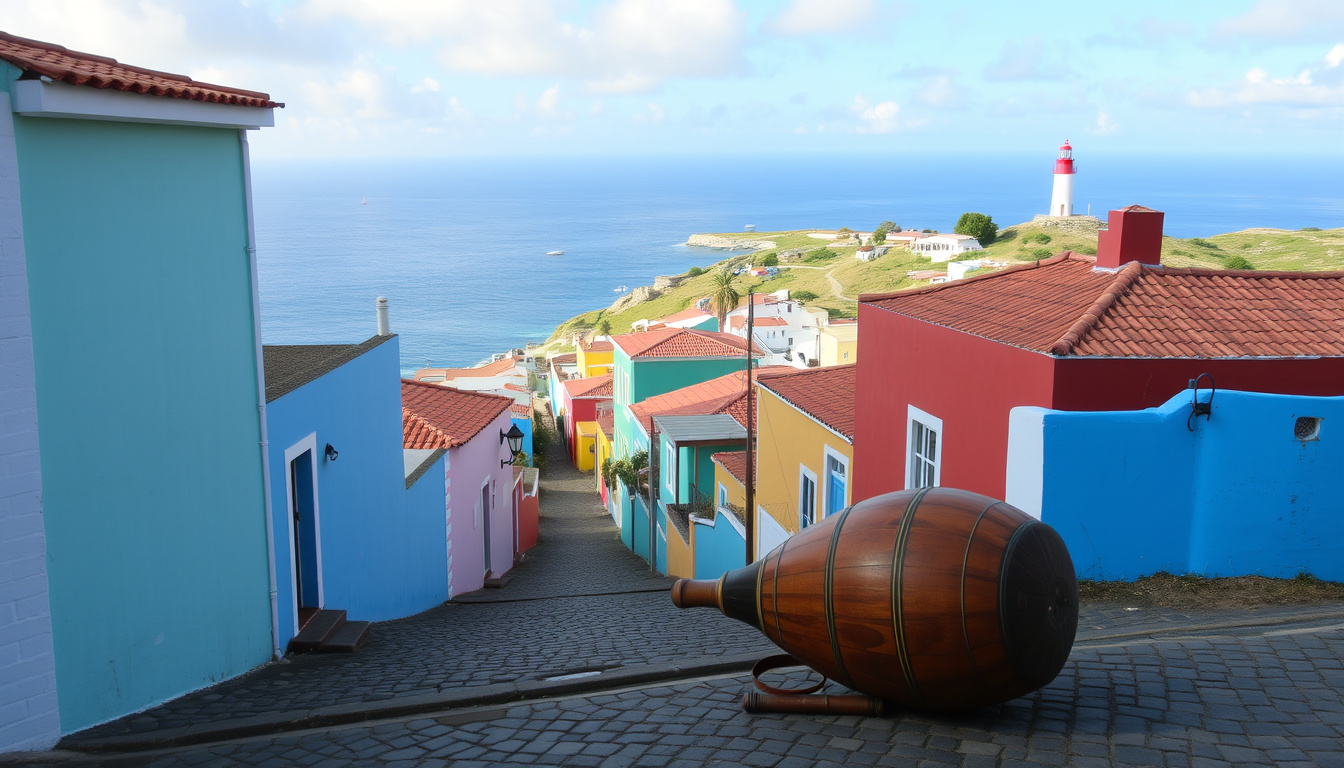
Someone from Cape Verde will usually tell you they’re Kriolu before they name a race or a nationality. That’s because Cape Verdean identity is fundamentally Creole — a blend of African and European ancestry that formed over centuries on ten isolated islands off West Africa. With a population of about 530,000 and a diaspora that reaches from Portugal to the United States, Cape Verdeans have built a nation that doesn’t fit neatly into any single ethnic box. This guide pulls together the key facts about Cape Verdean ethnicity, language, geography, and daily life so you can see the full picture.
Population: About 530,000 (as of 2026) · Islands: 10 · Location: West Africa, off the coast of Senegal · Ancestry: Mixed African and European · Official language: Portuguese · Democracy: One of Africa’s most stable democracies
Quick snapshot
- Mixed African and European ancestry (U.S. Department of State background note)
- Cape Verdean Creole culture (Bridgewater State University undergraduate review)
- Diaspora communities in the U.S. and Portugal (U.S. State Department 2007 background note)
- 10 islands in the Atlantic Ocean (U.S. State Department 2001 background note)
- Off the coast of West Africa, near Senegal (U.S. State Department 2001 background note)
- Capital: Praia on Santiago (U.S. State Department 2001 background note)
- Portuguese is the official language (U.S. State Department 2003 background note)
- Cape Verdean Creole is the daily language (U.S. State Department 2003 background note)
- English is limited outside tourist areas (Cabo Verde tourism page)
- Tourism and services drive the economy (U.S. State Department 2007 background note)
- Remittances from the diaspora are important (U.S. State Department 2007 background note)
- Water scarcity and imports are structural challenges (U.S. State Department 2007 background note)
Six key facts, one pattern: Cape Verde is a small island nation with a mixed-heritage population, a Creole language ecology, and an economy that depends on what happens beyond its shores.
| Label | Value |
|---|---|
| Country name | Republic of Cabo Verde |
| Capital | Praia |
| Population | About 530,000 (as of 2026) |
| Main islands | 10 islands |
| Official language | Portuguese |
| Ancestry | Mixed African and European |
What ethnicity is Cape Verdean?
Cape Verdeans are a people native to the Republic of Cabo Verde, an island nation in West Africa. The U.S. Department of State background note describes the population as “of mixed African and European origin.” The Cabo Verde tourism page expands on that, noting ancestry that includes African, Portuguese, Italian, French, Spanish, and Sephardic Jewish roots. An Oxford Academic chapter states that most contemporary Cabo Verdeans define themselves as Kriolu — a people of mixed descent distinct from both Portuguese and Africans.
Are Cape Verdeans Portuguese?
- Portuguese is the official language of Cape Verde, but Cape Verdeans are not Portuguese nationals.
- Cape Verde became independent from Portugal on July 5, 1975.
- The U.S. Department of State background note identifies Cape Verdeans as a distinct people of mixed African and European origin.
No. Cape Verdeans are citizens of the Republic of Cabo Verde, an independent nation. The shared Portuguese language and colonial history create a cultural link, but Cape Verdean nationality is separate. The Bridgewater State University undergraduate review notes that Cape Verdeans are descendants of both Portuguese and West Africans, but that does not make them Portuguese today.
Cape Verdeans hold Cabo Verdean citizenship, not Portuguese. The two countries maintain close diplomatic and economic ties, but national identity is firmly rooted in Cape Verde itself.
Are Cape Verdeans Afro-Latina?
- Afro-Latina typically refers to people of African descent in Latin America.
- Cape Verde is in Africa, not Latin America, so the label does not apply officially.
- Cape Verdean identity is Lusophone (Portuguese-speaking) and African.
The term Afro-Latina is not a standard official label for Cape Verdeans because Cape Verde is an African nation, not a Latin American one. The Oxford Academic chapter explains that Cape Verdeans define themselves as Kriolu, a mixed-race Creole identity rooted in the African archipelago. Some Cape Verdeans in the diaspora may identify with broader Afro-Lusophone or Afro-Atlantic categories, but “Afro-Latina” does not align with the country’s geography or official classification.
Are Cape Verdeans part Jews?
- The Cabo Verde tourism page mentions Sephardic Jewish roots as part of Cape Verde’s mixed ancestry.
- Jewish ancestry is not a primary census category for Cape Verdeans.
- Most Cape Verdeans identify as Christian, primarily Roman Catholic.
A small number of Cape Verdeans may have Sephardic Jewish ancestry dating back to the colonial period, when Portuguese Jews migrated to the islands. The Cabo Verde tourism page lists Sephardic Jewish roots among the many strands of Cape Verdean heritage. However, the U.S. Department of State 2008 background page lists Roman Catholic and Protestant as the main religions, and Jewish ancestry is not recorded as a separate ethnic category in demographic surveys.
Why do Cape Verdeans look different?
- Cape Verdeans have a wide range of physical appearances due to centuries of mixing between African and European populations.
- The U.S. Department of State background note lists ethnic groups as Creole (mixed African and Portuguese), African, and European.
- This diversity is a direct result of the islands’ history as a Portuguese colonial trading post.
Cape Verde’s history as a hub for the transatlantic slave trade and Portuguese settlement created a population that is neither uniformly African nor uniformly European. The University of Michigan linguistics article notes that Kriolu itself emerged from contact between European and African languages during the slave trade — a linguistic parallel to the population’s mixed heritage. The Bridgewater State University undergraduate review confirms that Cape Verdeans are descendants of both Portuguese and West Africans, which explains the broad spectrum of physical traits.
Cape Verdean physical diversity is not unusual — it’s the direct result of a Creole society where African and European populations mixed for more than 500 years. The variety is a feature, not a puzzle.
The pattern: Cape Verdean identity is Creole and national, not racial. The question “what ethnicity is Cape Verdean” is better answered by pointing to Kriolu culture and shared citizenship than to any single ancestry box.
Is Cape Verde close to Nigeria?
Cape Verde is not close to Nigeria. The archipelago lies much farther north and west, off the coast of Senegal. The U.S. State Department 2001 background note describes Cape Verde as an island nation in the Atlantic Ocean, about 500 kilometers (310 miles) west of Senegal. Nigeria, by contrast, sits on the Gulf of Guinea, roughly 3,000 kilometers (1,864 miles) to the southeast.
Where is Cape Verde located?
- Cape Verde is an archipelago of 10 islands in the Atlantic Ocean.
- It lies off the west coast of Africa, near Senegal.
- The capital is Praia, located on the island of Santiago.
The U.S. State Department 2001 background note confirms Cape Verde is located in the Atlantic Ocean, approximately 500 kilometers west of Senegal. The country has no land borders with any African nation. The 10 islands are divided into the Barlavento (Windward) and Sotavento (Leeward) groups.
How far is Cape Verde from mainland Africa?
- Cape Verde is about 500 kilometers (310 miles) from the coast of Senegal.
- It is much closer to Senegal than to Nigeria.
- The distance to Nigeria is roughly 3,000 kilometers (1,864 miles).
For travelers, the nearest mainland African country is Senegal. Flights from Dakar to Praia take about one hour. Nigeria, on the other hand, is a separate flight of several hours across the continent. The U.S. State Department 2001 background note provides the geographic coordinates that make this clear.
The implication: If you’re looking for Cape Verde on a map, start at Senegal and head west into the Atlantic. Nigeria is a different region entirely.
Do they speak English in Cape Verde?
English is not an official language of Cape Verde and is not widely spoken outside tourist areas. The Cabo Verde tourism page confirms that the official language is Portuguese, while Cabo Verdean Creole is the national language used in daily life. The Oxford Academic chapter describes the situation as diglossic: Portuguese is used in government, formal education, and media, while Kriolu is the first language of most Cape Verdeans.
What language is spoken in Cape Verde?
- Portuguese is the official language of government, education, and media.
- Cape Verdean Creole (Kriolu) is the national language and mother tongue.
- English is not official and is mainly heard in tourist-facing businesses.
The Cabo Verde tourism page states that Cabo Verdean Creole is widely used in daily life and is the language of music, family, and community. The University of Michigan linguistics article explains that Kriolu is a mixture of European and African languages that came into contact during the Portuguese transatlantic slave trade.
Is Portuguese the official language?
- Yes, Portuguese is the sole official language of Cape Verde.
- It is used in government, schools, courts, and official documents.
- Most Cape Verdeans speak Portuguese as a second language, with Kriolu as their first.
The U.S. State Department 2003 background note confirms that Portuguese is the official language and that most Cape Verdeans also speak a Creole dialect called Crioulo. The Bridgewater State University undergraduate review describes the linguistic situation as diglossic — Portuguese holds formal prestige, but Kriolu is the language of everyday life.
The trade-off: Visitors who speak only English will manage in hotels and resorts, but anyone who wants to engage with Cape Verdeans beyond the tourist economy will benefit from Portuguese or a willingness to learn a few Kriolu phrases.
What to be careful of in Cape Verde?
Cape Verde is generally considered a safe destination for tourists, but standard travel precautions apply. The U.S. State Department 2007 background note describes the country as one of Africa’s most stable democracies, with low violent crime rates. Petty theft, especially in urban areas and markets, is the most common concern.
Can you drink alcohol in Cape Verde?
- Alcohol is legal in Cape Verde.
- The legal drinking age is 18.
- Local drinks include grog (sugarcane rum) and beer.
Yes, alcohol is legal and widely available. The legal drinking age is 18, and bars, restaurants, and supermarkets sell beer, wine, and spirits. Cape Verde is known for its local rum, grog, which is made from sugarcane. The Cabo Verde tourism page notes that drinking is part of social life, especially during music festivals and community gatherings.
Is Cape Verde safe for tourists?
- Petty theft is the most common safety issue.
- Avoid isolated areas at night, especially on beaches.
- Tap water is not always safe to drink; bottled water is recommended.
- Healthcare facilities are limited outside Praia and Mindelo.
Standard travel advice for Cape Verde focuses on protecting valuables, avoiding poorly lit areas after dark, and using bottled water. The U.S. State Department 2007 background note emphasizes the country’s political stability and low crime rate, but travelers should still exercise caution. Travel insurance is recommended because healthcare facilities are limited outside the two largest cities.
Cape Verde is safer than many tourist destinations in Africa and the Caribbean, but the combination of limited healthcare and petty theft means travelers should prepare: carry a basic medical kit, keep valuables in a hotel safe, and always drink bottled water.
Is Cape Verde a poor or rich country?
Cape Verde is classified as a lower-middle-income developing nation. The economy relies heavily on tourism, services, remittances from the diaspora, and foreign aid. The U.S. State Department 2007 background note describes the country as one of Africa’s most stable democracies, but economic challenges persist.
What is the problem with Cape Verde?
- Water scarcity is a chronic issue due to low rainfall and limited freshwater resources.
- The country depends heavily on imported food, fuel, and manufactured goods.
- Public debt has grown, partly from infrastructure investment and pandemic recovery.
- Natural resources are limited — no significant mineral deposits or oil reserves.
The Cabo Verde tourism page highlights the country’s natural beauty and cultural richness, but the economic reality is more constrained. Cape Verde imports about 80% of its food, making it vulnerable to global price shocks. The U.S. State Department 2007 background note notes that the economy is service-oriented, with tourism and remittances as key pillars.
What nationality visits Cape Verde the most?
- European tourists are the largest visitor group.
- Portugal, the United Kingdom, and other Western European countries are major source markets.
- Tourism is a key driver of the economy, accounting for a significant share of GDP.
European tourists make up the majority of visitors to Cape Verde. The Cabo Verde tourism page notes that the country markets itself to European travelers seeking sun, beaches, and cultural experiences. The exact ranking of source countries can vary by year, but Portugal, the UK, and other Western European nations consistently top the list.
Why this matters: Cape Verde’s economy is a balancing act between tourism revenue and structural vulnerabilities. The country’s political stability gives it a strong foundation, but water scarcity, import dependence, and debt are ongoing constraints that affect both residents and visitors.
What celebrity is from Cape Verde?
The most widely known Cape Verdean celebrity is Cesária Évora, the singer who brought the traditional music of Cape Verde to a global audience. The Cabo Verde tourism page highlights her as a cultural icon, and her music — especially the morna style — is synonymous with Cape Verdean identity worldwide.
Who is Cesária Évora?
- Cesária Évora (1941–2011) was a Cape Verdean singer known as the “barefoot diva.”
- She performed morna, a genre of music that blends Portuguese fado with African rhythms.
- Her album “Miss Perfumado” (1992) brought her international fame.
- She won a Grammy Award for Best Contemporary World Music Album in 2004.
Cesária Évora remains the most recognized Cape Verdean figure globally. The Cabo Verde tourism page notes that her music expresses the soul of Cape Verde — the longing, resilience, and joy of island life. Beyond Évora, the Cape Verdean diaspora has produced many other notable figures, including musicians like Mayra Andrade, soccer players like Nani and Gelson Fernandes, and writers like Germano Almeida.
The pattern: Cape Verde’s global footprint is larger than its population size suggests. The diaspora has produced artists and athletes who carry Cape Verdean culture far beyond the islands.
What’s clear and what’s not
Confirmed facts
- Cape Verde is an island nation in West Africa, about 500 kilometers west of Senegal. (U.S. State Department 2001 background note)
- Cape Verdeans are broadly of mixed African and European origin, with Creole (Kriolu) as the dominant cultural identity. (U.S. Department of State background note)
- Portuguese is the official language; Cape Verdean Creole is the national language used in daily life. (U.S. State Department 2003 background note)
- Cape Verde is one of Africa’s most stable democracies, with a low violent crime rate. (U.S. State Department 2007 background note)
What’s unclear
- The single most common visitor nationality may vary by year and reporting source; exact rankings are not consistently published.
- The share of Cape Verdeans with Jewish ancestry is not a standard census statistic, making it difficult to quantify.
- Applying the label “Afro-Latina” to Cape Verdeans depends on how “Latino/Latina” is defined — some diaspora members may use it, but it is not an official or widely accepted category in Cape Verde itself.
- Detailed demographic breakdowns by ethnic subgroup within the Creole population are not regularly updated.
- The economy’s dependence on tourism, remittances, and services faces structural challenges including water scarcity and import dependence, though exact metrics vary by source. (U.S. State Department 2007 background note)
Perspectives on Cape Verdean identity
“Cape Verdeans are of mixed African and European origin.”
— U.S. Department of State background note
“Most contemporary Cabo Verdeans define themselves as Kriolu, meaning a people of mixed descent different from Portuguese and Africans.”
— Oxford Academic chapter
“Kriolu is a mixture of European and African languages that came into contact during the Portuguese transatlantic slave trade.”
Cape Verdean identity is best understood as a Creole nationality shaped by diaspora, not as a single race, language, or tourist label. The country’s stability, mixed heritage, and distinct language ecology make it a unique case in West Africa. For travelers and researchers alike, the key takeaway is that Cape Verdeans define themselves on their own terms — as Kriolu, as Cabo Verdeans, and as a people whose identity resists the neat categories outsiders often try to apply. For the visitor planning a trip, the implication is clear: come with an open mind, learn a few words of Kriolu, and understand that Cape Verde is neither a poverty case nor a paradise — it’s a real country with real assets and real challenges.
encyclopedia.com, en.wikipedia.org, 2009-2017.state.gov, capeverde.com, responsibletravel.com
Frequently asked questions
How do Cape Verdeans describe their national identity?
Most Cape Verdeans describe themselves as Kriolu or Cabo Verdean first. The Oxford Academic chapter notes that Kriolu identity is based on mixed descent and a shared Creole culture, not on race or language alone.
What are the main islands of Cape Verde?
Cape Verde has 10 islands. The major ones include Santiago (where the capital Praia is located), São Vicente (home to Mindelo), Sal (popular for tourism), and Boa Vista. The U.S. State Department 2001 background note lists the Barlavento and Sotavento island groups.
What religion is common in Cape Verde?
The U.S. Department of State 2008 background page lists Roman Catholic as the majority religion, with a significant Protestant minority. Freedom of religion is respected.
What is the capital of Cape Verde?
The capital is Praia, located on the island of Santiago. It is the largest city and the political and economic center of the country.
How large is the Cape Verdean diaspora?
The diaspora is substantial — estimates suggest more Cape Verdeans live abroad than in the country itself. Major diaspora communities exist in the United States (especially Massachusetts and Rhode Island), Portugal, the Netherlands, and France.
What are common Cape Verdean surnames?
Common surnames reflect Portuguese colonial influence: Silva, Lopes, Santos, Gomes, Pereira, and Rodrigues are widespread. Many Cape Verdeans also bear African-influenced names and surnames that reflect the Creole heritage.

Alex Nguyen is Editor-in-Chief at BuzzLayer, overseeing editorial standards, publication decisions and corrections.