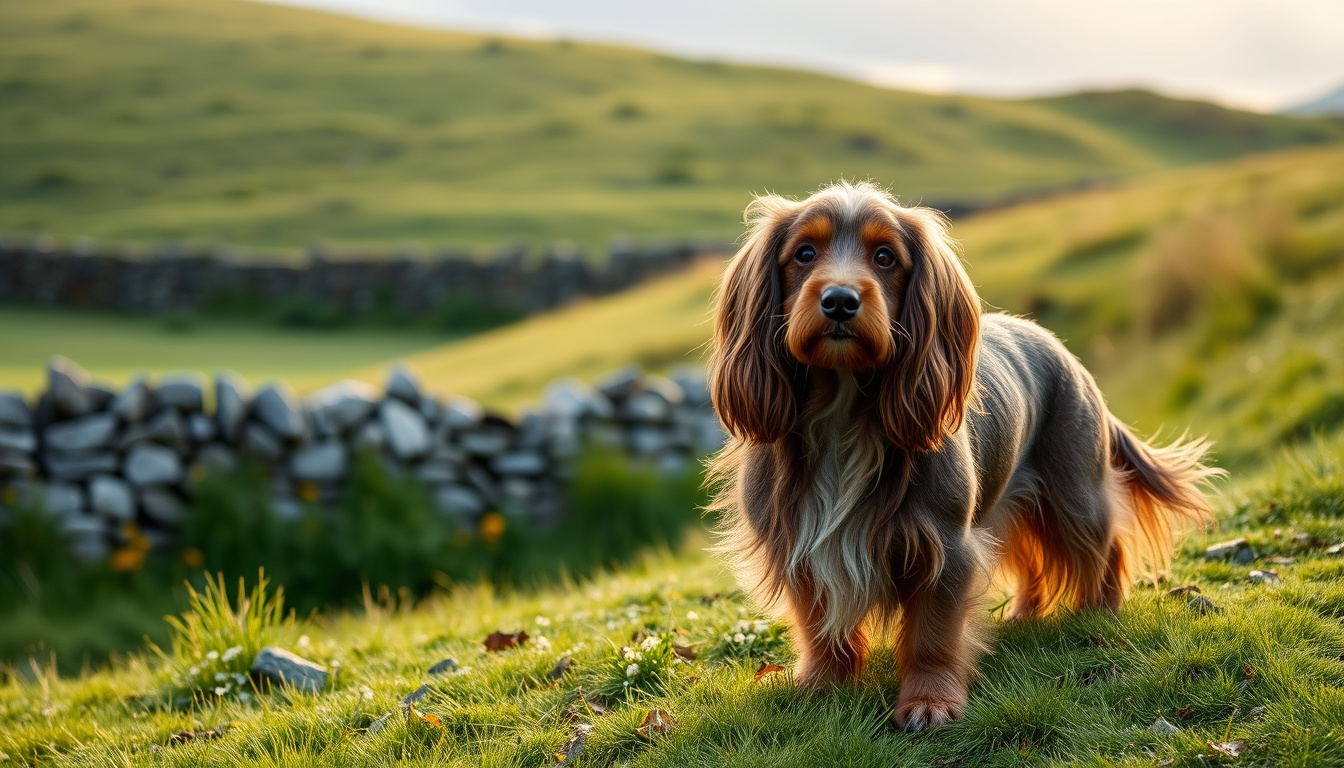
There’s a reason the dachshund is one of Ireland’s most instantly recognisable dogs — that long body and short legs leave a lasting impression. But behind the “sausage dog” nickname lies a breed with a hunting heritage, a stubborn streak, and a surprisingly polarising reputation.
Breed group: Hound ·
Size: Standard (16–32 lbs) or Miniature (under 11 lbs) ·
Lifespan: 12–16 years ·
Temperament: Courageous, stubborn, loyal ·
Good with children: With proper socialization ·
Price in Ireland: Approximately €800–€1,500
Quick snapshot
- Dachshunds were bred for hunting badgers (Wikipedia)
- Average lifespan is 12–16 years (Pooch & Mutt)
- Whether dachshunds are inherently more aggressive than other breeds – depends heavily on training and socialisation
- Exact price range varies widely by breeder and location in Ireland
- Dachshunds remain one of the most sought-after breeds on Irish platforms like dogs.ie
- Prospective owners should budget for high vet bills due to back issues
Six essential facts, one pattern: the dachshund is a small dog with big needs — health, training, and attention all come with a price tag.
| Attribute | Details |
|---|---|
| Breed group | Hound |
| Size | Standard or Miniature |
| Weight | Standard: 16–32 lbs; Miniature: under 11 lbs |
| Lifespan | 12–16 years |
| Temperament | Courageous, stubborn, loyal |
| Shedding | Moderate |
Are sausage dogs a good family pet?
Temperament with children
Dachshunds can be good with children if they are socialised early and consistently. The breed is described by Pooch & Mutt as playful, clever, bold, and headstrong — traits that can be delightful in the right home but challenging with toddlers. Weenect Ireland notes they are spirited and bond closely with families, but may be wary of strangers.
Irish families with young children face a real tension: the dachshund’s loyalty is deep, but its resource guarding and hunting instincts can trigger snapping if a child startles or crowds it. Early socialisation isn’t optional — it’s a prerequisite.
The catch: dachshunds are prone to resource guarding, meaning they may become possessive over food, toys, or sleeping spots. Weenect Ireland warns that their hunting instinct can make them cautious around other animals, which extends to unfamiliar children. This doesn’t disqualify them as family dogs — many dachshunds live happily in homes with kids — but it does demand consistent supervision and training from the start.
The implication: a dachshund’s loyalty is deep, but its resource guarding and hunting instincts can trigger snapping if a child startles or crowds it.
Training needs
Training a dachshund requires patience. Their stubbornness is well-documented: The Kennel Club describes them as courageous to the point of rashness, a trait that translates into a dog that will dig in its heels. House training can be particularly challenging, and many owners report that crate training and consistent routines are essential.
For a first-time owner in Ireland, the dachshund’s stubbornness means a steep learning curve. Without firm, reward-based training, that cleverness turns into digging, barking, and selective hearing.
VCA Hospitals recommends short, positive training sessions — dachshunds lose interest quickly. They respond better to motivation than force, which makes them a poor match for owners who expect a dog that obeys on command.
Exercise requirements
Dachshunds have moderate exercise needs. A daily walk of 20–30 minutes, plus playtime in a secure garden, is generally sufficient. PDSA advises that their long backs make them poor candidates for high-impact activities like jumping or running up stairs — these can trigger intervertebral disc disease (IVDD).
Is a dachshund aggressive or not?
Aggression statistics
Dachshunds are regularly cited in studies as one of the more aggressive dog breeds. Research from the University of Helsinki identified dachshunds among breeds with higher rates of aggression toward both strangers and other dogs. The study linked this behaviour to fear and lack of early socialisation rather than innate viciousness.
Dogs Trust Ireland notes that aggression in dachshunds is often a response to stress or perceived threat. Their history as badger hunters means they were bred to be tenacious and fearless — traits that can tip into aggression when mishandled.
Irish prospective owners should not dismiss the aggression studies, but nor should they treat dachshunds as inherently dangerous. The pattern across the research is clear: poor socialisation and fear-driven environments produce aggressive dachshunds; well-handled ones rarely make the statistics.
Causes of aggression
The most common triggers for dachshund aggression are fear, pain (especially back pain), and resource guarding. Weenect Ireland highlights that their hunting instinct can make them reactive to fast movements and small animals. VCA Hospitals adds that dachshunds are prone to anxiety, which can manifest as growling or snapping if they feel cornered.
Comparison to other breeds
In the same University of Helsinki study, chihuahuas and Jack Russell Terriers ranked alongside dachshunds as among the most aggressive small breeds. This suggests that small size combined with high prey drive — rather than breed alone — is a predictor of aggressive tendencies. Not all dachshunds are aggressive, and many are friendly with proper handling.
What is the downside of Dachshunds?
Health concerns
The most serious health risk for dachshunds is intervertebral disc disease (IVDD). VCA Hospitals explains that their elongated spines and short rib cages make them 10 to 12 times more likely to develop IVDD than other breeds. Surgery can cost thousands of euros, and severe cases can lead to paralysis.
PDSA recommends weight management as the single most effective preventive measure — a dachshund carrying extra kilos puts immense strain on its spine. Regular vet checkups are essential.
For an Irish owner, the cost of IVDD treatment can quickly exceed €5,000. Pet insurance for dachshunds is not a luxury — it’s a financial necessity that adds roughly €30–€50 per month to the ownership budget.
Stubbornness and training difficulties
Dachshunds are famously difficult to house train. Dogs Trust Ireland notes that this breed can take months longer than average to reliably toilet train. Their stubbornness extends to basic commands — owners often report that dachshunds respond perfectly one day and ignore them entirely the next.
Potential for aggression
As covered in the previous section, dachshunds have a documented tendency toward aggression when not properly socialised. SPANA adds that their barking can become excessive, which in a densely populated area can strain relationships with neighbours. The breed’s wariness of strangers also makes it a poor choice for households that frequently host guests.
How much is a dachshund in Ireland?
Average purchase price
Dachshund puppies in Ireland typically cost between €800 and €1,500 from registered breeders, according to listings on dogs.ie. Prices vary based on pedigree, coat type (smooth, long-haired, or wire-haired), and whether the puppy is standard or miniature. The Irish Kennel Club registers multiple varieties, including Smooth Haired, Long Haired, and Kaninchen forms, each with different price points.
In the UK market, Pooch & Mutt reports a range of approximately £500 to £1,600. Irish prices are broadly comparable, though availability is more limited — fewer breeders mean fewer puppies and higher demand.
Ongoing costs
Annual ownership costs for a dachshund in Ireland can range from €1,000 to €2,000. This includes:
- Food: €400–€600 per year for high-quality dog food
- Vet visits and vaccinations: Primary vaccines cost roughly €40–€70, with annual boosters around €60–€100 (Pooch & Mutt)
- Pet insurance: €360–€600 per year for coverage that includes back problems
- Dog licence: €20 per year (or €140 for a lifetime licence, per National Report citing Citizens Information)
- Microchipping: approximately €25
Rescue vs breeder
Adopting a dachshund from a rescue is significantly cheaper — typically €150–€300 — but availability is limited. Dogs Trust Ireland occasionally has dachshunds and dachshund crosses available, but demand far exceeds supply. Many prospective owners choose breeders specifically to find a puppy, not realising that rescue dachshunds often come with adult temperament already established — a potential advantage for families.
What are the top 3 most aggressive dog breeds?
Dachshund’s ranking
Multiple studies have placed dachshunds among the top aggressive dog breeds. The University of Helsinki research, which surveyed thousands of dog owners, found dachshunds ranked high for aggression toward strangers and other dogs. The study emphasises that aggression was more common in smaller breeds — a counterintuitive finding that challenges the stereotype that large dogs are more dangerous.
Other breeds on the list
The same studies consistently show chihuahuas and Jack Russell Terriers alongside dachshunds. Other breeds that frequently appear include:
- Chihuahua — small size, high reactivity
- Jack Russell Terrier — high prey drive, stubbornness
- Miniature Poodle — can be fear-aggressive without socialisation
The Dachshund Club of America contests the framing, arguing that the breed’s “courageous” nature is misinterpreted as aggression. The distinction matters: a dachshund that growls at a stranger may be expressing caution, not malice.
Why dachshunds are considered aggressive
Dachshunds were bred to hunt badgers — a dangerous animal that fights back. This required a dog with tenacity, fearlessness, and a willingness to stand its ground. Wikipedia describes them as “courageous to the point of rashness.” In a domestic setting, these same traits translate into guarding behaviour, wariness of strangers, and a low tolerance for being handled roughly.
Upsides
- Loyal and deeply bonded to owners
- Long lifespan (12–16 years) for a small breed
- Adaptable to apartment life with proper exercise
- Low grooming needs (smooth-haired variety)
- Bold and entertaining personality
Downsides
- High risk of IVDD and back problems
- Stubborn and challenging to train
- Can be aggressive without early socialisation
- Prone to excessive barking
- Expensive — purchase price €800–€1,500 plus ongoing costs
The very traits that make dachshunds so adored — courage, loyalty, tenacity — are the same ones that land them on aggression lists. Irish buyers chasing the “sausage dog” aesthetic often miss that they’re inviting a badger hunter into their living room.
services.ikc.ie, services.ikc.ie, services.ikc.ie, ikc.ie, ikc.ie, services.ikc.ie, dogs.ie, dogshowentry.ie
Frequently asked questions
Do dachshunds bark a lot?
Yes. Dachshunds were bred to alert hunters underground, and they retain a strong instinct to bark at perceived threats. Dogs Trust Ireland notes that excessive barking is one of the most common complaints from owners. Training can reduce it, but dachshunds are naturally vocal.
Can dachshunds live in apartments?
Yes, they can adapt well to apartment living if given daily walks and mental stimulation. Weenect Ireland describes them as generally adaptable. However, their barking may be an issue in close quarters, and access to a garden or nearby park is recommended.
How much exercise does a dachshund need?
About 20–30 minutes of walking per day, plus playtime. PDSA advises avoiding stairs and jumping to protect their backs. Moderate, consistent exercise is better than occasional long walks.
Are dachshunds easy to potty train?
Not particularly. Dachshunds are known for being difficult to house train. Dogs Trust Ireland suggests crate training and very consistent routines. It can take months longer than other breeds.
What is the difference between standard and miniature dachshund?
The standard dachshund weighs 16–32 lbs, while the miniature is under 11 lbs at maturity. The American Kennel Club recognises both sizes. The Irish Kennel Club also lists a Kaninchen (rabbit) variety, which is smaller than the miniature.
Do dachshunds shed?
Moderately. Smooth-haired dachshunds shed year-round, while long-haired varieties have a heavier seasonal shed. VCA Hospitals notes that regular brushing helps manage loose hair. Wire-haired dachshunds are the lowest shedders.
Are dachshunds good for first-time owners?
Challenging but possible if the owner is committed to training. Dogs Trust Ireland recommends experienced owners. First-timers should be prepared for stubbornness, barking, and potential back issues. A well-researched owner can succeed, but it will not be the simplest first dog.
What colors do dachshunds come in?
Dachshunds come in a variety of colours including red, black and tan, chocolate and tan, dappled, brindle, and wild boar. The Kennel Club provides detailed breed standards. The Irish Kennel Club registers all standard colours.
For Irish families considering a dachshund, the choice is clear: accept the training commitment, budget for insurance, and socialise relentlessly — or choose a breed with lower demands. The sausage dog’s charm is real, but so are the costs.

Alex Nguyen is Editor-in-Chief at BuzzLayer, overseeing editorial standards, publication decisions and corrections.