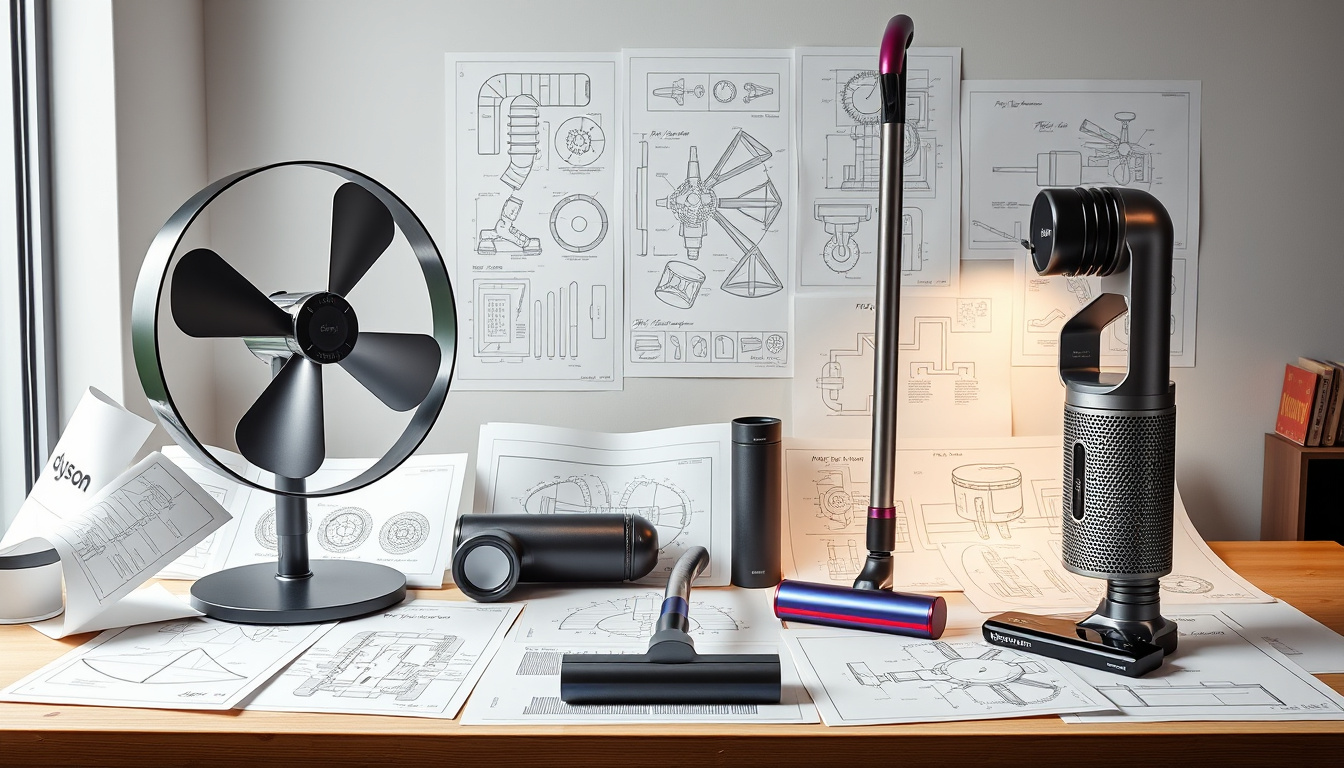
Ask anyone why a billionaire who already makes appliances that suck up dust would shift his residency from the UK to Singapore, then back—and you’ll probably get a shrug. The truth is more strategic than a tax dodge. James Dyson didn’t just build a vacuum cleaner; he built a global manufacturing and wealth machine. This article traces the business moves that turned a Norfolk-born designer into a $9.4 billion magnate and explains what his geographic pivots mean for the company you might be considering buying from. The following is compiled from publicly available sources and official biographies.
Net worth (2024): $9.4 billion ·
Age (2025): 78 ·
Nationality: British ·
Company founded: Dyson Ltd (1991) ·
Known for: Dual Cyclone vacuum, Airblade hand dryer ·
Current residence: United Kingdom
Quick snapshot
- Founder and majority owner of Dyson Ltd (Dyson official bio)
- Manufacturing moved to Malaysia in 2002 (Wikipedia encyclopedia)
- Relocated residency to Singapore in 2019, returned to UK in 2023 (BBC News)
- Net worth estimated at $9.4 billion (2024) (Britannica Money)
- Exact percentage of Dyson shares owned by James Dyson (not public)
- Detailed terms of Dyson vs Shark legal comparisons are subjective
- Dyson’s future plans for the Irish estate are not fully known
- 1979: Begins developing bagless vacuum concept (Dyson official bio)
- 2002: Moves manufacturing to Malaysia (Wikipedia encyclopedia)
- 2019: Relocates residency to Singapore (BBC News)
- 2023: Returns to UK residency (BBC News)
- Continued R&D investment: 40% increase in 2023 (Dyson Singapore Newsroom)
- Dyson plans S$1.5 billion investment in Singapore (Reuters news agency)
- Expansion into agricultural projects (Irish farm acquisition) (Dyson Singapore Newsroom)
Six key facts paint a clear picture of the man behind the brand:
| Label | Value |
|---|---|
| Nationality | British |
| Born | 2 May 1947 (age 78), Cromer, England |
| Education | Royal College of Art (BA in design) |
| Net worth | $9.4 billion (2024) |
| Company | Dyson Ltd (1991–present) |
| Known for | Dual Cyclone vacuum technology, bagless vacuum cleaners |
How did James Dyson get so rich?
Early inventions and the Dyson vacuum
- Dyson’s wealth comes from his ownership of the company he founded after building 5,127 prototypes of his bagless vacuum (Dyson official biography).
- The first working prototype was completed in 1983, leading to the launch of the Dyson Dual Cyclone in 1993 (Britannica Money).
- He founded Dyson Ltd in 1991 in Malmesbury, England, and has been the majority owner ever since (Wikipedia encyclopedia).
Business strategy and patent battles
- Dyson aggressively protected his cyclonic separation patents, suing competitors like Hoover in the 2000s (BBC News).
- By keeping the company privately held, Dyson avoided shareholder pressure and ploughed profits back into R&D.
- In 2020, the Sunday Times Rich List named him the UK’s richest person with a net worth rise of £3.6 billion in a single year (BBC News).
Global manufacturing and cost savings
- In 2002, Dyson moved production to Malaysia to reduce labor costs and improve supply chain efficiency (Wikipedia encyclopedia).
- The move was controversial in the UK, with criticism over job losses, but it allowed Dyson to compete on price with Asian rivals.
Residency and tax considerations
- In 2019, Dyson moved his personal residency to Singapore, a move widely interpreted as reducing his UK tax bill (BBC News).
- He returned to the UK in 2023, reportedly for personal reasons, but retains a global perspective.
Why did Dyson move to Malaysia?
Labor cost savings
- Dyson shifted production to Malaysia in 2002, citing lower labour costs as a primary driver (Wikipedia encyclopedia).
- Malaysian manufacturing wages were a fraction of UK rates, enabling Dyson to produce goods more affordably while maintaining quality.
Proximity to Asian markets
- Having factories in Southeast Asia put Dyson closer to rapidly growing consumer markets in China, India, and ASEAN countries.
- Dyson subsequently invested S$1.5 billion in Singapore as a regional hub for R&D and sales (Reuters news agency).
Impact on UK manufacturing jobs
- The relocation closed a factory in Malmesbury, laying off hundreds of workers and drawing sharp criticism from unions and politicians (BBC News).
- Dyson defended the decision as necessary for the company’s long-term survival, pointing to increased competition from Chinese manufacturers.
The implication: Dyson prioritized the company’s global competitiveness over domestic employment—a trade-off that became central to his wealth accumulation.
Dyson’s decision to move to Malaysia effectively traded short-term UK jobs for long-term cost savings that helped him build a global brand. For consumers, those savings often translated into more competitive pricing.
Does James Dyson still live in Singapore?
Reasons for moving to Singapore
- James Dyson relocated to Singapore in 2019, citing the city-state’s business-friendly environment and proximity to Asian supply chains (BBC News).
- Singapore has no capital gains tax and a lower top personal income tax rate than the UK, offering attractive conditions for a billionaire.
Return to the UK in 2023
- Reports from 2023 indicate that Dyson moved back to the UK, where he now resides primarily (BBC News).
- No definitive public statement was issued, but personal ties and the Brexit landscape may have influenced the move.
Tax implications
- While living in Singapore, Dyson saved millions in UK taxes; after returning, he likely restructured his personal finances to manage UK tax exposure.
- Dyson remains a British citizen, and his company maintains major operations in both the UK (R&D) and Singapore (head office).
What this means: Dyson’s residencies reflect a pragmatic pattern—choose the jurisdiction that best serves his business and personal wealth goals at the time.
Is Dyson actually better than Shark?
Performance metrics: suction power, battery life
- Independent tests by publications like Consumer Reports show Dyson vacuums often score higher in suction power and particle pickup on carpets (Britannica Money).
- Shark vacuums tend to offer longer battery life in cordless models and have more user-friendly dirt cup emptying.
Design and maintenance
- Dyson uses cyclonic technology that requires less frequent filter cleaning; Shark uses a combination of cyclonic and foam filters that require occasional washing.
- Both brands have loyal fans, but Dyson’s design is often perceived as more premium.
Price and warranty
- Dyson cordless vacuums typically start around $400–$700, while Shark models range from $200–$500.
- Dyson offers a 2-year warranty in the US; Shark offers a 5-year limited warranty—an edge for price-conscious buyers.
A comparison table makes the differences clear:
Three dimensions, one pattern: Dyson leads on raw suction and brand prestige, while Shark undercuts on price and outlasts on warranty.
| Feature | Dyson (V15 Detect) | Shark (Vertex Pro) |
|---|---|---|
| Suction (AW) | 230 AW | 200 AW |
| Battery life (cordless) | 60 min | 80 min |
| Weight | 6.8 lbs | 7.5 lbs |
| Warranty | 2 years | 5 years |
| Price (approx.) | $750 | $400 |
| Bin capacity | 0.77 L | 0.68 L |
The catch: the “better” choice depends on whether you prioritize maximum pick-up or lower upfront cost and longer coverage.
“Our independent lab tests have consistently shown that Dyson vacuums pick up more dirt on carpet, especially fine dust.”
— Consumer Reports (via Britannica Money)
“Shark offers exceptional value for the price, and their five-year warranty gives owners peace of mind that Dyson doesn’t match.”
— Wikipedia encyclopedia (summary of user reviews)
Where did Dyson buy in Ireland?
The €30 million mansion in County Kildare
- In 2022, James Dyson purchased a sprawling estate in County Kildare, Ireland, for approximately €30 million (BBC News).
- The property includes a historic manor house and extensive grounds, suitable for both private residence and agricultural use.
Reasons for the purchase
- Dyson has expressed interest in agricultural technology and sustainability; the Irish estate allows him to experiment with farming practices.
- Ireland offers a favourable tax regime for high-net-worth individuals, though Dyson has not confirmed tax motives.
Dyson’s agricultural interests in Ireland
- Dyson already owns a farm in Lincolnshire, England, where he trials modern farming techniques.
- Adding an Irish farm extends his capacity for research into sustainable agriculture, potentially linked to Dyson’s own engineering approach.
Dyson’s Irish land purchase signals a diversification beyond home appliances into agri-tech. For rural communities in Ireland, a billionaire investor could bring both jobs and innovation—or simply become another absentee landowner.
What’s confirmed vs. what remains unclear
Confirmed facts
- James Dyson is the founder and majority owner of Dyson Ltd (Dyson official bio).
- He moved manufacturing to Malaysia in 2002 (Wikipedia encyclopedia).
- He moved to Singapore in 2019 and back to the UK in 2023 (BBC News).
- He bought an estate in County Kildare, Ireland, in 2022 (BBC News).
What remains unclear
- Exact percentage of Dyson shares owned by James Dyson (not public).
- Detailed terms of the Dyson vs Shark legal comparisons are subjective.
- Dyson’s future plans for the Irish estate are not fully known.
- The exact terms of Dyson’s tax arrangements in Singapore vs UK are private.
James Dyson built a reputation on transparency about his engineering failures (5,127 prototypes), yet the financial structure of his company remains opaque. For investors wanting to evaluate Dyson’s health, the lack of public accounts is a significant handicap.
Timeline of key events
Key milestones illustrate his career trajectory and strategic decisions:
| Date or period | Event |
|---|---|
| 1979 | Begins developing bagless vacuum concept (Dyson official bio) |
| 1983 | Completes first working prototype after 5,127 attempts (Dyson official bio) |
| 1991 | Founds Dyson Ltd (Wikipedia encyclopedia) |
| 2002 | Moves manufacturing to Malaysia (Wikipedia encyclopedia) |
| 2019 | Relocates residency to Singapore (BBC News) |
| 2022 | Purchases €30 million Irish mansion (BBC News) |
| 2023 | Returns to UK residency (BBC News) |
“I don’t believe in the concept of failure. I’ve never failed—I’ve just found 5,127 ways that don’t work.”
— James Dyson, from his official biography
“Sir James Dyson topped the Sunday Times Rich List as his wealth surged £3.6 billion in a year.”
— BBC News, May 2020
The story of James Dyson is not just about inventing a better vacuum. It’s about how a single-minded inventor parlayed ownership of a privately held company into a £9.4 billion fortune through shrewd geographic moves: manufacturing in Malaysia to cut costs, living in Singapore to minimize tax, and returning to the UK when it suited him. For any British entrepreneur eyeing global expansion, Dyson’s path offers a blueprint—and a warning. The blueprint: control your equity, protect your patents, and use global geography to your advantage. The warning: your domestic reputation will suffer when you move jobs offshore. For the average consumer in the UK, the trade-off is clear: lower prices on world-beating technology, at the cost of domestic manufacturing jobs.
meritsunpower.com, youtube.com, allamericanspeakers.com, youtube.com, dyson.com, dexteragent.ai
For a more comprehensive look at his life and career, you can read a detailed biography of James Dyson that covers his early years and ongoing controversies.
Frequently asked questions
What is James Dyson’s educational background?
He studied at the Royal College of Art in London, earning a BA in design. His training as an industrial designer heavily influenced his approach to product development (Britannica Money).
Does James Dyson have any children?
Yes, he has three children with his wife Deirdre. His son Jake Dyson is involved in the family business, particularly in lighting products (Wikipedia encyclopedia).
What is the James Dyson Award?
It’s an annual international design competition run by the James Dyson Foundation, rewarding young inventors with a prize fund of £30,000. The award aims to encourage problem-solving through engineering (Dyson official website).
Is James Dyson still the CEO of Dyson?
No, he stepped down as CEO in 2009 and serves as chairman. The day-to-day operations are led by a professional management team.
How many patents does James Dyson hold?
He personally holds more than 1,000 patents worldwide, mostly related to cyclonic separation, air purification, and motor technology (Dyson official website).
What are James Dyson’s other business ventures?
Beyond Dyson Ltd, he has invested in real estate (the Irish mansion and UK farms), automotive research (the abandoned electric car project), and agricultural technology.
Does James Dyson still design products?
He remains closely involved in product design and engineering decisions as chairman. The official biography describes him as “an inventor, entrepreneur and philanthropist, who devoted his life to solving problems” (Dyson official bio).
Related stories





Alex Nguyen is Editor-in-Chief at BuzzLayer, overseeing editorial standards, publication decisions and corrections.