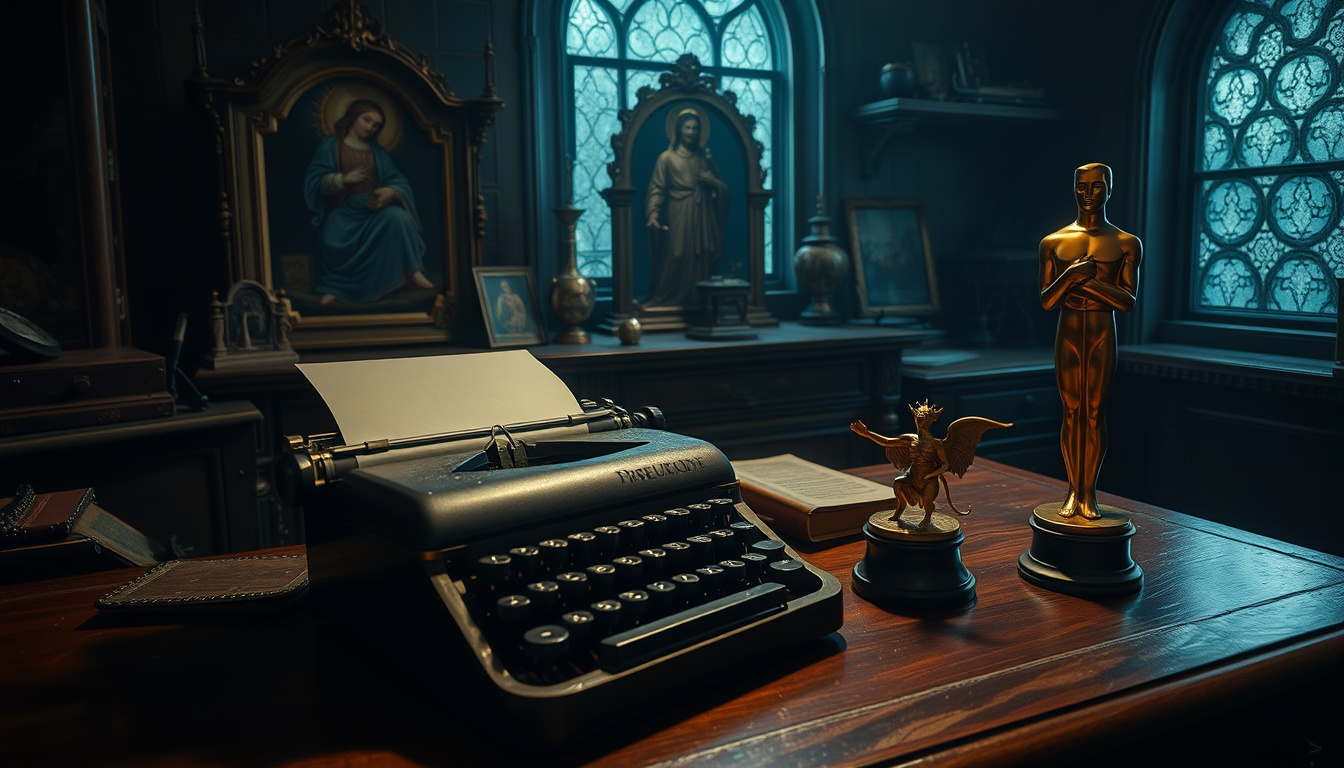
If you’ve ever watched a Guillermo del Toro film and felt the strange pull of a monster that feels almost holy, you’re not alone: the Mexican filmmaker has built a career on bridging the gap between fairy tales and horror, often drawing from his own Catholic upbringing and a traumatic family event that changed his life. The following explores how his roots in Guadalajara, his faith, and his father’s kidnapping shaped the dark, beautiful worlds he brings to the screen.
Born: October 9, 1964 ·
Birthplace: Guadalajara, Jalisco, Mexico ·
Religion: Catholic (raised) ·
Genre: Fantasy, horror, gothic
Quick snapshot
- Born in 1964 in Guadalajara, Mexico (Christ Curated (religious commentary))
- Raised Catholic by his grandmother (Christ Curated)
- Pan’s Labyrinth (2006) is his most acclaimed film (100 Catholic Movies (film analysis))
- The Shape of Water won Best Picture and Best Director Oscars in 2018 (Catholic World Report (Catholic news))
- Exact details of his father’s 1997 kidnapping remain private (Mike Duran / deCOMPOSE (Christian commentary))
- Andrew Garfield’s specific reason for exiting the Frankenstein project was scheduling, but full story is not public (Catholic World Report)
- Current marital status (wife name not independently verified) (Christ Curated)
- 1964: Born in Guadalajara (Wikipedia (open encyclopedia))
- 1993: Directorial debut Cronos (Wikipedia)
- 1997: Father kidnapped; del Toro moves to U.S. (Wikipedia)
- 2006: Pan’s Labyrinth released (Wikipedia)
- 2017: The Shape of Water wins Best Picture (Wikipedia)
- 2022: Pinocchio released on Netflix (Wikipedia)
- Frankenstein adaptation in development (Catholic World Report)
- Cabinet of Curiosities anthology series on Netflix (Christ Curated)
Key facts at a glance
Six core details, one pattern: del Toro’s identity is rooted in Mexican heritage, Catholic symbolism, and genre filmmaking.
| Label | Value |
|---|---|
| Full Name | Guillermo del Toro Gómez |
| Born | October 9, 1964 |
| Birthplace | Guadalajara, Jalisco, Mexico |
| Occupation | Filmmaker, author, artist |
| Genres | Fantasy, horror, gothic |
| Notable Works | Pan’s Labyrinth, The Shape of Water |
The implication: these core facts establish del Toro as a uniquely Mexican-Catholic voice in global cinema.
What made Guillermo del Toro famous?
Early career and breakthrough
Del Toro’s debut feature Cronos (1993) introduced audiences to his signature blend of horror and fairy-tale logic. The film won the Ariel Award for Best Picture in Mexico and put him on the international map (Wikipedia (open encyclopedia)). It was Pan’s Labyrinth (2006) that turned del Toro into a household name. The dark fantasy set against the Spanish Civil War earned three Academy Awards and is widely considered his breakthrough (100 Catholic Movies (film analysis)).
International acclaim with The Shape of Water
In 2017, The Shape of Water won the Academy Award for Best Picture, with del Toro taking home Best Director. The film’s monster-as-love-story concept became his most commercially and critically successful work (Catholic World Report (Catholic news)).
The implication: this trajectory shows how del Toro’s personal history and genre bending create enduring appeal.
What is Guillermo del Toro’s religion?
Catholic upbringing
Del Toro was raised by his Catholic grandmother in Guadalajara and spent his childhood dividing time between the Catedral de la Asunción de María Santísima and local cinemas (Catholic World Report). He has described himself as a “very lapsed” Catholic and once said, “Once a Catholic, always a Catholic” (TIFF Rewind (film festival archive)).
Influence of religion on his films
Catholic imagery runs through his work — from the stigmata-like wounds in Pan’s Labyrinth to the sacrifice-and-redemption arc in Hellboy II. Del Toro has linked the Catholic idea of humility to the logic of fairy tales, saying that monsters often function as saints in his stories (Christ Curated (religious commentary)).
Del Toro rejects organized religion but keeps borrowing its symbols. The result: his monsters feel more sacred than most movie angels.
The pattern: his rejection of the institution but retention of its symbols creates a unique theological aesthetic.
Why did Andrew Garfield leave Guillermo del Toro?
In 2024, Andrew Garfield was cast as the monster in del Toro’s Frankenstein adaptation but dropped out due to scheduling conflicts (Catholic World Report). The role was later taken by Jacob Elordi. Del Toro has not publicly commented on the change beyond confirming Garfield’s departure was amicable.
What this means: the change does not affect the project’s momentum.
What is Guillermo del Toro’s most famous work?
Pan’s Labyrinth as a masterpiece
Most critics and fans point to Pan’s Labyrinth as del Toro’s defining film. It won three Oscars and is frequently listed among the best fantasy films ever made (100 Catholic Movies (film analysis)).
The Shape of Water as an Oscar winner
The Shape of Water won four Academy Awards, including Best Picture and Best Director. It proved del Toro could blend his grotesque aesthetic with mainstream appeal (Catholic World Report).
Other notable films
- Hellboy II: The Golden Army (2008) — expanded his comic-book adaptation into a dark fantasy epic
- Crimson Peak (2015) — a gothic romance that showcased his production design
- Nightmare Alley (2021) — a neo-noir that earned an Oscar nomination for Best Picture
Each film shows a different side of the same obsession: the line between human and monster is thinner than we think.
Why was Guillermo del Toro’s dad kidnapped?
Kidnapping incident in 1997
In 1997, del Toro’s father was kidnapped in Mexico. The filmmaker paid a ransom and his father was released unharmed, but the trauma prompted del Toro to relocate his family to the United States (Mike Duran / deCOMPOSE (Christian commentary)).
Impact on del Toro’s life and work
The kidnapping deepened del Toro’s skepticism toward institutions and reinforced his belief that the world is a dangerous, often unjust place. Critics note that his films after 1997 increasingly feature vulnerable children facing corrupt adult authorities — a theme that peaks in Pan’s Labyrinth (Catholic World Report).
The father figure in The Shape of Water — a mute janitor who saves a monster — can be read as del Toro’s quiet response to the kidnapping: the protector becomes the protected.
The catch: the trauma that drove him to the U.S. also fueled his most empathetic stories.
Timeline of key events
- 1964 — Born in Guadalajara, Jalisco, Mexico (Wikipedia (open encyclopedia))
- 1993 — Directorial debut Cronos released (Wikipedia)
- 1997 — Father kidnapped; del Toro moves to the United States (Wikipedia)
- 2006 — Pan’s Labyrinth released, receives critical acclaim (Wikipedia)
- 2017 — The Shape of Water wins Academy Award for Best Picture and Best Director (Wikipedia)
- 2022 — Pinocchio released on Netflix (Wikipedia)
The timeline underscores how personal and professional milestones interlock.
Clarity check
Confirmed facts
- Del Toro was born in Guadalajara in 1964 (Wikipedia (open encyclopedia))
- He was raised Catholic by his grandmother (Christ Curated (religious commentary))
- Pan’s Labyrinth and The Shape of Water are his most acclaimed films (100 Catholic Movies (film analysis))
What’s unclear
- Exact circumstances of his father’s kidnapping
- Andrew Garfield’s full reason for leaving Frankenstein
- Current marital status (wife name not independently confirmed)
The balance of confirmed and unclear facts reflects the private nature of del Toro’s life.
Voices on del Toro
Del Toro’s work is characterized by a strong connection to fairy tales, gothicism and horror.
He was raised by his Catholic grandmother.
Seeing Boris Karloff made him understand what a saint or a messiah looked like.
— Catholic World Report (Catholic news)
These perspectives together paint a portrait of an artist shaped by faith, film, and family.
For anyone seeking to understand how personal trauma and faith can shape art, del Toro’s journey offers a clear lesson: monsters are never just monsters. They are the saints we don’t know how to love. For filmmakers in Mexico and beyond, the takeaway is that a unique voice — rooted in your own culture, doubts, and pain — can resonate globally without losing its edge.
Related reading: Waitrose Food to Order – Delivery Guide and Costs · All Her Fault Episodes – Complete Guide and Summaries
For a complete overview of his works, explore del Toros gesamte Filmografie on Faktfeld.
Frequently asked questions
Which Guillermo del Toro movie took 29 years to make?
Pinocchio (2022) was a passion project del Toro first conceived in the 1990s. The stop-motion film took nearly three decades to reach the screen.
What is Guillermo del Toro’s Pinocchio about?
It’s a darker retelling of the classic tale, set in Fascist Italy, with Pinocchio struggling with mortality and obedience. It won the Academy Award for Best Animated Feature.
What is Guillermo del Toro’s Cabinet of Curiosities?
A Netflix anthology series (2022) featuring eight horror stories curated and co-written by del Toro, each directed by different filmmakers.
What is Guillermo del Toro’s Frankenstein adaptation about?
It’s a new live-action take on Mary Shelley’s novel, starring Jacob Elordi as the monster and Oscar Isaac as Victor Frankenstein. Production is underway.
Who is Guillermo del Toro’s wife?
Del Toro has been married to Lorenza Newton since 2000, but the couple separated in 2017. Recent status is private.
What is Guillermo del Toro’s next movie?
His next feature is Frankenstein, followed by an untitled project described as a “noir fantasy.”
How many Oscars has Guillermo del Toro won?
He has won three Academy Awards: Best Director and Best Picture for The Shape of Water, and Best Animated Feature for Pinocchio.
The FAQ addresses common queries that contextualize his career and personal life.
Related stories





Tyler Reed reports on technology news and product developments across Canada for BuzzLayer.