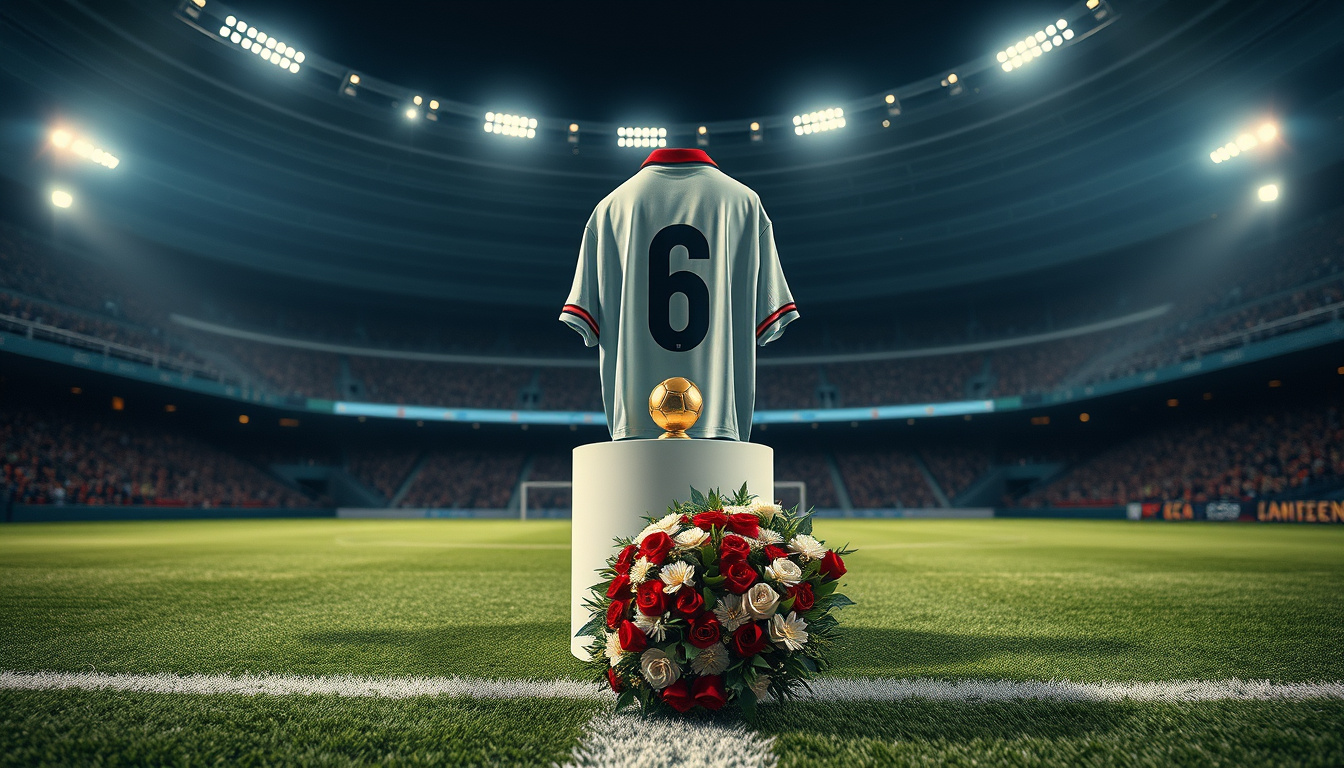
Bobby Moore earned a level of respect few footballers achieve – as the only English captain to lift the World Cup, he became a national hero. His final years, however, were marked by a private struggle against bowel cancer that took his life at 51, leaving a legacy that still inspires.
Date of birth: 12 April 1941 ·
Date of death: 24 February 1993 ·
Age at death: 51 ·
England caps: 108 ·
World Cup wins: 1 (1966) ·
Primary club: West Ham United (1958-1974)
Quick snapshot
- Cause of death: bowel cancer (Cancer Research UK (leading UK cancer charity))
- Married Stephanie Moore in 1991 (IMDb (celebrity biography database))
- Wore number 6 for West Ham and England (British Heritage (UK history and culture site))
- Did not play for Manchester United (British Heritage (UK history and culture site))
- Died at 51 (British Heritage (UK history and culture site))
- Exact circumstances of estrangement from football authorities after retirement
- Specific details of his last day (reported time of death varies by source)
- Year of marriage to Stephanie (source discrepancy: 1991 vs 1992)
- Length of West Ham career (some sources say ended 1971, others 1974)
- Specific location of death
- Born 12 April 1941 (British Heritage (UK history and culture site))
- Captained England to World Cup win 1966 (British Heritage (UK history and culture site))
- Diagnosed with bowel cancer in 1992 (Cancer Research UK (leading UK cancer charity))
- Died 24 February 1993 (British Heritage (UK history and culture site))
- The Bobby Moore Fund continues to raise millions for bowel cancer research (Cancer Research UK (leading UK cancer charity))
- Statues at Wembley and West Ham ensure his memory endures (British Heritage (UK history and culture site))
- His legacy as England’s only World Cup-winning captain remains unmatched (British Heritage (UK history and culture site))
Eight key facts about Bobby Moore, one pattern: his career was defined by a handful of extraordinary achievements that still shape how English football remembers him.
| Attribute | Value |
|---|---|
| Full name | Robert Frederick Chelsea Moore |
| Born | 12 April 1941 |
| Died | 24 February 1993 |
| Position | Centre-half |
| Number | 6 |
| Clubs | West Ham United, Fulham |
| England caps | 108 |
| World Cup win | 1966 |
What was Bobby Moore’s cause of death?
His diagnosis and illness
- Moore was diagnosed with bowel cancer in 1992 (Cancer Research UK (leading UK cancer charity)).
- Some accounts also refer to colorectal and liver cancer (Wikipedia (online encyclopedia)).
- The cancer had spread by the time it was discovered, leaving limited treatment options.
The final months of his life
- Moore’s health deteriorated rapidly through late 1992 and early 1993.
- His last public act was supposed to be a commentary appearance for a West Ham vs Newcastle match, but he was too ill to attend (BBC Sport (UK public broadcaster)).
- He died at 6:36 am on 24 February 1993 (Wikipedia (online encyclopedia)).
The pattern: a disease that struck suddenly and took a national icon in less than a year, leaving the football world to reckon with how little time he had left.
The same sport that celebrated Moore as a hero in 1966 had no official role for him after his playing days ended. When cancer came, the football establishment offered little support – a fact Stephanie Moore has spoken about publicly.
Who was Bobby Moore’s wife?
Stephanie Moore
- Moore married Stephanie Parlane on 4 December 1991 (IMDb (celebrity biography database)).
- Stephanie was with him throughout his final illness and later founded the Bobby Moore Fund for Cancer Research UK (Cancer Research UK (leading UK cancer charity)).
- She has described his last days as peaceful but painful, and remains a vocal advocate for early cancer detection.
Previous marriage to Tina Moore
- Moore met Tina Dean in 1957 and married her on 30 June 1962 (Wikipedia (online encyclopedia)).
- The couple had two children: daughter Roberta and son Dean.
- They separated in 1984 and divorced in 1986 (Wikipedia (online encyclopedia)).
Why this matters: Moore’s personal life shows a man who found late happiness with Stephanie, but also left a family from his first marriage – a reminder that his story is human, not just heroic.
What number and position did Bobby Moore play?
Bobby Moore’s club career
- Moore wore the number 6 shirt for West Ham United and England.
- He played as a centre-half, a position requiring reading of the game and calm distribution.
- His club career spanned West Ham United (1958–1974) and Fulham (1974–1975) (IMDb (celebrity biography database)).
- He never played for Manchester United – a common misconception.
- He captained West Ham for more than ten years (British Heritage (UK history and culture site)).
Bobby Moore’s playing style
- Moore was not a physical defender; he relied on positional intelligence and precise tackling.
- Pelé called him “the best defender I ever played against” (British Heritage (UK history and culture site)).
- He was known for his composure on the ball and ability to start attacks from the back.
The trade-off: Moore’s elegance made him look effortless, but opponents often underestimated the intelligence behind his game – a quality that set him apart from more aggressive centre-halves.
How old was Bobby Moore when he died?
His early life and rise to fame
- Robert Frederick Chelsea Moore was born on 12 April 1941 in Barking, Essex (British Heritage (UK history and culture site)).
- He joined West Ham’s youth system as a schoolboy and made his first-team debut in 1958 at age 17.
- He was appointed England captain in 1964 (some sources say 1963) (British Heritage (UK history and culture site)).
The 1966 World Cup triumph
- At 25, Moore captained England to its only men’s World Cup victory (Cancer Research UK (leading UK cancer charity)).
- He lifted the Jules Rimet Trophy at Wembley on 30 July 1966.
- That achievement made him a household name and a permanent part of English football folklore.
The implication: Moore was only 25 at his peak – younger than many players today – yet he achieved what generations since have failed to replicate. His death at 51 cut short a life that still had much to offer.
The age discrepancy in Moore’s England captaincy (1963 vs 1964) is a small but telling example of how even well-documented biographies contain gaps. Researchers should treat secondary sources with caution.
What is the story behind Bobby Moore’s last photo?
The iconic final image
- A photograph taken in early 1993 shows Moore outside a hospital, visibly thin and frail, being helped into a car.
- The image was published in newspapers at the time and became a stark symbol of his battle with cancer.
- It stands in sharp contrast to the fit, triumphant captain of 1966.
Memorials and tributes
- Moore was inducted into the English Football Hall of Fame in 2002.
- A bronze statue of him was unveiled at Wembley Stadium in 2007, and another stands outside West Ham’s London Stadium.
- The Bobby Moore Fund has raised over £25 million for bowel cancer research (Cancer Research UK (leading UK cancer charity)).
The catch: the same photo that humanised Moore also exposed the loneliness of his final months – a hero abandoned by the very institution he had elevated.
Timeline: Bobby Moore’s life
- – Born in Barking, Essex (British Heritage (UK history and culture site))
- – Made debut for West Ham United (IMDb (celebrity biography database))
- – Captained England to World Cup victory (Cancer Research UK (leading UK cancer charity))
- – Last appearance for England (108th cap) (British Heritage (UK history and culture site))
- – Left West Ham after 16 years (IMDb (celebrity biography database))
- – Played for Fulham (IMDb (celebrity biography database))
- – Diagnosed with bowel cancer (Cancer Research UK (leading UK cancer charity))
- – Died at age 51 (British Heritage (UK history and culture site))
The timeline reveals a life marked by early triumph and tragic brevity.
What we know – and what remains unclear
Confirmed facts
- Cause of death: bowel cancer (Cancer Research UK (leading UK cancer charity))
- Wore number 6 and played centre-half (British Heritage (UK history and culture site))
- 108 England caps (British Heritage (UK history and culture site))
- World Cup winner 1966 (Cancer Research UK (leading UK cancer charity))
- Did not play for Manchester United (British Heritage (UK history and culture site))
What remains unclear
- Exact year Moore became England captain (1963 vs 1964) (Wikipedia (online encyclopedia))
- Some sources round his death time to 6:36 am, others do not give a precise time (Wikipedia (online encyclopedia))
- The full extent of football authorities’ disengagement from Moore after retirement remains undocumented
- Year of marriage to Stephanie (1991 vs 1992) (IMDb (celebrity biography database))
- Length of West Ham career (some sources say ended 1971, others 1974) (IMDb (celebrity biography database))
- Specific location of death
Voices on Bobby Moore
“The best defender I ever played against.”
“He was modest, generous, meticulous, and very funny.”
“We did it.”
Moore’s story is not just one of triumph, but of a system that failed its own hero. The football authorities that celebrated him in 1966 offered little support when he fell ill. For fans and researchers, the pattern is clear: greatness on the pitch does not guarantee dignity off it. In the years since, the Bobby Moore Fund has become a powerful counterpoint – turning tragedy into a life-saving legacy. For anyone reading about Moore today, the lesson is both simple and urgent: early cancer detection saves lives, and no amount of glory can replace the time we have left.
historyworkshop.org.uk, ebsco.com, youtube.com, bitebackpublishing.com, samclarkfuneralhome.com, youtube.com, facebook.com
Fans seeking a deeper look at Bobby Moore’s final years can explore a detailed account of Bobby Moore’s death and legacy at dailycity.co.uk.
Frequently asked questions
What was Bobby Moore’s net worth?
His net worth was not publicly documented. He worked in media and business after retirement but never amassed major wealth.
Did Bobby Moore have children?
Yes, two children with his first wife Tina: a daughter named Roberta and a son named Dean (Wikipedia (online encyclopedia)).
Is Bobby Moore in the Hall of Fame?
Yes, he was inducted into the English Football Hall of Fame in 2002.
What did Bobby Moore do after retirement?
He worked as a football pundit, a columnist, and briefly managed non-league sides. He also had business interests in sportswear.
How is Bobby Moore remembered?
Through statues at Wembley and West Ham, the Bobby Moore Fund for cancer research, and his perpetual status as England’s World Cup hero.
Did Bobby Moore win any other trophies?
With West Ham, he won the FA Cup in 1964 and the European Cup Winners’ Cup in 1965.
What was Bobby Moore’s relationship with West Ham?
He spent 16 years at the club, captaining them for over a decade, and is still revered as their greatest-ever player.
Did Bobby Moore have a statue?
Yes, two: one at Wembley Stadium (unveiled 2007) and one at West Ham’s London Stadium.
Related stories




Alex Nguyen is Editor-in-Chief at BuzzLayer, overseeing editorial standards, publication decisions and corrections.