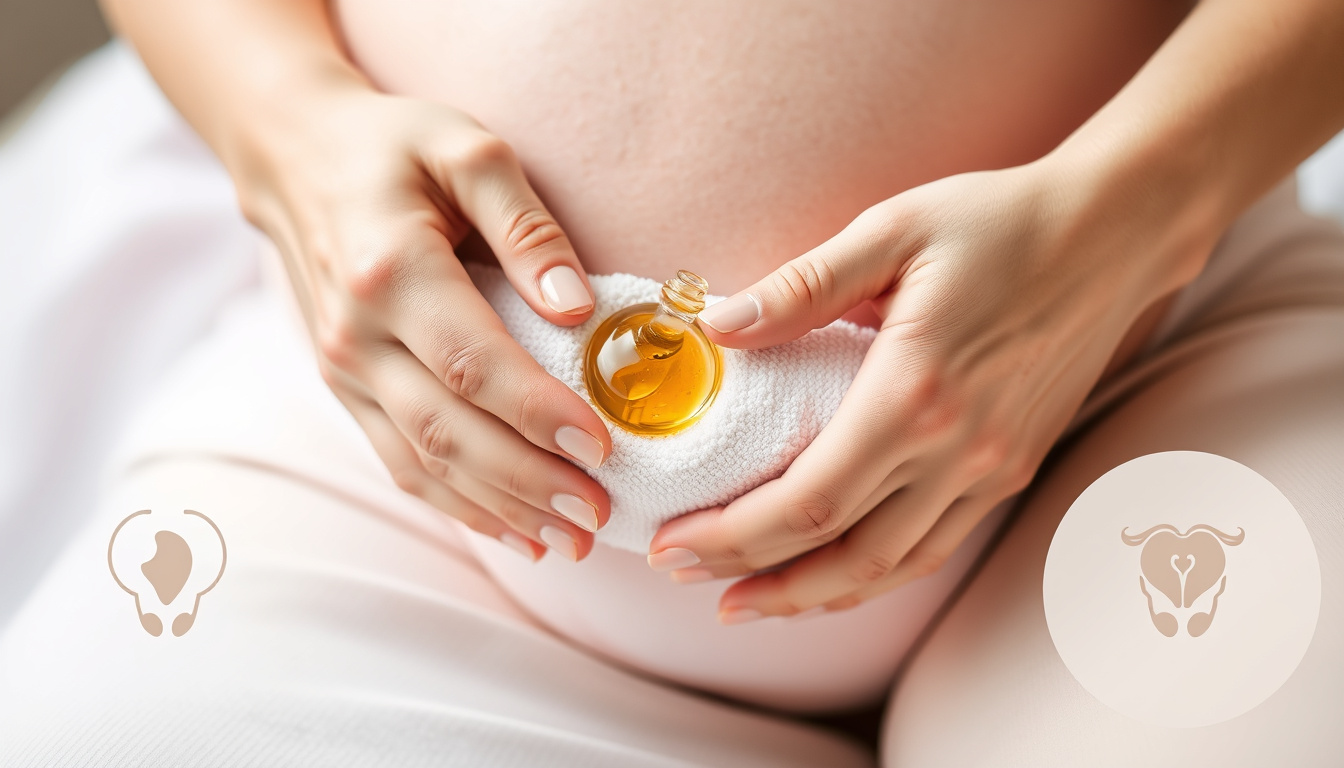
If you’re expecting a baby, you’ve probably heard about perineal massage — but sorting through the advice can feel overwhelming. This guide breaks down what the research actually says about timing, technique, and whether to involve your partner, so you can make an informed decision grounded in NHS and NCT recommendations.
Recommended start week: 34 weeks (NHS) ·
Session length: 5–10 minutes ·
Evidence base: Reduces perineal trauma (NHS) ·
Frequency: 3–4 times per week
Quick snapshot
- From 34–36 weeks (NHS Scotland guidance)
- Can start at 37 weeks if missed earlier (NHS Scotland guidance)
- Avoid if certain infections or preterm labor risk (NHS Scotland guidance)
- Insert finger 1–2 inches
- Use U‑shaped sweeping motion
- Massage 5–10 minutes daily
- Use oil or lubricant
- Reduces perineal trauma (University Hospitals Sussex NHS)
- May decrease episiotomy risk (University Hospitals Sussex NHS)
- Prepares perineum for stretching (University Hospitals Sussex NHS)
Here’s a quick look at the core numbers behind perineal massage — five data points, one pattern: consistency and early start matter most.
| Item | Value |
|---|---|
| Recommended start week | 34–36 weeks |
| Session duration | 5–10 minutes |
| Frequency | 3–4 times per week |
| Evidence level | Reduces perineal trauma (NHS) |
When should you begin perineal massages?
Is it too late to start perineal massage at 37 weeks?
- Cambridge University Hospitals NHS recommends starting at 34 weeks, but if you’re already 37 weeks, don’t skip it — starting later still offers benefit.
- The Manchester University NHS Foundation Trust states that massage can begin from 34 to 35 weeks up until delivery.
When should you not do perineal massage?
- BNSSG NHS guidance warns against massage before 34 weeks, or if you have vaginal thrush, herpes, another vaginal infection, or broken waters.
- Also avoid if you have signs of preterm labor.
The trade-off: start early enough to let the tissue adapt, but not before 34 weeks. Missing that window isn’t a deal‑breaker — any practice is better than none.
Can my husband do my perineal massage?
How do I give my wife a perineal massage?
- The NCT (UK parenting charity) advises partners to use clean index fingers, apply side‑to‑side and U‑shaped pressure toward the back wall of the vagina.
- Pregnancy, Birth and Baby (Australian health service) says partner support is fine if everyone is comfortable; communication should be clear because massage should not cause pain.
Can I do a perineal massage by myself?
- Self‑massage is equally effective and gives you full control over pressure and depth.
- Use the same technique: insert one or two fingers about 1–2 inches, sweep in a U‑shape toward the rectum.
Partners who are educated about the technique can be a real help, but the evidence doesn’t show one method is superior. Choose whichever feels most comfortable for you both – consistency is what counts.
The implication: whether you go solo or with a partner, the key is lubrication, gentle pressure, and clear communication.
How deep should I insert my finger during a perineal massage?
How do I know if I’m doing perineal massage correctly?
- Insert your finger about 1–2 inches (2.5–5 cm) inside the vagina – that’s roughly to the second knuckle.
- Use a U‑shaped sweeping motion toward the rectum. Correct technique feels like gentle stretching, not sharp pain.
- Massage for 5–10 minutes, using perineal oil or lubricant (NHS Scotland recommends vitamin E, almond or olive oil).
What is a pelvic finger massage?
- Pelvic finger massage (also called “pelvic floor massage”) often refers to the same technique: internal circular strokes that stretch the perineal muscles. It’s a broader term used by some physiotherapists.
Most discomfort comes from going too deep too fast. If you feel sharp pain, stop and check your finger position or reduce pressure – the perineum should be stretched, not stabbed.
The pattern: depth is less important than the correct angle and consistent U‑shaped motion. One inch is often enough for the first few sessions.
Do perineal massages actually make a difference?
Is a perineal massage painful?
- Evidence shows perineal massage reduces the risk of perineal trauma requiring stitches (University Hospitals Sussex NHS).
- A 2022 PMC meta‑analysis (peer‑reviewed medical research) found massage during labor was associated with a lower incidence of severe perineal trauma (RR 0.52).
- Mild discomfort is normal; sharp or lasting pain indicates incorrect technique or a contraindication.
What this means: the numbers back it up – regular antenatal massage roughly halves the risk of needing stitches after birth. That’s a tangible payoff for a few minutes a day.
What perineal massage tools and positions are recommended?
Perineal massage oil
- Use a water‑soluble lubricant or natural oil like coconut, almond, olive, or vitamin E oil. Avoid synthetic products that may irritate sensitive tissue.
Perineal massage best position
- Semi‑reclining with legs bent and knees apart, or lying on your back with knees bent and feet apart – whatever gives you easy access.
- A perineal massage tool (Y‑shaped device) can help if finger access is difficult, though most NHS leaflets recommend fingers.
Tools are a convenience, not a shortcut. They don’t replicate the finger’s ability to feel tissue tension. If you use one, stop if it causes any pinch or discomfort.
The trade-off: oil and position are personal preferences – there’s no “best” brand. What matters is that you feel comfortable and can maintain a routine.
Step‑by‑Step Perineal Massage Guide
- Wash your hands and trim your nails. (NHS Scotland suggests a warm bath beforehand to relax.)
- Choose a comfortable position – semi‑reclining or lying on your back with knees apart.
- Apply lubricant (vitamin E, almond, or olive oil) to your fingers and the perineum.
- Insert one or two fingers about 1–2 inches (2.5–5 cm) into the vagina.
- Press gently downward toward the anus and then sweep in a U‑shape to the sides of the vaginal wall. Repeat for 5–10 minutes.
- Breathe deeply and relax – stop if you feel sharp pain.
- Perform 3–4 times per week from 34 weeks onward (Royal Berkshire NHS Foundation Trust).
For partners: use clean index fingers and follow the same steps, with constant verbal feedback on pressure.
Upsides
- Reduces the risk of perineal tears requiring stitches (NHS evidence)
- May lower the chance of episiotomy
- Prepares the perineum for stretching during birth
- Can be done alone or with a partner – no special equipment needed
Downsides
- Requires consistent effort (3–4 times per week) for several weeks
- Mild discomfort is normal; some find it awkward or uncomfortable
- Not suitable if you have active infections, herpes, or risk of preterm labour
- Partner‑assisted massage may feel awkward and requires clear communication
Timeline signal
- 34–36 weeks: Begin perineal massage if no contraindications (Cambridge University Hospitals NHS)
- 37 weeks: Still beneficial to start; continue daily if already started
- Labour: Perineal massage during labour (if desired and feasible) may further aid stretching (PMC meta‑analysis)
Clarity: What we know and what remains unclear
Confirmed facts
- Perineal massage reduces perineal trauma (NHS evidence)
- Recommended from 34–36 weeks by UK health bodies (Royal Devon University Healthcare NHS)
- Use lubrication to prevent discomfort (NHS Scotland)
What’s unclear
- Optimal frequency beyond 3–4 times per week is not established
- Whether partner‑assisted massage is more effective than self‑massage has limited evidence
- The exact reduction in third‑ and fourth‑degree tears specifically requires more research (PMC meta‑analysis notes wide confidence intervals)
Quotes from the experts
“Perineal massage has been proven to reduce perineal trauma and therefore we would recommend this to women from 35 weeks’ gestation.”
— NHS (Leeds Teaching Hospitals)
“Perineal massage involves massaging the area between the vagina and anus during late pregnancy. Some pregnant women and people massage their perineum…”
— NCT (National Childbirth Trust)
For any expectant parent weighing whether to add perineal massage to their antenatal routine, the choice is backed by robust NHS evidence and a clear timeline. Starting around 34 weeks, with or without a partner, offers a concrete, low‑cost way to reduce your risk of perineal trauma – and the few minutes a day it takes are a small investment for a smoother recovery.
Frequently asked questions
When should you not do perineal massage?
Avoid if you have genital herpes, vaginal infections (thrush, bacterial vaginosis), broken waters, or signs of preterm labour. Also avoid before 34 weeks.
How do I give my wife a perineal massage?
Wash hands, use lubricant, gently insert a clean index finger about 1–2 inches, and sweep in a U‑shape toward the rectum. Communicate constantly about pressure.
How do I know if I’m doing perineal massage correctly?
You should feel a gentle stretch, not sharp pain. If you feel pain, reduce depth or pressure. The motion should be smooth and U‑shaped.
Is it too late to start perineal massage at 37 weeks?
No. Although 34–36 weeks is the ideal window, starting at 37 weeks still offers benefits.
Can I do a perineal massage by myself?
Yes. Self‑massage is equally effective and allows you to control the pressure and depth.
What is a pelvic finger massage?
It’s another term for perineal massage, referring to internal circular strokes that stretch the pelvic floor muscles.
Related stories





Alex Nguyen is Editor-in-Chief at BuzzLayer, overseeing editorial standards, publication decisions and corrections.