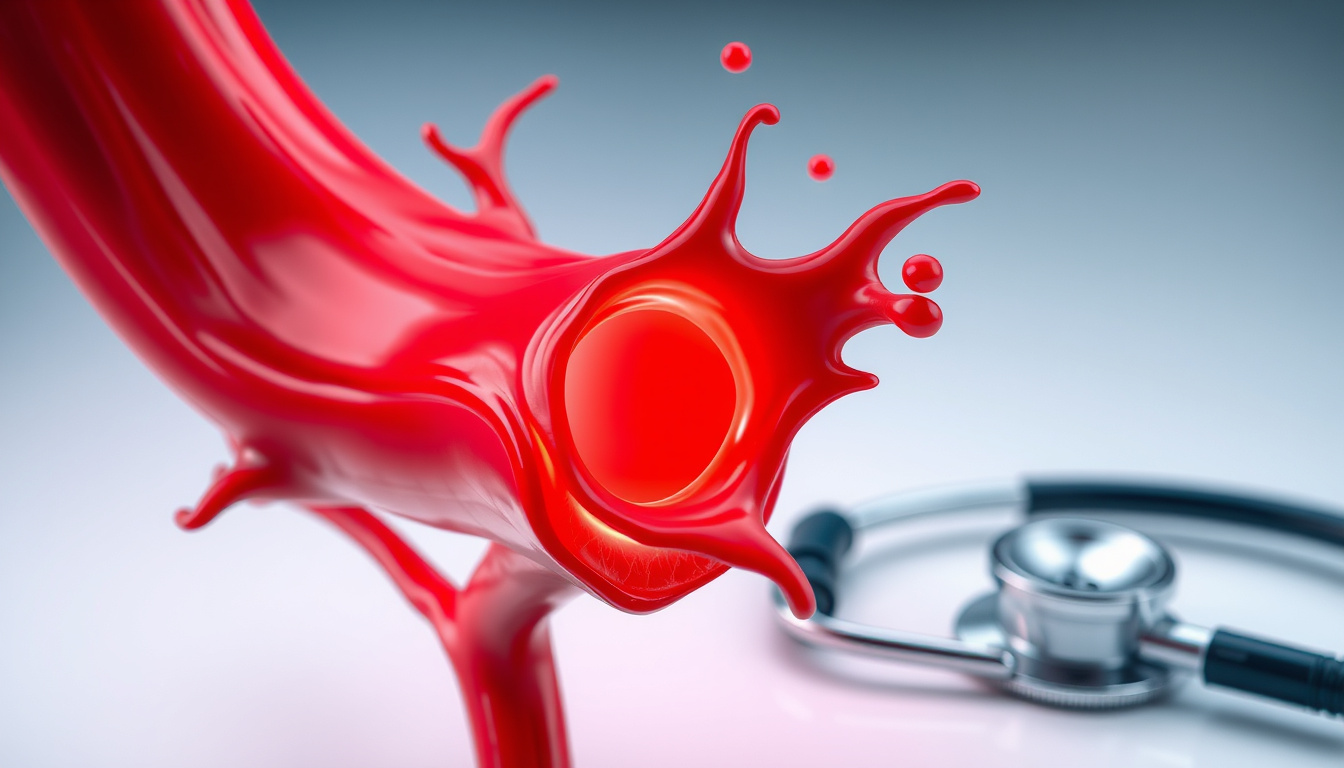
Most people never give their arteries a second thought — until something goes wrong. An aneurysm is one of those conditions that can develop silently for years, with the first serious warning coming only when it bursts. Understanding what an aneurysm is, where it forms, and what puts you at risk could quite literally be lifesaving knowledge.
Definition: Bulge in weakened artery wall · Rupture Risk: Medical emergency if bursts · Widening Threshold: Greater than 50% of normal diameter · Common Sites: Brain, aorta, heart, stomach · Symptoms Often: None until rupture
Quick snapshot
Four pillars define how clinicians approach aneurysms: the type of vessel involved, what weakens the wall, how the body signals trouble, and which intervention stops the bleeding.
- Saccular (berry) aneurysms account for 90% of intracranial cases (NIH PubMed Central)
- Aortic aneurysms are the most common type overall, forming in the body’s largest artery (Cleveland Clinic health library)
- Approximately 85% of cerebral aneurysms occur in the anterior circulation (NCBI Bookshelf StatPearls)
- Weak artery walls are the primary structural flaw that allows ballooning to occur (Johns Hopkins Medicine patient education)
- Hypertension damages vessel walls over time, increasing formation risk (NCBI Bookshelf StatPearls)
- Genetic disorders and inherited connective tissue conditions play a significant role (Johns Hopkins Medicine patient education)
- Brain aneurysms typically cause no symptoms unless they rupture (Brigham and Women’s Hospital neurosurgery)
- Ruptured cerebral aneurysm: sudden severe headache, nausea, vomiting, visual disturbance (Johns Hopkins Medicine patient education)
- Abdominal aortic aneurysm: constant pain in abdomen, chest, lower back, or groin (Johns Hopkins Medicine patient education)
- Microsurgical clipping places a titanium clip at the aneurysm base to stop blood flow (Brigham and Women’s Hospital neurosurgery)
- Endovascular coil embolization uses a catheter to place soft metal coils inside the aneurysm (Brigham and Women’s Hospital neurosurgery)
- Endovascular aneurysm repair (EVAR) requires only small groin incisions with X-ray guidance (Johns Hopkins Medicine patient education)
The table below consolidates the defining numbers that clinicians use to categorize, diagnose, and risk-stratify aneurysms.
| Aspect | Details |
|---|---|
| Medical Definition | Bulge or ballooning in blood vessel wall |
| Widening Threshold | Greater than 50% of vessel’s normal diameter |
| Most Common Location | Aorta or brain |
| Rupture Consequence | Internal bleeding, stroke |
| Detection Method | Imaging like CT/MRI |
| Survival Rate (Ruptured) | Varies, often low without treatment |
| Intracranial Prevalence | Approximately 4% |
| Saccular Type Share | 90% of intracranial aneurysms |
What Is an Aneurysm?
An aneurysm is defined as a bulging, weakened area in the wall of a blood vessel resulting in an abnormal widening or ballooning greater than 50% of the vessel’s normal diameter (Johns Hopkins Medicine). Aneurysms may occur in any blood vessel but are most often seen in an artery rather than a vein (Johns Hopkins Medicine). The larger an aneurysm becomes, the greater the risk for rupture (bursting) (Johns Hopkins Medicine).
With rupture, life-threatening hemorrhage (uncontrolled bleeding) and possibly death may result (Johns Hopkins Medicine). If an aneurysm in the brain bursts, it causes a stroke (MedlinePlus).
The implication is stark: a vessel weakened enough to balloon is already on a trajectory where intervention — not watchful waiting alone — determines whether the outcome is survival or catastrophe.
The majority of cerebral aneurysms are silent and may be found incidentally on neuroimaging or upon autopsy (NCBI Bookshelf). This means millions of people carry this condition without any idea they have it.
Types of aneurysm
The main categories of aneurysm include saccular (berry) aneurysms, which are the most common type and form as a sac of blood attached to an artery (Cleveland Clinic). The saccular type accounts for 90% of intracranial aneurysms (NIH PMC).
Aortic aneurysms are by far the most common type overall and form in the aorta, the body’s largest artery (Cleveland Clinic). Fusiform aneurysms cause bulging on all sides of an artery (Brigham and Women’s Hospital). A dissecting aneurysm occurs with a tear in the artery wall that separates the 3 layers, rather than ballooning out the entire wall (Johns Hopkins Medicine).
Peripheral aneurysms develop in arteries other than the aorta (Cleveland Clinic). These include popliteal aneurysms in the artery behind the knees, mesenteric artery aneurysms affecting blood flow to the intestine, and splenic artery aneurysms (Cleveland Clinic).
The pattern across aneurysm types is consistent: wherever vessel wall integrity fails under pressure, the anatomy will balloon unless surgical or endovascular intervention stops the blood flow into the defect.
What is an aneurysm in the brain
Intracranial aneurysms have a prevalence of approximately 4% (NIH PMC). Approximately 85% of cerebral aneurysms are located in the anterior circulation, predominantly at junctions or bifurcations along the circle of Willis (NCBI Bookshelf).
Brain aneurysms typically cause no symptoms unless they rupture (Brigham and Women’s Hospital). An unruptured aneurysm usually causes little to no pain; if it presses on surrounding brain tissue or nerves, it may cause headaches (Pacific Neuroscience Institute).
Cerebral aneurysms can vary in size: small less than 5mm, medium 6 to 25mm, and large greater than 25mm (NCBI Bookshelf). Subarachnoid hemorrhage (SAH) usually occurs with rupture of a cerebral aneurysm and is associated with a high rate of morbidity and mortality (NCBI Bookshelf).
The catch with intracranial aneurysms is that the brain’s confined space means even a moderate hemorrhage — let alone a full rupture — compresses critical structures almost instantly, making every minute of delay measurably worse for patient outcomes.
What is an aneurysm in the heart
Cardiac aneurysms can develop following damage to the heart muscle, most commonly after a heart attack. The weakened area of the heart wall bulges outward, creating a pouch that can potentially rupture or form blood clots.
What this means for patients is that a post-MI cardiac aneurysm transforms a past cardiac event into an ongoing structural threat — the damaged wall never fully regains its integrity and remains vulnerable to future complications.
What is an aneurysm in the stomach
Abdominal aortic aneurysm symptoms include constant pain in abdomen, chest, lower back, or groin area (Johns Hopkins Medicine). Atherosclerosis is a cause of abdominal aortic aneurysm, especially in the infrarenal aortic segment below the kidneys (Johns Hopkins Medicine).
The implication for anyone experiencing unexplained, persistent abdominal or flank pain combined with atherosclerotic risk factors is that imaging — not reassurance alone — should be the immediate next step.
What is an aneurysm in the aorta
Most aneurysms occur in the aorta, the main artery that runs from the heart through the chest and abdomen (MedlinePlus). Thoracic aneurysms can affect nearby nerves and other blood vessels, potentially causing swallowing and breathing difficulties, and pain in the jaw, chest, and upper back (Medical News Today).
Aortic aneurysms illustrate why size matters clinically: the larger the dilated segment, the more wall stress concentrates at the defect, creating a feedback loop that accelerates growth and sharpens the urgency of surgical evaluation.
What Is the Main Cause of an Aneurysm?
The fundamental cause of an aneurysm is a weak area in the wall of an artery. This weakness allows the vessel wall to stretch and balloon outward under the constant pressure of blood flow (Cleveland Clinic). Once the vessel wall begins to weaken, the natural pulsing of blood through the artery gradually enlarges the abnormal bulge.
The pattern across the research is clear: structural failure at the wall level is the initiating event, and hemodynamic stress determines how quickly that failure progresses to a clinically significant bulge.
Aneurysm causes
Risk factors for cerebral aneurysm include advanced age, hypertension, smoking, alcohol use, atherosclerosis, and certain inherited connective tissue disorders (NCBI Bookshelf). Causes of cerebral aneurysm include genetic factors, high blood pressure, smoking, aging, atherosclerosis, head injury, and vascular disease (Pacific Neuroscience Institute).
Genetic disorders are a risk factor for abdominal aortic aneurysm (Johns Hopkins Medicine). Mycotic aneurysms result from bacterial, fungal, or viral infections that weaken arteries in the brain (Brigham and Women’s Hospital).
What this means for prevention: every controllable risk factor — smoking cessation, blood pressure management, blood sugar control — directly reduces the hemodynamic stress on a vessel wall that may already harbor microscopic weaknesses.
Risk factors
The controllable risk factors that may help slow aneurysm progression include quitting smoking, controlling blood sugar if diabetic, losing weight if overweight or obese, and controlling dietary fat intake (Johns Hopkins Medicine). Family history significantly increases risk, particularly for first-degree relatives of someone diagnosed with an aneurysm.
The implication for anyone with a family history of aneurysms is unambiguous: proactive screening is not overcautious — it is the only mechanism that catches a silent, time-sensitive threat before it announces itself as an emergency.
What Are the First Signs of an Aneurysm?
The cruel reality of aneurysms is that they often show no warning signs until catastrophe strikes. Brain aneurysms typically cause no symptoms unless they rupture (Brigham and Women’s Hospital). The majority of cerebral aneurysms are silent and may be found incidentally on neuroimaging or upon autopsy (NCBI Bookshelf).
This silence is the defining danger of aneurysms: the condition progresses toward a medical emergency while the patient experiences nothing that would prompt them to seek care.
Aneurysm symptoms
When symptoms do occur with an unruptured aneurysm, they usually result from the aneurysm pressing on surrounding structures. An unruptured aneurysm usually causes little to no pain; if it presses on surrounding brain tissue or nerves, it may cause headaches (Pacific Neuroscience Institute).
Cerebral aneurysm symptoms include sudden severe headache, nausea, vomiting, visual disturbance, and loss of consciousness (Johns Hopkins Medicine). Abdominal aortic aneurysm symptoms include constant pain in abdomen, chest, lower back, or groin area (Johns Hopkins Medicine).
The pattern here is consistent: mass-effect symptoms (headache, compression pain) precede rupture, but the threshold for what triggers a patient to seek emergency care is almost always crossed only after hemorrhage begins.
Ruptured signs
Symptoms of a ruptured brain aneurysm include sudden, very severe headache, nausea and vomiting, and neck pain (Healthdirect Australia). Untreated aneurysms can burst open, leading to internal bleeding and blood clots that block blood flow in the artery (Cleveland Clinic). Depending on the location of the aneurysm, a rupture or clot can be life-threatening (Cleveland Clinic). Per a més informació sobre els aneurismes, feu clic a símptomes de la malaltia renal crònica.
A ruptured aneurysm needs emergency surgery; without immediate repair, patients have a low chance of survival (Medical News Today). Subarachnoid hemorrhage (SAH) from a ruptured cerebral aneurysm carries a high rate of morbidity and mortality (NCBI Bookshelf).
How Do They Fix an Aneurysm?
The goal of surgical treatment for aneurysms is to prevent blood flow from getting to the aneurysm to prevent rupture (Froedtert & MCW). Surgical treatment for aneurysms comes in two general categories: microsurgical clipping and endovascular embolization (Froedtert & MCW).
What this binary framework means in practice is that every aneurysm case gets to either open surgery or a catheter-based approach — the choice depends on aneurysm location, size, patient anatomy, and operator expertise.
Brain aneurysm repair
Microsurgical clipping is a type of open brain surgery where the surgeon places a tiny titanium clip at the base of the aneurysm to stop blood flow (Brigham and Women’s Hospital). Microsurgical bypass is used for large or complex aneurysms and involves taking a blood vessel from another part of the body to create a new route around the aneurysm (Brigham and Women’s Hospital).
Surgical options
Endovascular coil embolization uses a thin, flexible tube (catheter) to reach blood vessels in the brain and places a soft metal coil inside the aneurysm to block blood flow (Brigham and Women’s Hospital). In endovascular coil embolization, small mesh tubes called stents are sometimes used to help hold the coil in place (Brigham and Women’s Hospital). Endovascular treatment was approved by the FDA in 1991 and consists of guiding a catheter from the femoral artery to the cerebral vasculature (NIH PMC). In endovascular treatment, soft platinum coils are deployed in the lumen of the aneurysm lesion when the catheter reaches the aneurysm (NIH PMC).
Endovascular aneurysm repair (EVAR) requires only small incisions in the groin along with X-ray guidance and specially-designed instruments (Johns Hopkins Medicine). In EVAR, a stent-graft is inserted via the femoral artery and advanced up into the aorta to the site of the aneurysm (Johns Hopkins Medicine).
Some small aneurysms have a low risk of rupture and may only require regular health checkups and imaging tests (Mayo Clinic). Routine ultrasound procedures monitor the size and rate of growth of aneurysms every 6 months to 12 months as part of a watchful waiting approach for smaller aneurysms (Johns Hopkins Medicine). To determine the risk of aneurysm rupture, healthcare professionals consider symptoms, medical history, family medical history, and the size, shape and location of the aneurysm (Mayo Clinic).
The implication for patients is that treatment decisions are never made on size alone — a small aneurysm in a high-flow location with a family history of rupture warrants more aggressive management than a larger one in a lower-risk site.
Is an Aneurysm Serious?
The answer is unequivocally yes — aneurysms are among the most serious medical conditions because they can be fatal without warning. With rupture, life-threatening hemorrhage (uncontrolled bleeding) and possibly death may result (Johns Hopkins Medicine). The larger an aneurysm becomes, the greater the risk for rupture (bursting) (Johns Hopkins Medicine).
The stakes are non-negotiable: a ruptured cerebral aneurysm kills roughly 40–50% of those affected before reaching hospital care, and survivors frequently face permanent neurological disability — making screening in high-risk groups one of the highest-yield interventions in neurology.
Can someone survive an aneurysm?
Survival is absolutely possible with prompt medical intervention. A ruptured aneurysm needs emergency surgery; without immediate repair, patients have a low chance of survival (Medical News Today). If an aneurysm breaks open, emergency treatment is needed and may involve open surgery or endovascular surgery (Mayo Clinic). The earlier the treatment after rupture, the better the chances of recovery.
What this means for patients is that time-to-treatment is the dominant variable in survival — every minute between rupture and surgical intervention measurably worsens outcomes.
Who is most likely to get an aneurysm?
Risk factors for cerebral aneurysm include advanced age, hypertension, smoking, alcohol use, atherosclerosis, and certain inherited connective tissue disorders (NCBI Bookshelf). Genetic disorders are a risk factor for abdominal aortic aneurysm (Johns Hopkins Medicine). Individuals with a family history of aneurysms should discuss screening with their healthcare provider.
The implication is clear: anyone with two or more first-degree relatives who have had an aneurysm should request neurovascular imaging, regardless of whether they have symptoms.
What is life expectancy after an aneurysm?
Survival rates vary dramatically based on aneurysm location, size, whether it ruptured, and how quickly treatment was received. Subarachnoid hemorrhage (SAH) from a ruptured cerebral aneurysm is associated with a high rate of morbidity and mortality (NCBI Bookshelf). Those who survive and receive timely treatment can have meaningful recovery, though many face long-term neurological effects.
What this means is that survival alone does not define a good outcome — the quality of post-treatment life depends heavily on how quickly blood flow was restored and whether secondary complications like vasospasm were managed aggressively.
At what age is an aneurysm most likely?
Advanced age is a significant risk factor for aneurysm development (NCBI Bookshelf). However, aneurysms can occur at any age, and certain genetic conditions may cause them to develop earlier in life. Screening recommendations typically focus on older adults and those with known risk factors.
The implication is that age-based screening guidelines, while useful for population-level resource allocation, should never override clinical judgment about individual risk — a young person with a strong family history warrants imaging that blanket age-cutoff rules would not trigger.
The very nature of aneurysms — silent progression until catastrophic rupture — makes them particularly dangerous. The only real defense is knowing your risk factors and pursuing appropriate screening if warranted.
Cleveland Clinic explains that aneurysms form when there’s a weak area in the artery wall that cannot withstand the constant pressure of blood flow
Mayo Clinic states that an aneurysm can break open, called rupture, which is a medical emergency requiring immediate intervention
Johns Hopkins Medicine defines an aneurysm as abnormal widening greater than 50% of normal vessel diameter
For individuals with identified aneurysms or relevant family history, the stakes are clear: commit to regular monitoring, control modifiable risk factors like blood pressure and smoking, and understand the warning signs of rupture. For those without known risk factors, a conversation with your physician about whether screening makes sense could be the most important health decision you make this year.
Related reading: Waitrose Food to Order – Delivery Guide and Costs · All Her Fault Episodes – Complete Guide and Summaries
Aneurysms form when artery walls weaken and bulge, with symptoms and treatments detailed in this aneurysm symptoms guide offering practical insights for prevention.
Frequently asked questions
What is a brain aneurysm?
A brain (cerebral) aneurysm is a bulge in a blood vessel in the brain caused by a weakness in the vessel wall. Intracranial aneurysms have a prevalence of approximately 4%, and approximately 85% occur in the anterior circulation at junctions or bifurcations along the circle of Willis.
What causes aneurysms to form?
Aneurysms form when a weak area in an artery wall gives way under constant blood pressure. Risk factors include advanced age, hypertension, smoking, atherosclerosis, genetic disorders, and inherited connective tissue conditions.
Are aneurysms hereditary?
Genetic disorders are a recognized risk factor for abdominal aortic aneurysm. Family history significantly increases risk, and individuals with affected first-degree relatives should discuss screening with their healthcare provider.
How is an aneurysm diagnosed?
Aneurysms are typically detected through imaging tests such as CT scans, MRI, or ultrasound. Many are found incidentally during imaging for unrelated conditions. The majority of cerebral aneurysms are silent and may be found incidentally on neuroimaging or upon autopsy.
What lifestyle changes prevent aneurysms?
Controlling risk factors such as quitting smoking, controlling blood sugar if diabetic, losing weight if overweight or obese, and controlling dietary fat intake may help slow aneurysm progression. Managing blood pressure is particularly important.
What happens if an aneurysm bursts?
If an aneurysm bursts, it causes life-threatening internal bleeding. If an aneurysm in the brain bursts, it causes a stroke. A ruptured aneurysm needs emergency surgery; without immediate repair, patients have a low chance of survival.
Can small aneurysms be ignored?
Some small aneurysms have a low risk of rupture and may only require regular health checkups and imaging tests. However, any aneurysm should be monitored by a healthcare professional who can assess the specific risk based on size, location, and patient factors.
Related stories





David Kim covers consumer technology, apps and platform updates for BuzzLayer.