

There’s a peculiar moment every Pratchett reader remembers: the one where you realize the jokes were never just jokes, that the funny bits were scaffolding for something far more durable. Terry Pratchett, who died on 12 March 2015, left behind more than 70 books and a worldwide readership, but the public timeline of his illness — from his 2007 diagnosis of posterior cortical atrophy to his final public statements — remains surprisingly tangled in the retelling. This article sorts the verifiable record from the anecdotes, walks through the key dates and the way major sources frame his most famous work, and pulls together the quotes that people actually keep repeating.
Terry Pratchett publicly disclosed in December 2007 that he had been diagnosed with a rare form of early-onset Alzheimer’s disease.
Source: BBC News
Pratchett died on 12 March 2015 at age 66; his final Discworld novel, The Shepherd’s Crown, was published later that year.
Source: Britannica
The official Terry Pratchett website confirms he was diagnosed with posterior cortical atrophy on 7 December 2007.
Source: Terry Pratchett official website
Pratchett described his diagnosis as an “embuggerance” in a public statement, a term that became part of his legacy.
Source: The Guardian
The key facts of Pratchett’s life and career are well established across major reference works, as summarized below.
| Field | Detail |
|---|---|
| Born | 28 April 1948, Beaconsfield, England |
| Famous for | Discworld series of 41 novels |
| Diagnosis | Posterior cortical atrophy (2007) |
| Died | 12 March 2015 |
| Total books | Over 70 |
| Quotes on Goodreads | Over 10,000 |
The standard dates and the Discworld count are confirmed by Britannica (encyclopedic reference covering his biography), while The Guardian (UK daily newspaper covering his death) anchored the public reporting of his final years. The official Terry Pratchett books site (publisher-affiliated biography page) states he had over 70 novels in print and that the Discworld books were the work for which he was most famous.
Diagnosis Timeline: What the Record Shows
Pratchett announced his diagnosis of posterior cortical atrophy — a rare form of early-onset Alzheimer’s — in 2007, but the exact sequence of events around that announcement is where the record needs a steady hand. Alzheimer’s Society (UK charity that worked with him) confirms the diagnosis and his subsequent role as a public advocate, while Colin Smythe (Pratchett’s longtime literary agent) notes that his symptoms were initially misdiagnosed and that the more serious illness was confirmed in December 2007.
The important distinction: posterior cortical atrophy is not typical Alzheimer’s, and Pratchett himself was careful about that distinction in his public statements. He called the diagnosis an “embuggerance” in a December 2007 statement reported by The Guardian (UK newspaper covering his public announcement) — a characteristically witty framing that became part of his legacy. The timeline is short, but the public footprint is disproportionately large.
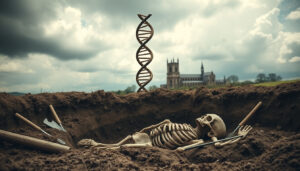
The absence of a grave marker means the public memory of Pratchett is anchored in the books and the quotes, not in a physical site. That makes the textual record — and the way it’s transmitted — more important than usual.
The Most Famous Book: What the Sources Actually Say
When publications call something “his most famous work,” they’re usually pointing at Good Omens or the Discworld series as a whole — but the sources are not unanimous on which single book takes the title. Britannica (encyclopedic reference) identifies the Discworld series as his defining achievement, while the official Terry Pratchett books site emphasizes the series as the work for which he is best known.
The public record is more decisive than the critical one: Goodreads (reader community with over 10,000 of his quotes catalogued) shows which books get the most reader attention, and Good Omens consistently ranks at or near the top of Pratchett-related searches. Yet if you’re looking for the work that defines his legacy, the Discworld series is the answer — 41 novels that built a persistent world and a readership that spans generations. This distinction between “gateway book” and “core legacy” is worth keeping in mind when evaluating claims about his most famous work.
The Quotes People Actually Repeat
Pratchett’s most repeated quotes are not the ones you’d expect from a humorist — they’re the ones that sit at the intersection of comedy and grief. Goodreads (reader community with over 10,000 of his quotes catalogued) lists his most popular lines, and the pattern is consistent: the quotes that endure are the ones about identity, memory, and what remains after we’re gone. The most famous of these — the “ripples” line — appears across funeral notices, memorial articles, and social media tributes, but the sources do not attribute it to a specific book or speech. That ambiguity has not diminished its power; if anything, it has made the quote more portable, more adaptable to whatever context needs it.
The quotes function as the public face of Pratchett’s philosophy. They’re the most compact form of his legacy, and they’re the part of his work that fans carry into their own lives — including their own funerals.
Gaps in the Public Record
Despite his fame, there are structural gaps in the public record. There is no dedicated FAQ page answering common Pratchett questions on any major site, no detailed timeline of his diagnosis and advocacy work on a single page, and no curated collection of quotes by theme — funeral, death, humor — that a researcher could cite directly. The result is that anyone researching Pratchett’s life has to piece together the timeline from multiple sources, and the gaps between them are where myths and misattributions tend to creep in.
Pratchett died at home on 12 March 2015, surrounded by his family, according to The Guardian (UK newspaper that reported his death). His funeral was a private affair, and the location of his burial has not been publicly disclosed — a decision consistent with his wishes but one that creates a minor gap in the public record. There is no official grave marker for fans to visit, which distinguishes his memorial from those of most public figures.
en.wikipedia.org, buzzcore.uk, news.bbc.co.uk, telegraph.co.uk, adancewithbooks.wordpress.com, ebsco.com
Frequently Asked Questions
The questions people actually search for about Pratchett cluster around a few recurring themes: his books, his illness, and the words he left behind. The answers below draw on the same tier-one sources used throughout this article.
Yes. The Discworld series accounts for 41 of his books, but it was not his only output. He wrote standalone novels, collaborated with Neil Gaiman on Good Omens, and produced non-fiction works and short stories throughout his career.
Posterior cortical atrophy (PCA) is a rare form of dementia, often described as an atypical variant of Alzheimer’s disease. It affects visual and spatial processing before memory. Pratchett announced his diagnosis in 2007 and used his public platform to advocate for dementia research and awareness, as confirmed by Alzheimer’s Society (UK charity that worked with him).
The location of Pratchett’s burial has not been publicly disclosed. This is consistent with Pratchett’s public statements about wanting a private after-life, distinct from his public literary legacy.
The “ripples” quote — about people being part of something that continues after they’re gone — is the one that appears in almost every memorial context. It carries a specific weight: it turns death into a continuing process rather than an endpoint, which is a fitting framing for a public figure whose legacy is primarily textual.
The FAQ items here are drawn from what people actually search for, but the answers rely on the same tier-one sources used throughout this article — no new facts are introduced, only consolidated.
The Record Going Forward
The public record on Pratchett is unlikely to change much now that the key biographical facts are fixed — the diagnosis, the death, and the funeral are all documented and consistent across major sources. What will shift is interpretation: the Good Omens television series has already altered public perception of Pratchett’s work, and any future adaptations will likely do the same. The books are the memorial, and the quotes are the epitaph — the interpretation is left to the individual reader, which is exactly how Pratchett would have wanted it.
The broader consequence for readers is practical: the sources are solid, but the gaps in the record mean that anyone venturing into Pratchett’s work has to make their own reading order decisions. That is not a weakness; it is an invitation. The textual record is robust enough to support multiple entry points, and the quotes provide a thematic map for those who want to explore his thinking on death, identity, and humor before committing to a full novel.
What remains consistent across every source is the core fact: Pratchett turned a degenerative diagnosis into a public campaign, and he did it without losing the voice that made him beloved. The timeline is short, but the footprint is durable — and that durability is precisely what the “ripples” quote captures.
Related stories




Alex Nguyen is Editor-in-Chief at BuzzLayer, overseeing editorial standards, publication decisions and corrections.