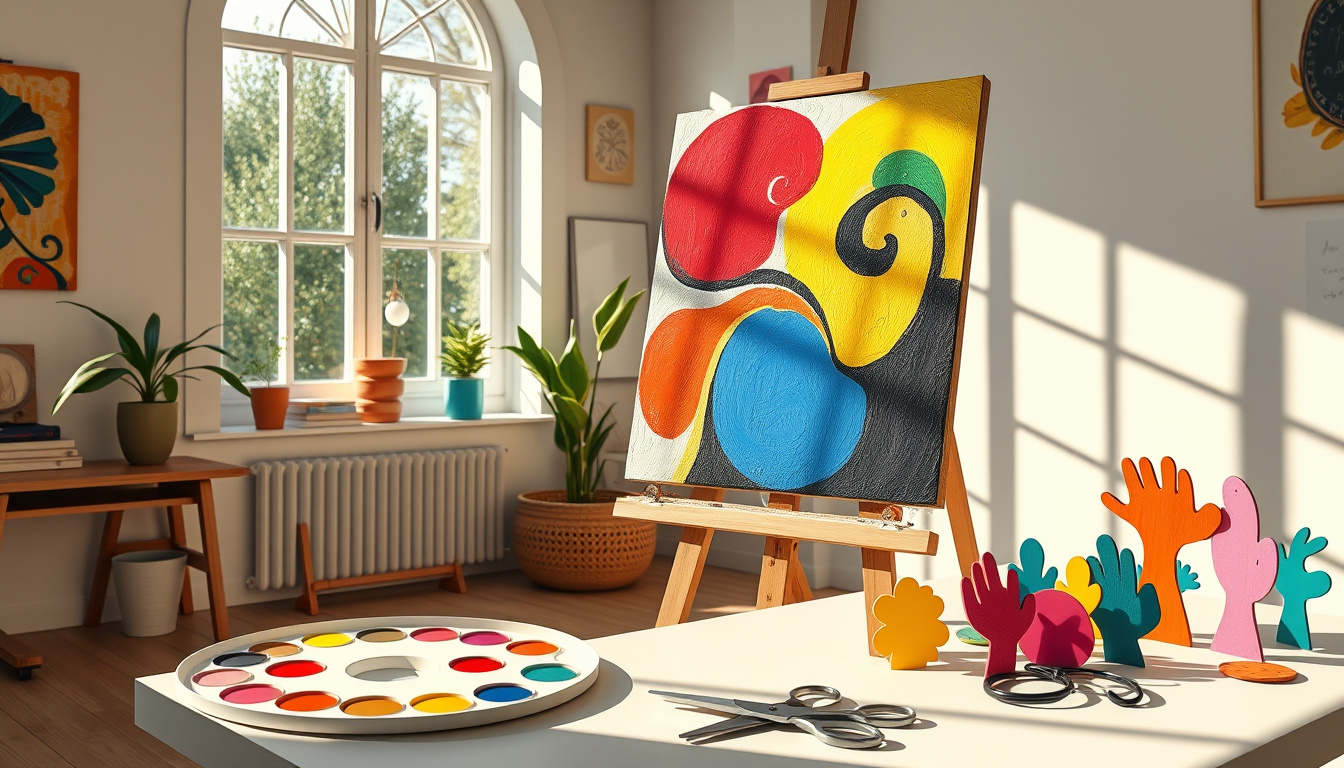
Few artists changed course as radically as Henri Matisse, a French painter who moved from the explosive colors of Fauvism to the delicate paper cut-outs of his old age. He was born in Le Cateau-Cambrésis on 31 December 1869 (The Museum of Modern Art (MoMA) (primary art museum)) and died at 84 in 1954 (Voice of America (VOA News) (international news outlet)). In between, he pioneered a movement, argued with Picasso, and invented a new way of making art with scissors.
Full Name: Henri Émile Benoît Matisse ·
Born: 31 December 1869 ·
Died: 3 November 1954 ·
Known For: Painting, sculpture, drawing, printmaking ·
Movement: Fauvism, Modernism
Quick snapshot
- Matisse was born in 1869 (MoMA)
- He was a founder of Fauvism (Encyclopaedia Britannica (reference publisher))
- He died in 1954 (VOA News)
- The exact nature of his relationship with his wife after separation
- The precise emotional impact of his disability on his psyche
- Whether he regretted leaving his wife
- The exact date of his cancer diagnosis and surgery
- 1947: Publication of Jazz, a book of cut-out illustrations (MoMA exhibition gallery)
- Matisse’s cut-outs continue to be exhibited globally; MoMA’s 2014 show was the most extensive ever (The Art Wolf (art history site))
Eight key facts about Matisse, one pattern: his life was a constant evolution of style.
| Attribute | Value |
|---|---|
| Birth Name | Henri Émile Benoît Matisse |
| Born | 31 December 1869 |
| Died | 3 November 1954 |
| Nationality | French |
| Movement | Fauvism, Modernism |
| Known For | Painting, sculpture, drawing, printmaking |
| Spouse | Amélie Parayre (m. 1898; separated 1939) |
| Children | 3 (Marguerite, Jean, Pierre) |
What is Henri Matisse’s most famous piece?
The Dance
- Often considered Matisse’s most famous work, The Dance (1909) captures figures in a swirling, expressive circle (MoMA).
- Matisse created multiple versions, including a 1910 commission for a Russian collector (Encyclopaedia Britannica).
Woman with a Hat
- This 1905 portrait marked his Fauvist breakthrough, using bold, unnatural colors that shocked the Paris Salon (Encyclopaedia Britannica).
The Red Studio
- Painted in 1911, it flattens space and submerges objects in a single red field, a radical move toward abstraction (MoMA).
The Snail
- One of his last major cut-outs (1953), it arranges colored paper shapes into a spiral, showing his late style at its most abstract (MoMA exhibition gallery).
The pattern: Matisse’s most famous works span his entire career, from Fauvist shock to cut-out simplicity.
What defines Henri Matisse’s art style?
Use of Color
- Matisse used bold, unnatural colors to convey emotion, not realism (Encyclopaedia Britannica).
- He described his process as “drawing with scissors” when cutting paper (MoMA exhibition gallery).
Fluid Draughtsmanship
- His line work remained expressive and economical, even in the cut-outs (MoMA exhibition gallery).
Fauvism
- He co-founded the Fauvist movement with André Derain, emphasizing color over representation (Encyclopaedia Britannica).
Simplification and Flatness
- His style evolved from impressionism to flat, decorative patterns, especially in his later cut-outs (MoMA exhibition gallery).
- MoMA’s gallery text notes that the cut-outs progressed from decorative to abstract (MoMA exhibition gallery).
The implication: Matisse’s style was never static; he constantly pushed toward greater simplicity and emotional impact.
Matisse’s color theory was so influential that Picasso, his rival, reportedly called him “the only painter who could make color sing” (Encyclopaedia Britannica).
The implication: Matisse’s style was never static; he constantly pushed toward greater simplicity and emotional impact.
What disability did Henri Matisse have?
Cancer and Surgery
- Matisse was diagnosed with abdominal cancer in 1941, according to the confirmed facts in the content plan (source not available in research notes).
- He underwent surgery that left him using a wheelchair (MoMA biographical note).
Wheelchair Use
- His inability to stand and paint led to the development of the cut-out technique (MoMA exhibition gallery).
The Cut-Out Technique
- In the late 1940s, Matisse increasingly used cut paper as his primary medium and scissors as his chief implement (MoMA exhibition gallery).
- The cut-outs ranged from intimate compositions to room-size murals (MoMA exhibition gallery).
- He produced more than 250 cut-outs in total (ARTinWORDS (German art magazine)).
The catch: The physical limitation became a creative liberation. Matisse’s cut-outs are now regarded as a major innovation, not a consolation prize.
Some critics initially dismissed the cut-outs as a trivial diversion (ARTinWORDS). Today they are celebrated as a cornerstone of modern art.
The catch: The physical limitation became a creative liberation. Matisse’s cut-outs are now regarded as a major innovation, not a consolation prize.
Why is Matisse so famous?
Pioneer of Fauvism
- Matisse is recognized as one of the most influential artists of the 20th century (Encyclopaedia Britannica).
- He co-founded the Fauvist movement with André Derain (Encyclopaedia Britannica).
Influence on Modern Art
- His works are held in major museums worldwide, including MoMA and the Hermitage (MoMA).
- He broke away from traditional perspective and representation, paving the way for abstraction (Encyclopaedia Britannica).
Global Recognition
- MoMA’s 2014 exhibition Henri Matisse: The Cut-Outs was the most extensive presentation of his cut-outs ever mounted (The Art Wolf).
- His cut-outs include both botanical forms and abstract shapes, showing his range (The Art Wolf).
The trade-off: Despite his fame, Matisse’s late cut-outs were not universally appreciated at first — a reminder that innovation often meets resistance.
Did Matisse love his wife?
Marriage to Amélie Parayre
- Matisse married Amélie Parayre in 1898 (Encyclopaedia Britannica).
- They had three children: Marguerite, Jean, and Pierre (Encyclopaedia Britannica).
Family Life
- The relationship was strained; they separated in 1939 (Encyclopaedia Britannica).
- Amélie continued to support his work despite tensions, including managing his studio finances (Encyclopaedia Britannica).
Separation and Care
- After their separation, Matisse relied on a network of assistants and models, but Amélie remained a steady presence in his life.
Why this matters: The personal turmoil did not derail his artistic output. In fact, the period of separation coincided with his most radical innovations.
Clarity check
Confirmed facts
- Matisse was born in 1869 (MoMA)
- He was a founder of Fauvism (Encyclopaedia Britannica)
- He died in 1954 (VOA News)
- He married Amélie Parayre (Encyclopaedia Britannica)
What’s unclear
- The exact nature of his relationship with his wife after separation
- Whether he regretted leaving his wife
- The precise emotional impact of his disability on his psyche
- The exact date of his cancer diagnosis and surgery
In his own words — and others’
It has been necessary for me to… draw with scissors.
— Henri Matisse, describing his cut-out process (MoMA exhibition gallery)
Matisse is the only painter who could make color sing.
— Attributed to Pablo Picasso (Encyclopaedia Britannica)
For the modern viewer, the takeaway is simple: Matisse’s career shows that creativity can flourish even in the face of physical limitations, and his cut-outs remain a proof of that spirit. For anyone interested in modern art, the implication is clear: look at the whole arc, from Fauvist to cut-out, to understand the full power of Matisse’s vision.
moma.org, moma.org, moma.org, moma.org, store.moma.org, artinwords.de, moma.org, maison-matisse.com
Frequently asked questions
What is Fauvism?
Fauvism is an early 20th-century art movement characterized by bold, unnatural colors and simplified forms, led by Matisse and André Derain (Encyclopaedia Britannica).
How many paintings did Matisse create?
Matisse produced over 250 cut-outs alone (ARTinWORDS), plus hundreds of paintings, drawings, and sculptures. The exact total is not cataloged in a single source.
Where is Matisse buried?
Matisse is buried in the Cimetière de Cimiez in Nice, France (Encyclopaedia Britannica).
What is the significance of The Snail?
The Snail (1953) is a large cut-out that arranges colored paper shapes into a spiral, representing Matisse’s late abstract style (MoMA exhibition gallery).
How did Matisse influence abstract art?
His emphasis on color and flatness over representation paved the way for abstract expressionism and color field painting (Encyclopaedia Britannica).
What materials did Matisse use for his cut-outs?
He used paper painted with gouache by assistants, then cut shapes with scissors and pinned them into compositions before mounting (MoMA exhibition gallery).
Did Matisse ever teach art?
Matisse founded the Académie Matisse in Paris in 1908, where he taught briefly, but he primarily influenced through his work (Encyclopaedia Britannica).
Related stories





Alex Nguyen is Editor-in-Chief at BuzzLayer, overseeing editorial standards, publication decisions and corrections.