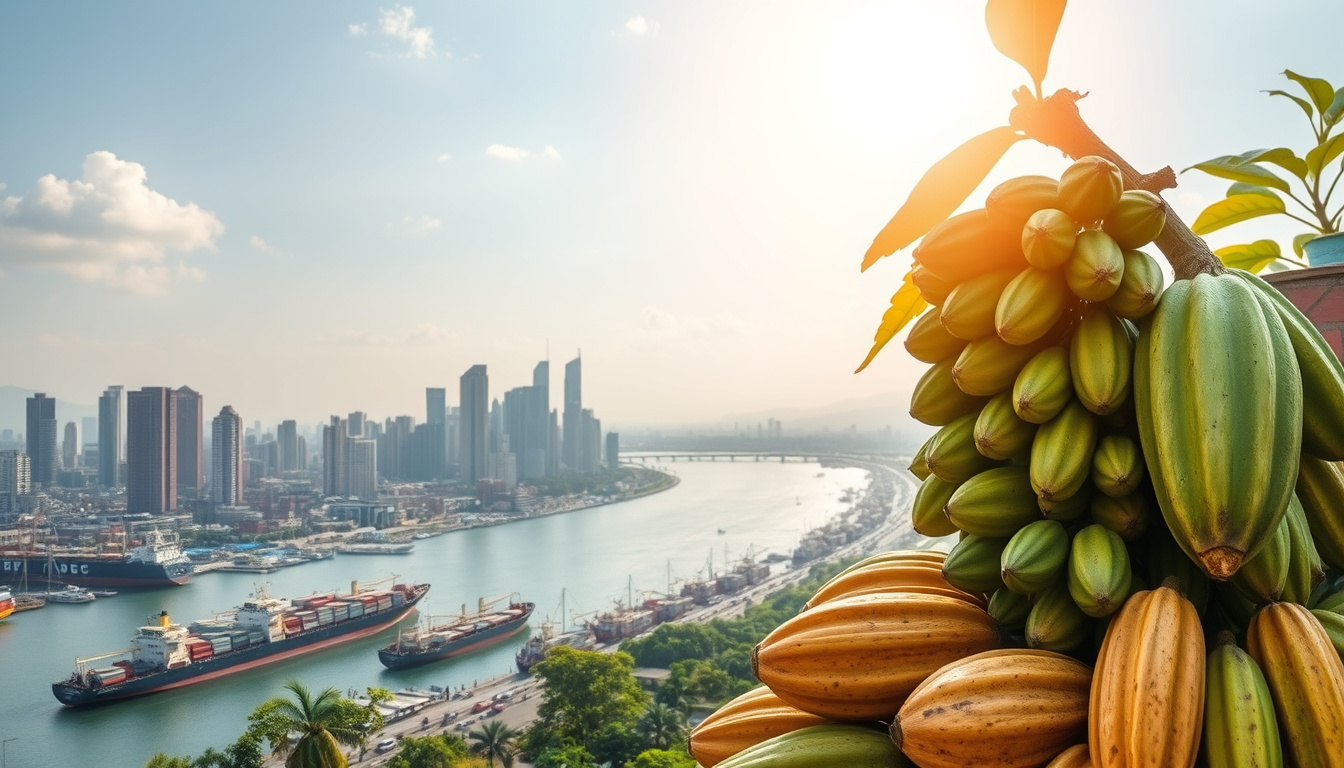
Few West African nations spark as much curiosity as Côte d’Ivoire — a country that juggles a colonial name debate, a dual-capital system, and the title of the world’s largest cocoa producer. Whether you are planning a visit or just trying to understand what makes it tick, this profile walks through the key facts, from safety and economy to language and religion.
Official Name: Republic of Côte d’Ivoire ·
Capital (administrative): Yamoussoukro ·
Capital (economic): Abidjan ·
Population (2024 est.): 29.3 million ·
Major Export: Cocoa beans
Quick snapshot
- Official capital is Yamoussoukro, economic capital is Abidjan (CIA World Factbook)
- World’s top cocoa producer (World Bank)
- GDP per capita about $3,050 (World Bank Data)
- Exact number of white tourists visiting annually (Insight Britain)
- Current crime rate specific to tourists (Insight Britain)
- Economy grew 8.2% annually 2012–2019, slowed to 2% in 2020, resumed to about 6% in 2024 (World Bank)
- Presidential election in 2025 may shape political stability (Insight Britain)
Côte d’Ivoire’s key facts fall into a neat pattern of contrasting figures — a dual capital, a growing yet unequal economy, and a religiously diverse population.
| Attribute | Value |
|---|---|
| Official Name | Republic of Côte d’Ivoire (Encyclopaedia Britannica) |
| Capital (administrative) | Yamoussoukro (CIA World Factbook) |
| Capital (economic) | Abidjan (Encyclopaedia Britannica) |
| Population (2024) | 29.3 million (CIA World Factbook) |
| Official Language | French (Encyclopaedia Britannica) |
| Currency | West African CFA franc (XOF) (CIA World Factbook) |
Is it okay to say Ivory Coast?
Official name and usage
- The country’s official name is Republic of Côte d’Ivoire, and the government prefers the French form in all languages (CIA World Factbook).
- Both “Ivory Coast” and “Côte d’Ivoire” are accepted in English, but the former is more common in casual English-language media (CIA World Factbook).
Diplomatic preferences
- The Ivorian government officially requests that other countries use “Côte d’Ivoire” in formal diplomatic contexts (Encyclopaedia Britannica).
The implication: You can say Ivory Coast in casual conversation, but using Côte d’Ivoire shows respect for the country’s stated preference.
Using “Côte d’Ivoire” aligns with official protocol; using “Ivory Coast” is not wrong but may be viewed as outdated in formal writing.
Is Côte d’Ivoire safe for white tourists?
General safety for all tourists
- The U.S. State Department issues a Level 2 advisory – “exercise increased caution” – for the country (Insight Britain).
- Petty crime is common in cities, but tourist areas are generally safer (Insight Britain).
Specific concerns for white travelers
- White tourists are not specifically targeted, but should avoid isolated areas at night (Insight Britain).
- Political stability has improved since the 2010–2011 post-election crisis (Insight Britain).
What this means: No group is singled out, but standard travel precautions apply. The border regions near Mali and Burkina Faso carry higher risk (Insight Britain).
Safety concerns are often overblown online; the reality for most tourists is a manageable risk profile similar to other West African capitals.
Is Côte d’Ivoire rich or poor?
Economic overview
- The World Bank classifies Côte d’Ivoire as a lower-middle-income economy (World Bank).
- GDP in current US dollars reached about $99.8 billion in 2025 (World Bank Data).
Causes of wealth
- Côte d’Ivoire is the world’s largest cocoa producer, supplying roughly 40% of global cocoa (World Bank).
- It is also a major producer of cashew nuts (World Bank).
- Wealth is unevenly distributed: about 40% of the population lives below the poverty line (World Bank Open Knowledge).
The pattern: Strong headline growth masks deep inequality — the country is rich in aggregate but poor for many individuals.
Is Côte d’Ivoire an Islamic country?
Religious composition
- No single religion dominates: approximately 42% Muslim, 33% Christian, and 25% practice indigenous religions or none (CIA World Factbook).
- Freedom of religion is constitutionally protected (Encyclopaedia Britannica).
Ethnic diversity
- Over 60 ethnic groups are present, with no single group forming a majority (Encyclopaedia Britannica).
The catch: Calling Côte d’Ivoire an “Islamic country” oversimplifies a genuinely pluralistic society where Muslims, Christians, and traditional believers coexist.
What is Côte d’Ivoire famous for?
Cocoa and chocolate
- World’s leading cocoa producer, supplying roughly 40% of global cocoa (World Bank).
Football
- Notable footballers include Didier Drogba and Yaya Touré (Encyclopaedia Britannica).
Cultural landmarks
- The Basilica of Our Lady of Peace in Yamoussoukro is one of the largest churches in the world (Encyclopaedia Britannica).
The implication: These three pillars — agricultural dominance, sporting success, and architectural ambition — define the country’s global identity.
Confirmed facts
- Côte d’Ivoire is a sovereign country in West Africa (CIA World Factbook)
- It is the world’s largest cocoa producer (World Bank)
- French is the official language (Encyclopaedia Britannica)
What’s unclear
- Exact number of white tourists visiting annually (no official statistics) (Insight Britain)
- Current crime rate specific to tourists (underreported) (Insight Britain)
- Future political stability after 2025 presidential election (Insight Britain)
- Population estimates may vary (CIA World Factbook)
“The country is positioned as an economic and transport hub in the region, recording average real GDP growth of 8.2% between 2012 and 2019.”
World Bank (international financial institution), country overview
“The U.S. travel-advisory level for Côte d’Ivoire is Level 2 – exercise increased caution – due to crime and potential terrorism.”
U.S. State Department (via Insight Britain)
For travelers and investors alike, Côte d’Ivoire’s trajectory hinges on maintaining its economic momentum while addressing inequality and ensuring political stability. The choices made in the next few years will determine whether the country cements its position as a West African success story or faces renewed challenges.
Related reading: Waitrose Food to Order – Delivery Guide and Costs · All Her Fault Episodes – Complete Guide and Summaries
documents1.worldbank.org, briefscape.uk, data.worldbank.org, worldbank.org, documents1.worldbank.org
Frequently asked questions
What is the capital of Côte d’Ivoire?
The administrative capital is Yamoussoukro, while Abidjan serves as the economic capital (CIA World Factbook).
What languages are spoken in Côte d’Ivoire?
French is the official language, and over 60 indigenous languages are spoken across ethnic groups (Encyclopaedia Britannica).
Is Côte d’Ivoire a safe country for solo female travelers?
Petty crime is common in cities, but with normal precautions it is considered manageable. Tourists may face harassment in markets; staying in well-trafficked areas is advised (Insight Britain).
What is the currency of Côte d’Ivoire?
The West African CFA franc (XOF) is used (CIA World Factbook).
How do you pronounce Côte d’Ivoire?
It is pronounced “koht dee-VWAHR” in French; in English, “kote dee-VWAHR” is common.
What visa is required for Côte d’Ivoire?
An eVisa is available for most nationalities; travelers should check current requirements before departure (Insight Britain).
Is Côte d’Ivoire a member of the African Union?
Yes, it is a founding member of the African Union (Wikipedia).
What is the climate in Côte d’Ivoire?
Tropical climate with a wet season from June to October and a dry season from November to May.
Related stories





Alex Nguyen is Editor-in-Chief at BuzzLayer, overseeing editorial standards, publication decisions and corrections.