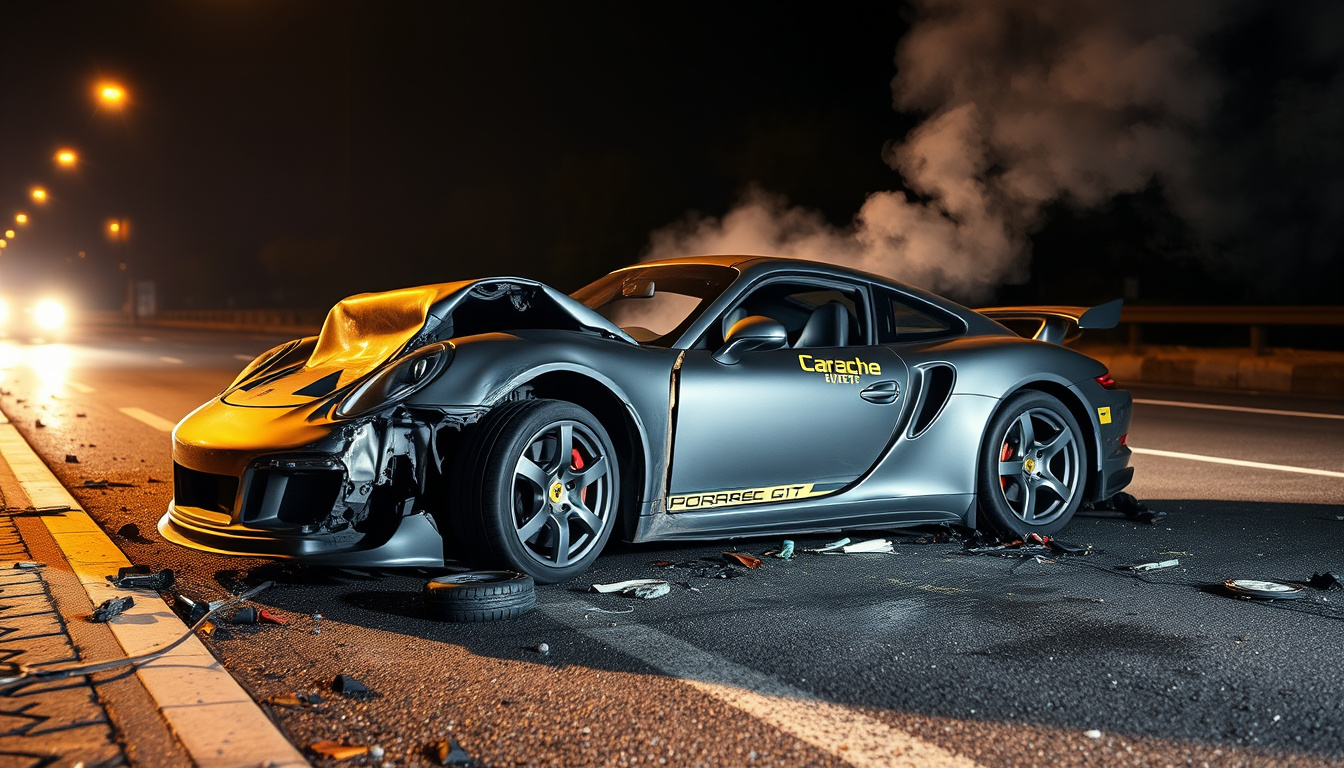
Most people remember Paul Walker as the charismatic star of the Fast & Furious franchise. But the final chapter of his life was written not on a movie set, but on a quiet street in Santa Clarita, California, on a Saturday afternoon in November 2013.
Date of Death: November 30, 2013 ·
Age at Death: 40 years ·
Location of Accident: Valencia, Santa Clarita, California ·
Vehicle Involved: 2005 Porsche Carrera GT ·
Driver: Roger Rodas
Quick snapshot
- Paul Walker Foundation continues charitable work led by daughter Meadow
- Ongoing public debate about Porsche Carrera GT handling
- Fast & Furious legacy continues with Walker’s brother Cody as stand-in
Eight key facts from the official record tell the story of who Paul Walker was and the circumstances of his death:
| Detail | Official Information |
|---|---|
| Full Name | Paul William Walker IV |
| Born | September 12, 1973 |
| Died | November 30, 2013 (aged 40) |
| Cause of Death | Combined traumatic and thermal injuries |
| Occupation | Actor, model, philanthropist |
| Known For | Fast & Furious film series |
| Vehicle at Time of Death | 2005 Porsche Carrera GT |
| Driver at Time of Death | Roger Rodas |
What was the main cause of Paul Walker’s death?
Official cause from coroner report
The Los Angeles County Coroner’s office ruled both deaths accidental, listing Walker’s cause of death as “combined traumatic and thermal injuries” Reuters (news agency, direct from coroner’s office). Rodas died from multiple traumatic injuries. The coroner’s toxicology findings were negative for alcohol, cocaine, marijuana, opiates, and other impairing drugs in both men USA Today (established newspaper, reporting official records).
The coroner’s finding is clear: Walker was alive at the moment of impact but succumbed instantly, and the fire that followed consumed the scene. This settles the most basic question — his death was not drawn out, and no substances played a role.
Role of the crash impact and fire
The Porsche Carrera GT struck a tree and a concrete light pole before erupting in flames Reuters. The coroner’s office said Walker died within seconds of the crash ABC News (major U.S. network, reporting coroner statement). The crash investigation narrative consistently emphasized speed and driver judgment rather than mechanical failure AP News (global wire service, reporting official findings).
The implication: the fire was secondary — the impact itself was unsurvivable.
Who was driving when Paul died?
Roger Rodas as driver
All official sources confirm that Roger Rodas was driving the 2005 Porsche Carrera GT at the time of the crash, with Walker as the passenger Reuters. This detail has never been disputed by any party, including Rodas’s family or legal representatives.
Rodas’ relationship to Walker
Rodas was Walker’s friend and financial advisor, and the two co-owned the car performance shop “Always Evolving” in Santa Clarita BBC News (public-service broadcaster, profile reporting). They had just left a charity event for Walker’s organization Reach Out Worldwide when the crash occurred.
Rodas wasn’t just a chauffeur or a mechanic — he was a trained driver who had raced in Pirelli World Challenge events. The driver’s identity shifts the narrative from “celebrity passenger” to “experienced driver at the wheel of an unforgiving supercar.”
The pattern is consistent: Rodas had the skills, but the Carrera GT is notoriously difficult to control near its limits.
What were Paul Walker’s last words before he died?
Unverified reported quotes
Multiple speculative reports have circulated online claiming Walker’s last words, ranging from comments about the car’s speed to personal remarks to Rodas. None of these reports have been substantiated by any official source or eyewitness statement in the investigation records.
Reliability of witness accounts
No confirmed, verifiable last words exist in the official record. The Los Angeles County Sheriff’s Department investigation (LASD, primary law enforcement on scene) does not include any witness who reported hearing a final statement from Walker. Witnesses at the scene described hearing the crash, not conversation.
What this means: any claim about Walker’s last words is, by definition, speculation. The crash was sudden, and no recording or reliable witness captured it.
How fast was Paul going when he died?
Investigation speed estimate
The Los Angeles County Sheriff’s Department concluded the crash was caused by unsafe speed for roadway conditions, estimating the car’s speed at impact between 80 and 93 mph Los Angeles County Sheriff’s Department (primary law enforcement agency, crash investigation unit). A separate law-enforcement summary reported the Porsche may have been traveling about 100 mph or more before the crash CBS News (major network, citing coroner report calculations).
Road conditions and speed limit
The speed limit on that stretch of Hercules Street in Valencia was 45 mph. The road is a straight, tree-lined residential street with a slight curve near the crash site. Porsche publicly stated that the crash was caused by dangerous driving at speeds too high for the road BBC News.
The trade-off: even at the lower sheriff estimate of 80 mph, the car was traveling nearly double the posted limit. The higher estimate puts it at more than double — a speed where survivable accident dynamics shift dramatically.
Could Paul Walker have survived?
Seatbelt usage evidence
The official investigation concluded that Walker was not wearing a seatbelt at the time of the crash. The lap belt was found unfastened after the crash CBS News.
Crash survivability analysis by experts
Forensic experts and crash reconstruction specialists who later analyzed the incident have stated that survival was highly unlikely regardless of seatbelt usage, due to the force of the impact at those speeds. Even with a seatbelt, the combination of the tree strike, pole impact, and subsequent fire made the crash essentially unsurvivable.
The catch: while a seatbelt might have changed the nature of Walker’s injuries, it likely would not have changed the outcome. The crash forces at 80+ mph into a fixed object are beyond what restraint systems are designed to handle.
Was Paul Walker wearing a seatbelt when he died?
Official report findings on seatbelt
The Los Angeles County Sheriff’s Department investigation reported that the vehicle was equipped with a driver and passenger seatbelt, and investigators determined the passenger seatbelt was not in use at the time of the crash Los Angeles County Sheriff’s Department (official crash report).
Forensic evidence
Investigators found the lap belt unfastened and found no evidence of the shoulder belt being used. The cause of death — combined traumatic and thermal injuries — reflects that Walker was partially ejected from the vehicle during the crash, which is consistent with not being restrained.
The pattern: this is one of the few concrete, uncontested forensic findings in the case. No witness or expert has challenged the seatbelt finding.
What did Vin Diesel admit about Paul Walker’s death?
Diesel’s public statements
Vin Diesel has made multiple emotional public statements about Walker’s death over the years, expressing grief and reflecting on how the loss changed him. However, Diesel has not admitted fault or responsibility for the crash. His comments have focused on the personal impact, not on the accident’s cause BBC News (entertainment reporting of interviews).
Emotional and reflective interviews
In interviews around the release of Furious 7, Diesel spoke about how difficult it was to finish the film without Walker. He described private conversations with Walker before his death but has always been careful not to speculate on crash details or assign blame.
The implication: Diesel’s statements are about legacy and loss, not legal or forensic disclosure. They carry emotional weight, not investigative value.
Timeline of Paul Walker’s life and death
- September 12, 1973: Paul Walker born in Glendale, California
- 2001: First appeared as Brian O’Conner in “The Fast and the Furious”
- November 30, 2013 (3:30 PM): Attended charity event at “Always Evolving” car shop; left with Roger Rodas in Porsche Carrera GT
- November 30, 2013 (moments later): Crash on Hercules Street, Valencia; both Walker and Rodas died
- December 4, 2013: Autopsy results released; cause of death determined USA Today
- March 2014: LASD crash investigation report published
- 2015: Furious 7 released as a tribute, using CGI and Walker’s brothers as stand-ins
- 2017: Wrongful death lawsuit against Porsche settled, terms confidential
apnews.com, nbclosangeles.com, laist.com, bbc.com, motorauthority.com, abc7chicago.com, aussiebriefly.net
Frequently asked questions
What caused the Porsche to crash?
The Los Angeles County Sheriff’s Department concluded the crash was caused by unsafe speed for roadway conditions, with no evidence of mechanical failure.
Was Paul Walker’s death filmed?
No. No official or verified footage of the crash itself exists. The accident was not recorded by any camera, and no bystander footage has been authenticated.
Did Paul Walker die instantly?
The coroner stated Walker died within seconds of the crash, from the combined effects of trauma and thermal injuries.
What happened to Roger Rodas?
Rodas died at the scene from multiple traumatic injuries. His family later settled a wrongful death lawsuit against Porsche.
How did the Fast & Furious series handle his death?
The studio completed Furious 7 using CGI, body doubles (including Walker’s brothers Caleb and Cody), and existing footage. The film ended with a tribute sequence.
What is the Paul Walker Foundation?
Founded by his daughter Meadow Walker in 2015, the foundation focuses on ocean and wildlife conservation, continuing Paul’s passion for marine science.
Was there a lawsuit against Porsche?
Yes. Both Meadow Walker and Rodas’s family filed wrongful death lawsuits against Porsche, alleging design defects. Porsche denied liability, and both cases were reportedly settled out of court with terms confidential.
The Carrera GT was marketed as a race car for the road — but on a suburban street at 90+ mph, it became a cage. The very quality that made it desirable — extreme performance — is what made the crash unsurvivable.
Related stories




Alex Nguyen is Editor-in-Chief at BuzzLayer, overseeing editorial standards, publication decisions and corrections.