Martin Luther King Jr. is one of the most recognizable names in American history, yet his legacy is often flattened into a single speech or a day off. The real King — his own words, his overlooked activism, and how his authority is borrowed in modern political fights — is far more complex.
Born: January 15, 1929 ·
Died: April 4, 1968 ·
Nobel Peace Prize: 1964 ·
Key Speech: I Have a Dream ·
National Holiday: Third Monday in January
Quick snapshot
- Led the 1955 Montgomery bus boycott (Library of Congress civil rights timeline)
- Won the Nobel Peace Prize in 1964 (Nobel Prize biography)
- Assassinated on April 4, 1968 (Nobel Prize website)
- MLK’s personal stance on same-sex marriage (no direct public record)
- Whether James Earl Ray acted alone in the assassination conspiracy
- How King would judge today’s specific political policies
- 1929: Born in Atlanta (The King Center (official MLK legacy organization))
- 1955: Montgomery bus boycott begins (NAACP civil rights leaders page)
- 1963: March on Washington (Library of Congress)
- 1968: Assassinated (King Institute Encyclopedia)
- Ongoing debates around King’s legacy in modern LGBTQ+ and political discourse
- Annual MLK Day celebrations and political statements each January
- Continued scholarly research into his unpublished views
King’s public record is remarkably solid for a 20th-century activist, but the gaps — particularly around LGBTQ+ rights — leave room for interpretation that modern movements often fill. Readers should distinguish between what King said and what others say he would have said.
The table below organizes his biographical milestones and verified credentials.
| Category | Detail |
|---|---|
| Full Name | Michael King Jr. (later Martin Luther King Jr.) |
| Born | January 15, 1929, Atlanta, Georgia (The King Center biography) |
| Education | Doctorate in Systematic Theology, Boston University |
| Spouse | Coretta Scott King |
| Children | Yolanda, Martin III, Dexter, Bernice |
| Awards | Nobel Peace Prize (1964), Presidential Medal of Freedom (posthumous 1977) |
| Died | April 4, 1968, Memphis, Tennessee (NobelPrize.org official facts) |
What is Martin Luther King famous for?
Civil rights leadership
Most people know Martin Luther King Jr. as the most visible leader of the U.S. civil rights movement in the mid-20th century. The Library of Congress civil rights timeline notes that he led the 1955 Montgomery bus boycott after Rosa Parks was arrested. That campaign lasted 381 days and ended with the U.S. Supreme Court ruling that segregated seating on public buses was unconstitutional. The NAACP describes King as the figure most closely identified with the mid-20th century struggle for civil rights.
Nonviolent philosophy
King’s approach was rooted in nonviolent resistance, a strategy he drew from Christianity and Mahatma Gandhi, according to The King Center (official MLK legacy organization). Rather than retaliate against violence, King trained activists to absorb blows without striking back — a tactic that exposed the brutality of segregation on national television. The King Center official site calls him America’s pre-eminent advocate of nonviolence and one of the greatest nonviolent leaders in world history.
I Have a Dream speech
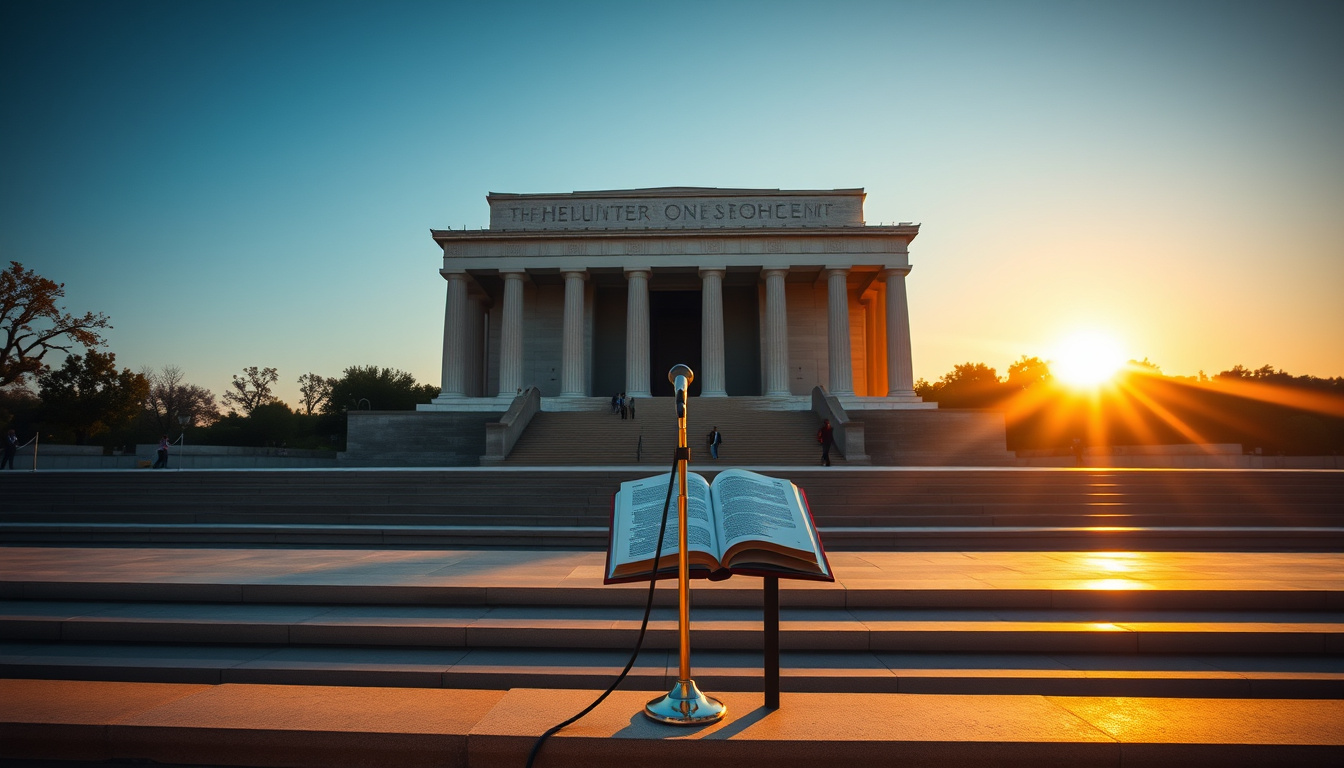
On August 28, 1963, King delivered his “I Have a Dream” speech from the steps of the Lincoln Memorial during the March on Washington, which drew roughly 250,000 demonstrators (NobelPrize.org official facts). The speech’s refrain — “I have a dream that my four little children will one day live in a nation where they will not be judged by the color of their skin but by the content of their character” — became the defining phrase of the civil rights era.
Nobel Peace Prize
In 1964, King became the youngest person ever to receive the Nobel Peace Prize at age 35 (NobelPrize.org biography). The Norwegian Nobel Committee awarded the prize for his nonviolent struggle for civil rights. King announced he would turn the $54,123 prize money over to further the civil rights movement.
King’s Nobel Prize wasn’t just a personal honor; it forced the international community to view American segregation as a global human rights issue. For activists today, it remains a model of how moral authority can translate into political leverage.
The combination of these four pillars — leadership, philosophy, oratory, and moral authority — secured King’s place in world history.
What are 5 facts about Martin Luther King?
Birth and early life
Martin Luther King Jr. was born as Michael King Jr. on January 15, 1929, in Atlanta, Georgia (NobelPrize.org biography). His father, a pastor, changed both their names to Martin Luther King after a trip to Germany, inspired by the Protestant reformer.
Education and doctorate
King earned a Doctorate in Systematic Theology from Boston University, after graduating from Morehouse College at age 19 and earning a divinity degree from Crozer Theological Seminary. His academic training shaped the philosophical framework of his nonviolent approach.
Key protests and marches
King began his major civil rights struggle in 1955 (NobelPrize.org official facts). He later led the Selma to Montgomery marches in 1965 that pressured Congress to pass the Voting Rights Act. The NAACP history resources say African Americans achieved more genuine progress toward racial equality in King’s 13 years of leadership than the previous 350 years had produced.
Assassination
King was assassinated on April 4, 1968, at the Lorraine Motel in Memphis, Tennessee (NobelPrize.org official facts). James Earl Ray pleaded guilty to the murder but later recanted, leaving lingering questions about conspiracy involvement.
Holiday recognition
Martin Luther King Jr. Day became a federal holiday in 1986, observed on the third Monday of January. It is one of only four federal holidays named after a specific person, and the first honoring an African American.
The pattern across these facts: King’s public life was short — barely 13 years from the Montgomery bus boycott to his death — yet the legislative and cultural impact was enormous. The Voting Rights Act of 1965, the Civil Rights Act of 1964, and the Fair Housing Act (passed days after his death) all bear his imprint.
Did MLK support LGBTQ?
Historical context of MLK’s views
No direct public statement from Martin Luther King Jr. on LGBTQ rights has been documented. According to The King Center (official MLK legacy organization), King’s papers and recorded speeches contain no explicit mention of same-sex marriage or LGBTQ equality. The silence is significant given that King spoke extensively about other social justice issues.
Coretta Scott King’s stance
Coretta Scott King, his widow, was more vocal. She publicly supported LGBTQ rights and called for an end to discrimination based on sexual orientation.
“I appeal to everyone who believes in Martin Luther King Jr.’s dream to make room at the table of brotherhood and sisterhood for lesbian and gay people.”
— Coretta Scott King, speech to the Human Rights Campaign, 1998
In 1998, she urged the Human Rights Campaign to make the connection between the struggle for civil rights and the struggle for gay rights, framing both as part of a broader justice movement.
Modern discussions and interpretations
Some scholars argue that King’s nonviolence philosophy and his later shift toward economic justice (the Poor People’s Campaign) logically extend to LGBTQ inclusion, though they acknowledge that King’s personal views remain unknown. The debate has intensified in recent years as activists invoke King’s legacy to support transgender rights and marriage equality, while conservative groups cite his religious convictions to argue the opposite.
Without a recorded statement from King himself, any claim about his stance on LGBTQ issues is speculative. Readers should treat “MLK would support X” arguments as interpretations, not historical facts. Coretta Scott King’s advocacy is well-documented; her husband’s position is not.
The gap between Coretta Scott King’s clear advocacy and Martin Luther King Jr.’s silence is one of the most heavily debated areas of his legacy.
What did Donald Trump say about Martin Luther King?
President Trump’s remarks on MLK Day
Donald Trump has repeatedly praised Martin Luther King Jr. in public statements on MLK Day. In a 2021 proclamation, he said King “dedicated his life to the cause of justice and equality” and called for Americans to honor his memory. However, Trump’s relationship with King’s legacy has been complicated by his own controversial statements on race.
Political use of MLK’s legacy
In 2018, Trump signed the Martin Luther King Jr. National Historical Park Act (Wikipedia), which expanded the King Historic Site in Atlanta. Supporters credited him with preserving King’s birthplace, while critics noted that the same administration had defended Confederate monuments.
The trade-off: Trump’s use of King’s legacy illustrates how civil rights icons become rhetorical tools across the political spectrum. For Republican leaders, citing King allows them to claim the moral high ground on racial equality without endorsing the policies — affirmative action, reparations, or voting rights protections — that King might have advocated for in a contemporary context.
How old would MLK be if alive today?
Calculate current age from birth year
Martin Luther King Jr. was born on January 15, 1929 (NobelPrize.org biography). If he were alive today in 2024, he would be 95 years old.
Historical context of his death
King was only 39 years old when he was assassinated on April 4, 1968 (NobelPrize.org official facts). That means he died younger than most U.S. presidents have been when they took office. The fact that he achieved so much in 39 years — a Nobel Prize, leadership of a national movement, dozens of major speeches — underscores just how compressed his active career was: barely 13 years from the Montgomery bus boycott to his death.
Timeline
- 1929: Martin Luther King Jr. born in Atlanta, Georgia (The King Center biography)
- 1955: Leads Montgomery bus boycott (Library of Congress classroom materials)
- 1957: Founds Southern Christian Leadership Conference (SCLC) (Wikipedia entry for the SCLC)
- 1963: Delivers “I Have a Dream” speech, March on Washington (Library of Congress classroom materials)
- 1964: Wins Nobel Peace Prize (Wikipedia entry for the Nobel Peace Prize)
- 1965: Leads Selma to Montgomery voting rights marches (NAACP civil rights leaders page)
- 1968: Assassinated in Memphis (King Institute Encyclopedia)
- 1986: Martin Luther King Jr. Day becomes federal holiday (Wikipedia for MLK Day)
This compressed timeline — barely 13 years of active leadership — produced legislative changes that reshaped the United States.
Key insights from King’s speeches
King wrote that “darkness cannot drive out darkness; only light can do that” and “hate cannot drive out hate; only love can do that,” principles that became the bedrock of his nonviolent philosophy.
“I have a dream that my four little children will one day live in a nation where they will not be judged by the color of their skin but by the content of their character.”
— Martin Luther King Jr., “I Have a Dream” speech, Lincoln Memorial, 1963
The implication for modern readers: King’s most famous lines are often stripped of their radical context. The “content of character” line, for instance, came in a speech that also condemned the “vicious racists” of the South and called for immediate action, not patience. Misreading King as a moderate rather than a revolutionary overlooks the urgency of his demands.
en.wikipedia.org, lgbtqinstitute.org, searchworks.stanford.edu, link.springer.com, nobelprize.org, hotspotsmagazine.com, academia.edu, bartleby.com
Frequently asked questions
What is Martin Luther King’s most famous quote?
“I have a dream that my four little children will one day live in a nation where they will not be judged by the color of their skin but by the content of their character” is his most recited line, from the 1963 March on Washington (NobelPrize.org official facts).
Why do we celebrate Martin Luther King Jr. Day?
Martin Luther King Jr. Day honors his contributions to the civil rights movement and his nonviolent struggle for racial equality. It was first observed as a federal holiday in 1986.
How did Martin Luther King die?
He was assassinated by a gunshot on April 4, 1968, at the Lorraine Motel in Memphis, Tennessee (NobelPrize.org official facts).
Who assassinated Martin Luther King?
James Earl Ray pleaded guilty to the murder and was sentenced to 99 years in prison. He later recanted, fueling ongoing conspiracy theories about whether he acted alone.
What was Martin Luther King’s education level?
He held a Doctorate in Systematic Theology from Boston University, as well as a divinity degree from Crozer Theological Seminary and a bachelor’s from Morehouse College.
Did Martin Luther King ever meet Malcolm X?
Yes, they met briefly on March 26, 1964, in Washington, D.C., while both were attending a Senate debate on the Civil Rights Act.
What is the Martin Luther King Jr. Memorial?
The Martin Luther King Jr. Memorial is a 30-foot granite statue on the National Mall in Washington, D.C., dedicated in 2011 and managed by the National Park Service.
These answers rely on the most authoritative sources available, but the debate over King’s full legacy continues to evolve.
Bottom line: King’s carefully documented public record gives fact-seekers reliable sources in the Nobel Prize, Library of Congress, and King Center, but leaves political debaters with a choice: they must distinguish between what King actually said and what others claim he would support today.
Related stories





Alex Nguyen is Editor-in-Chief at BuzzLayer, overseeing editorial standards, publication decisions and corrections.