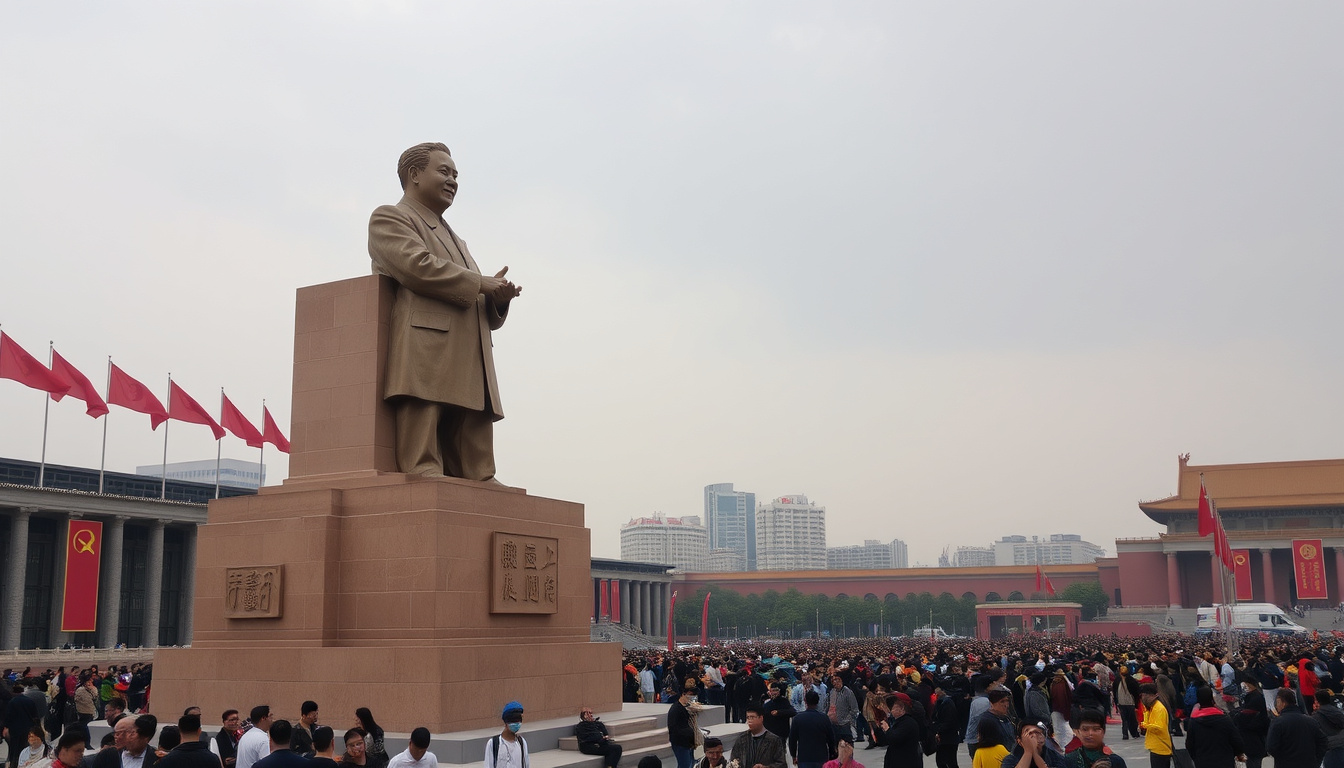
Few historical figures evoke such sharply divided opinions as Mao Zedong. To some, he is the revolutionary who shattered China’s century of humiliation; to others, the architect of policies that led to immense suffering. This article navigates that duality, balancing his achievements against his failures through a fact-based lens.
Born: 26 December 1893, Shaoshan, Hunan, China ·
Died: 9 September 1976, Beijing, China ·
Role: Founder of the People’s Republic of China, Chairman of the Chinese Communist Party (1949–1959) ·
Key Policies: Great Leap Forward, Cultural Revolution ·
Legacy: Revered by some as unifier of China; criticized for human rights abuses and economic failures
Quick snapshot
- Mao founded the People’s Republic of China in 1949 (Britannica (reference work))
- He was chairman of the CCP from 1943 until his death (Britannica (reference work))
- The Great Leap Forward caused a famine that killed an estimated 15–45 million people (NPR (public radio news))
- Exact number of deaths attributable to Mao’s policies remains debated (Britannica (reference work))
- Details of the Lin Biao incident are still disputed; some historians question the official narrative (IPG Journal (European policy analysis))
- Mao’s personal role in specific atrocities is sometimes contested (Encyclopedia.com (academic reference))
- 1949: Proclamation of the People’s Republic of China (Britannica (reference work))
- 1958–1962: Great Leap Forward; widespread famine (NPR (public radio news))
- 1966–1976: Cultural Revolution (Britannica (reference work))
- Ongoing reassessment of Mao’s legacy as China’s global role evolves (IPG Journal (European policy analysis))
- Generational shifts may alter how younger Chinese view Mao (Encyclopedia.com (academic reference))
- Historical research continues to refine estimates of policy outcomes (Britannica (reference work))
| Attribute | Detail |
|---|---|
| Full Name | Mao Zedong (also romanized as Mao Tse-tung) (Britannica (reference work)) |
| Born | 26 December 1893, Shaoshan, Hunan Province, Qing China (Britannica (reference work)) |
| Died | 9 September 1976, Beijing, China (Britannica (reference work)) |
| Title | Chairman of the Chinese Communist Party (1943–1976), Chairman of the People’s Republic of China (1949–1959) (Britannica (reference work)) |
| Key Works | Quotations from Chairman Mao (Little Red Book), On Guerrilla Warfare (Britannica (reference work)) |
| Cause of Death | Heart failure, according to official sources (Britannica (reference work)) |
What is Mao Zedong famous for?
Founding the People’s Republic of China
- Mao proclaimed the founding of the PRC on 1 October 1949, ending the Chinese Civil War (Britannica (reference work)).
- His leadership united mainland China under a single government for the first time since 1912 (Britannica (reference work)).
Leading the Chinese Communist Party to victory in the civil war
- Mao’s strategic vision and peasant-based guerrilla tactics defeated the Nationalist forces (JCER (academic journal)).
- The Long March (1934–1935) solidified his leadership within the CCP (Britannica (reference work)).
Implementing the Great Leap Forward and Cultural Revolution
- The Great Leap Forward (1958–1962) aimed to rapidly industrialize China but led to the deadliest famine in history (NPR (public radio news)).
- The Cultural Revolution (1966–1976) purged perceived enemies of the state and destroyed vast cultural heritage (Britannica (reference work)).
Was Mao Zedong a good leader?
Arguments for Mao as a unifier and modernizer
- Mao ended the “century of humiliation” and restored Chinese sovereignty (Britannica (reference work)).
- Land reforms redistributed land to formerly landless peasants (Britannica (reference work)).
- Literacy rates rose significantly during his early years in power (Encyclopedia.com (academic reference)).
Criticisms of Mao’s economic and human rights record
- The Great Leap Forward caused a famine that killed an estimated 15–45 million people (NPR (public radio news)).
- The Cultural Revolution led to political persecution, torture, and destruction of millions of artifacts (Britannica (reference work)).
- Mao ran an authoritarian government that suppressed dissent and controlled media (Britannica (reference work)).
Contemporary Chinese government perspective
- The official CCP line holds that Mao’s actions were laudable until the summer of 1957, after which they became harder to defend (Britannica (reference work)).
- The common expression “70 percent right, 30 percent wrong” was introduced by Deng Xiaoping and is still used by current leadership (IPG Journal (European policy analysis)).
For the Chinese Communist Party, Mao remains a unifying symbol of revolution, but acknowledging his human cost risks undermining the party’s legitimacy.
Upsides
- Unified China under a single government after decades of fragmentation (Britannica (reference work))
- Ended foreign domination and restored national sovereignty (Britannica (reference work))
- Land reforms gave land to millions of poor peasants (Britannica (reference work))
Downsides
- Famine caused by the Great Leap Forward killed tens of millions (NPR (public radio news))
- The Cultural Revolution destroyed cultural heritage and persecuted millions (Britannica (reference work))
- Authoritarian rule established a one-party system that persists today (Britannica (reference work))
Does China still respect Mao Zedong?
Official state reverence and monuments
- Mao’s portrait remains on Tiananmen Gate, and his mausoleum in Beijing is a pilgrimage site (Britannica (reference work)).
- The CCP officially credits Mao as a “great revolutionary” and “founding father” (IPG Journal (European policy analysis)).
Mao’s image in Chinese education and media
- School textbooks present Mao’s achievements prominently while glossing over policy failures (Encyclopedia.com (academic reference)).
- State-controlled media rarely criticize Mao directly (NPR (public radio news)).
Public opinion and generational differences
- Most Chinese today hold a mixed view: great unifier but flawed leader (Encyclopedia.com (academic reference)).
- Younger Chinese, exposed to more global information, may be more critical (IPG Journal (European policy analysis)).
Why do Chinese people like Mao Zedong?
National unification and anti-imperialist narrative
- Mao is credited with ending the “century of humiliation” and standing up to foreign powers (Britannica (reference work)).
- Many Chinese see him as the father of the nation who restored pride (Encyclopedia.com (academic reference)).
Economic development and industrialization
- Early policies built basic heavy industry and infrastructure (JCER (academic journal)).
- Land reform broke the power of the old landlord class (Britannica (reference work)).
Cultural Revolution and its aftermath
- The Cultural Revolution was intended to prevent capitalist restoration but caused deep societal trauma (Britannica (reference work)).
- Many older Chinese still view it as a betrayal of Mao’s original ideals (Encyclopedia.com (academic reference)).
“The Chinese people have stood up.” – Mao Zedong, 1949 (Britannica (reference work))
Who tried to assassinate Mao?
Lin Biao and the alleged coup attempt
- Lin Biao, Mao’s designated successor, reportedly plotted a coup in 1971 (Britannica (reference work)).
- Lin died in a plane crash in Mongolia while fleeing after the plot was exposed (IPG Journal (European policy analysis)).
Other reported assassination plots
- Several other alleged plots have been reported, but details remain murky (Britannica (reference work)).
The Lin Biao incident and its aftermath
- The official narrative remains controversial; some historians question whether the coup was real or fabricated (IPG Journal (European policy analysis)).
The Lin Biao incident remains a sensitive topic in China; full archival access could either confirm or refute the official story.
Policy comparison: intended vs. actual outcomes
Three signature Mao-era policies, one pattern: each sought rapid transformation but produced devastating side effects.
| Policy | Intended Goal | Actual Outcome |
|---|---|---|
| Great Leap Forward (1958–1962) | Rapid industrialization and agricultural collectivization | Widespread famine, estimated 15–45 million deaths (NPR (public radio news)) |
| Cultural Revolution (1966–1976) | Purge capitalist elements, preserve communist ideology | Political persecution, destruction of cultural artifacts (Britannica (reference work)) |
| Land Reform (1950s) | Redistribute land to peasants | Initial redistribution, later reversed by collectivization (Britannica (reference work)) |
Timeline of key events
- – Mao Zedong born in Shaoshan, Hunan (Britannica (reference work))
- – Co-founded the Chinese Communist Party (Britannica (reference work))
- – Long March; Mao emerges as CCP leader (Britannica (reference work))
- – Proclamation of the People’s Republic of China (Britannica (reference work))
- – Great Leap Forward; widespread famine (NPR (public radio news))
- – Cultural Revolution (Britannica (reference work))
- – Lin Biao incident; alleged coup attempt (IPG Journal (European policy analysis))
- – Mao dies; end of the Cultural Revolution (Britannica (reference work))
Clarity: what we know and what remains uncertain
Confirmed facts
- Mao founded the People’s Republic of China in 1949 (Britannica (reference work))
- He was chairman of the CCP from 1943 until his death (Britannica (reference work))
- The Great Leap Forward caused a famine that killed an estimated 15–45 million people (NPR (public radio news))
- The Cultural Revolution resulted in widespread persecution and destruction of cultural artifacts (Britannica (reference work))
What remains unclear
- Exact number of deaths attributable to Mao’s policies remains debated (NPR (public radio news))
- Details of the Lin Biao incident are still disputed; some historians question the official narrative (IPG Journal (European policy analysis))
- Mao’s personal role in specific atrocities is sometimes contested (Encyclopedia.com (academic reference))
“The Chinese government’s official position is that Mao’s actions were laudable until the summer of 1957, after which they became harder to defend.” (Britannica (reference work))
“Most Chinese today have a mixed view of Mao as both a great leader who united and rejuvenated China and a leader who left considerable human suffering.” (Encyclopedia.com (academic reference))
For the Chinese Communist Party, the challenge of maintaining Mao’s revolutionary legacy while acknowledging his human cost remains unresolved. The trade-off: continued reverence or honest reckoning with a past that still shapes the nation’s identity.
britannica.com, en.wikipedia.org, studocu.com, academia.edu, britannica.com, youtube.com, ebsco.com
For a deeper look at the man behind the revolution, readers can explore Mao Zedongs complex legacy in greater detail.
Frequently asked questions
What is Mao Zedong’s full name?
Mao Zedong (also romanized as Mao Tse-tung). (Britannica (reference work))
How do you pronounce Mao Zedong?
It is pronounced “Mao Dze-dong” – the “ao” sounds like “ow” in English. (Britannica (reference work))
What was Mao Zedong’s height?
Mao was approximately 5 feet 10 inches (178 cm) tall, though sources vary. (Encyclopedia.com (academic reference))
What is the difference between Mao Tse-tung and Mao Zedong?
Both refer to the same person. “Mao Tse-tung” is the older Wade-Giles romanization; “Mao Zedong” is the modern Pinyin transliteration. (Britannica (reference work))
What was Mao Zedong’s cause of death?
Official sources state heart failure on 9 September 1976. (Britannica (reference work))
How old was Mao Zedong when he died?
He was 82 years old. (Calculated from 26 December 1893 to 9 September 1976).
What is Maoism?
Maoism is a variant of Marxism-Leninism developed by Mao that emphasizes peasant revolution, guerrilla warfare, and continuous class struggle. It remains the official ideology of the Chinese Communist Party. (Britannica (reference work))

Alex Nguyen is Editor-in-Chief at BuzzLayer, overseeing editorial standards, publication decisions and corrections.