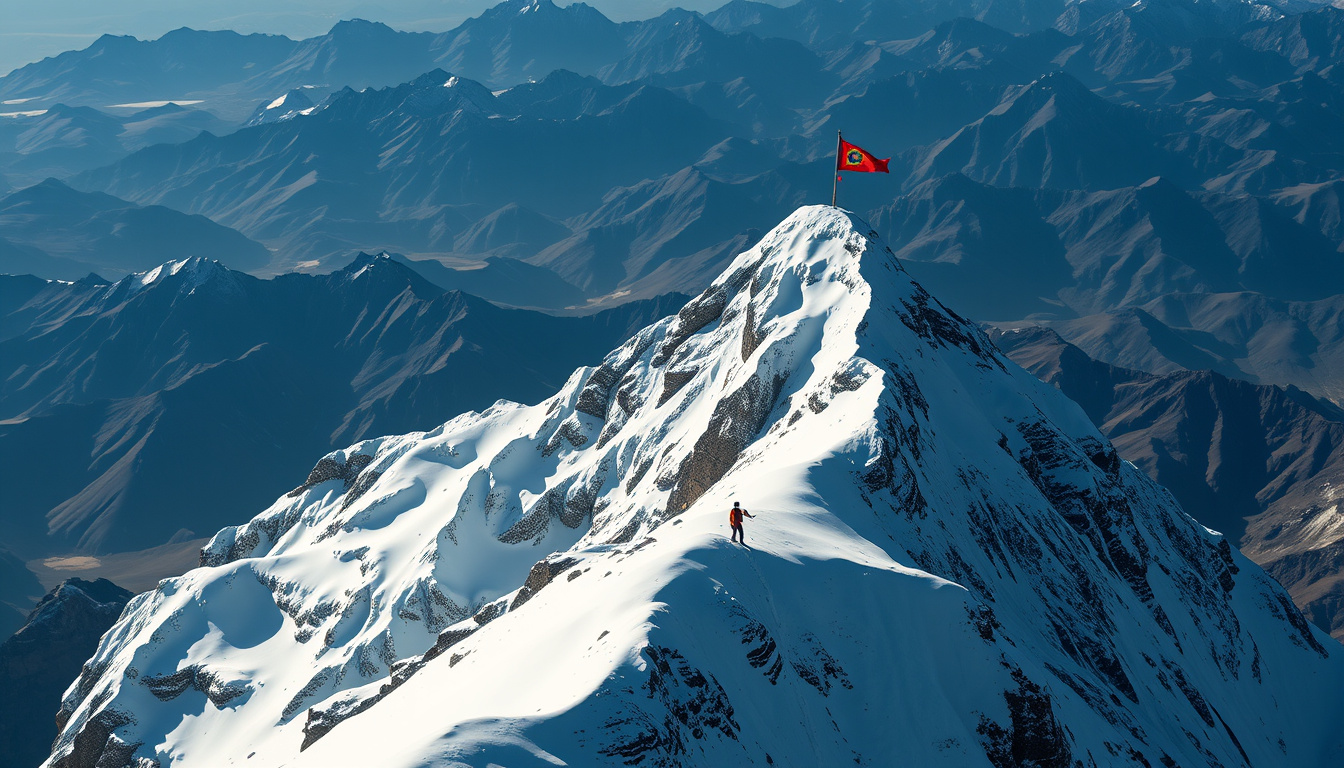
There’s something about Mount Everest that pulls at the imagination — the highest point on Earth, a sliver of rock and ice that has drawn climbers, dreamers, and scientists for generations. But the peak is more than a number. It’s a stage where extreme altitude meets human ambition, where geological forces shaped the tallest mountain on the planet, and where a single climb can cost more than a house. The key facts, the real costs, the dangers, and the quiet heroes who make summits possible are all detailed below.
Elevation: 8,848.86 m (29,031.7 ft) ·
First Ascent: 1953 by Sir Edmund Hillary and Tenzing Norgay ·
Total Deaths: Over 335 recorded as of 2023 ·
Typical Permit Cost: $11,000 per person (Nepal side) ·
Climbing Season: April–May (spring) and September–October (autumn) ·
Location: Nepal–Tibet (China) border
Quick snapshot
- 8,848.86 m (29,031.7 ft) above sea level (Climbing (outdoor magazine))
- Borders Nepal and Tibet, China (Green Valley Nepal Treks (trekking guide))
- Part of the Himalayan range (Gokyo Treks Nepal (trekking operator))
- 335+ deaths recorded (Climbing Kilimanjaro (data compilation site))
- Over 6,000 successful summits (Breeze Adventure (climbing logistics provider))
- Climbing cost ranges from $35,000 to $80,000 (ExpedReview (expedition planning resource))
- First summit: Edmund Hillary & Tenzing Norgay (1953) (Alan Arnette (Everest expert))
- Oldest climber: Yuichiro Miura (80 years old, 2013) (YouTube (climbing documentary))
- Fastest ascent: 10 hours 56 minutes (Kilian Jornet, 2017) (CNN (travel news))
- 2 PM turn-around rule to avoid death zone darkness (NPR (public radio))
- Death zone above 8,000 m with low oxygen (ExplorersWeb (expedition news))
- Sherpa support essential for safe climbing (Nepal High Trek (trekking operator))
Six key metrics, one pattern: the mountain’s statistics reveal a paradox — more people summit every year, yet the death toll keeps climbing.
| Attribute | Value |
|---|---|
| Elevation | 8,848.86 m (29,031.7 ft) |
| First Ascent | 1953 by Sir Edmund Hillary and Tenzing Norgay |
| Country | Nepal / China (Tibet) |
| Permit Cost | $11,000 per person (Nepal side) |
| Total Deaths | Over 335 (as of 2023) |
| Climbing Season | April – May |
How many climbers have died in Everest?
What is the deadliest year on Everest?
- 1996: 8 deaths in a single day, later chronicled in ‘Into Thin Air’
- 2014: Avalanche on Khumbu Icefall kills 16 Sherpas (ExplorersWeb (expedition news outlet))
- 2015: Nepal earthquake triggers avalanche at Base Camp, killing 19
- 2019: Notorious overcrowding and record deaths (11 in one season)
The deadliest years aren’t random — they cluster around disasters that expose the mountain’s vulnerability to both nature and human traffic.
Where are bodies found?
Most deaths occur in the death zone above 8,000 m, where oxygen levels are too low to sustain life without supplementary gas. Bodies are often left where they fall because retrieval is extremely dangerous and expensive. The most famous identifiable body is “Green Boots,” believed to be of Tsewang Paljor, an Indian climber who died in 1996.
Every body left on the mountain is a grim reminder that the death zone doesn’t forgive mistakes. For families, closure often remains out of reach.
What is the oldest body still on Everest?
According to Breeze Adventure (climbing logistics provider), around 200 bodies remain on the mountain. The oldest known body is likely that of George Mallory, who vanished in 1924. His body was found in 1999 at around 8,160 m. Whether Mallory and Irvine reached the summit before dying remains one of mountaineering’s great mysteries.
The implication: Everest’s death toll is not just a number — it’s a permanent archive of human ambition frozen in ice.
Why does it cost $40,000 to climb Mount Everest?
Permits and fees
- Nepal government charges $11,000 for a climbing permit per person (Alan Arnette (Everest expert and chronicler))
- As of 2026, permit fees were reported to rise to $15,000
- Tibet-side permits cost additional fees through Chinese authorities
Equipment and logistics
- Oxygen bottles, tents, ropes, and high-altitude food add $15,000–$25,000
- Sherpa support: hiring a Sherpa can cost from $3,000 to over $10,000 per climber (Nepal High Trek (trekking operator))
- Commercial expeditions typically include lead Sherpa, fixed ropes, oxygen logistics, and camp systems
Why does it take two months?
Acclimatization requires weeks of hiking between Base Camp and higher camps, allowing the body to adapt to lower oxygen. Climbers spend about 40 days on the mountain, with multiple rotations up and down the icefall. The two-month timeline is the only safe way to prepare for the death zone.
The trade-off: Every dollar spent buys a margin of safety. Skimping on Sherpa support or oxygen is a gamble climbers rarely win.
Why are sherpas so strong?
Genetic adaptations
Sherpas have higher oxygen efficiency due to a variant of the EPAS1 gene, which regulates the body’s response to hypoxia. This adaptation allows them to function at extreme altitudes where lowlanders struggle to breathe. Research from the NPR (public radio reporting) noted that Sherpa deaths accounted for about one-third of Everest fatalities, highlighting both their physical capability and the risks they face.
Training and experience
- Many Sherpas begin climbing as teenagers, carrying loads for expeditions
- Their livelihood depends on climbing expertise; multiple summits are common
- Kami Rita Sherpa holds the record for most Everest summits — 28 times
Role in Everest expeditions
“Climbing Everest is part of my life; each time is different.”
Kami Rita Sherpa
Why this matters: Sherpas are not just guides — they are the backbone of the Everest economy, bearing the highest physical risk for wages that are a fraction of what foreign clients pay.
Has anyone ever reached the peak of Mount Everest?
Who were the first?
The first confirmed summit was achieved by Sir Edmund Hillary and Tenzing Norgay on May 29, 1953. Their historic climb proved that the world’s highest peak was conquerable, and it opened the door for thousands to follow.
Notable ascents and records
- Oldest climber: Yuichiro Miura, aged 80 in 2013
- Fastest ascent: Kilian Jornet, 10 hours 56 minutes in 2017
- Most summits: Kami Rita Sherpa (28 as of 2021)
How many summits each year?
In 2023, a record number of permits were issued, and over 600 climbers reached the summit in the spring season alone. The overall count of successful summits now exceeds 6,000 according to expedition reports.
“It is not the mountain we conquer but ourselves.”
Sir Edmund Hillary
The pattern: Each year, more people reach the top, but the mountain’s danger doesn’t diminish — it changes shape with overcrowding and climate shifts.
What is Mount Everest’s highest peak?
Exact elevation and measurements
- Official height: 8,848.86 m (29,031.7 ft) as per the 2020 joint Nepal-China survey
- Prior to 2020, Nepal used 8,848 m and China used 8,844.43 m
- The mountain grows about 4 mm per year due to tectonic uplift
Is Mount Everest the tallest from base?
No. Mauna Kea in Hawaii is taller from base to summit — over 10,000 m — but most of it is underwater. Everest remains the highest peak above sea level.
Why don’t planes fly over Everest?
Jet streams over the Himalayas are extremely strong, and the lack of emergency landing options in the event of decompression makes overflight risky. Airlines typically avoid routes directly over the peak for safety reasons.
The catch: Everest’s height is a record only by one definition — from sea level. The real story is the mountain’s relentless growth, driven by the collision of the Indian and Eurasian plates.
Climbers face a brutal arithmetic: $70,000+ expense, 2 months of acclimatization, and a 1 in 100 chance of dying — that’s the price of standing on the roof of the world.
Timeline signal
- 1953 – First successful summit by Edmund Hillary and Tenzing Norgay
- 1996 – Disastrous season with 8 deaths in a single day; later chronicled in ‘Into Thin Air’
- 2014 – Avalanche on Khumbu Icefall kills 16 Sherpas
- 2015 – Nepal earthquake triggers avalanche at Base Camp, killing 19
- 2019 – Notorious overcrowding and record deaths (11 in one season)
- 2020 – Joint Nepal-China survey sets new official height at 8,848.86 m
- 2023 – Record number of permits issued; over 600 summits in one season
Confirmed facts
- Everest height of 8,848.86 m (confirmed by 2020 survey)
- First ascent in 1953 by Hillary and Norgay
- Death toll exceeding 300 (NPR reports 94 Sherpa deaths alone by 2018)
- Cost of $40,000+ for typical expedition (Climbing magazine estimates $70,000–$100,000 for 2025)
What’s unclear
- Exact number of bodies remaining on the mountain — estimates range from 200 to over 300
- Long-term impact of climate change on climbing safety, including melting permafrost and more unstable icefall
- Effectiveness of 2 PM rule enforcement — some operators reportedly ignore it
- Exact number of successful summits is disputed; estimates range from 6,000 to over 7,000
Summary
For anyone dreaming of standing on the roof of the world, the choice is clear: a properly funded, Sherpa-supported expedition with a reputable operator, or stay home. The mountain doesn’t test your courage — it tests your bank account, your patience, and your respect for the thin air above 8,000 m. For Nepal, the balancing act between tourism revenue and climber safety is getting harder every season.
Related reading: Waitrose Food to Order – Delivery Guide and Costs
For those seeking more detailed facts about Mount Everest’s peak, detailed facts about Mount Everests peak provides an in-depth look at the height, climbing costs, and the critical 2 PM rule.
Frequently asked questions
Is Mount Everest still growing?
Yes. The Indian tectonic plate continues to push under the Eurasian plate, lifting Everest by about 4 mm per year.
How long does it take to climb Everest?
Most expeditions take about two months total, including acclimatization rotations and waiting for weather windows.
What is the death zone on Everest?
The death zone is any altitude above 8,000 m where oxygen is insufficient to sustain human life without supplementary oxygen.
Can you climb Everest without supplementary oxygen?
Yes, but very few climbers have done it — it dramatically increases risk of hypoxia, frostbite, and death.
How dangerous is an Everest climb in terms of fatality rate?
The historical fatality rate is about 1 in 100 climbers. Certain seasons have been far worse.
What gear is essential for climbing Everest?
High-altitude boots, down suit, climbing harness, crampons, ice axe, oxygen system, and sleeping bag rated to at least -30°C.
Do I need a permit to climb Everest?
Yes. A climbing permit from Nepal costs $11,000 (rising to $15,000 in 2026) and must be obtained through a licensed expedition operator.
Is there an age limit for climbing Everest?
Nepal has set a minimum age of 16. The oldest successful climber was 80 (Yuichiro Miura).
Related stories





Alex Nguyen is Editor-in-Chief at BuzzLayer, overseeing editorial standards, publication decisions and corrections.